
FG Pursues $1 Billion Investment In Agriculture, Targeting Half A Million Job Opportunities By 2027
 Follow us on Google News
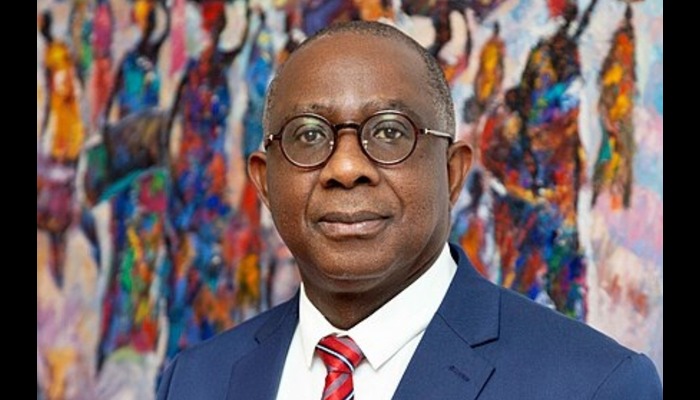
FG Pursues $1 Billion Investment In Agriculture, Targeting Half A Million Job Opportunities By 2027The Federal Government aims to secure $1 billion in agricultural investments and create 500,000 jobs by 2027 through the Special Agro-Industrial Processing Zones (SAPZ) Programme, as detailed in a fact sheet obtained by Sunday PUNCH. The initiative is being launched in collaboration with various development financing institutions, including the African Development Bank, the International Fund for Agricultural Development, and the Islamic Development Bank, and will roll out in seven states.
Known as SAPZ-1, the programme will be implemented in Cross River, Imo, Ogun, Oyo, Kaduna, Kano, and Kwara states. It seeks to attract $1 billion in new private sector investments within agro-processing hubs and agricultural transformation centers while also aiming for job creation that is categorized by age and gender.
Dr. Kabir Yusuf, the National Programme Coordinator for SAPZ, outlined plans to construct and rehabilitate 190 feeder roads at the farm level to help minimize post-harvest losses. The initiative also includes training and empowering 100,000 farmers in climate-smart agricultural practices by 2027.
The estimated total cost of SAPZ-1 is $538.05 million, excluding taxes. Funding will come from several sources: the African Development Bank (AfDB) is providing a loan of $160 million (29.7% of the total cost) along with a $50 million loan from the Africa Growing Together Fund (9.3%). The Islamic Development Bank (IsDB) and IFAD will co-finance $150 million (27.9%) and $100 million (18.6%), respectively. Additionally, $60 million (11.1%) is expected to be mobilized through the Green Climate Fund, while the Federal and State Governments will contribute $18.05 million (3.4%) in both cash and in-kind support.
The AfDB will finance all components of the SAPZ-1 programme in Ogun, Oyo, Kaduna, Cross River, and Imo states. IFAD will handle activities related to Component 2 in Kano and Ogun states, while the IsDB will oversee activities across all components in Kano, Kwara, and the Federal Capital Territory.
State leaders recently convened for the Special Agro-Industrial Processing Zones High-Level Implementation Acceleration Dialogue at the African Development Bank, where they reiterated their commitment to addressing food insecurity in Nigeria despite existing challenges. Prof. Banji Oyelaran, the Senior Special Advisor to the President of the African Development Bank on industrialization, pointed out that the primary obstacles to agricultural project execution stem from human factors rather than technical ones. He noted that bureaucratic delays and personal egos could significantly impede progress, sometimes requiring nearly nine months to resolve issues stemming from an individual’s inaction.
Oyelaran discussed the SAPZ initiative’s goal of fostering localized development and improving agricultural practices. While over $540 million has been secured for the first phase, he cautioned that difficulties in effectively allocating those funds could impede progress. He stressed the importance of knowledge dissemination among farmers, emphasizing that without proper education on planting times and techniques, farmers would face significant challenges.
Despite these hurdles, Oyelaran expressed optimism about the initiative’s potential, urging stakeholders to comply with project guidelines and establishing a compliance deadline of December 20. He warned that those unwilling to follow the rules would risk cancellation of their participation. He envisions the agricultural initiatives contributing to substantial economic growth, citing the potential to employ 25,000 individuals at a single site and replicate that success nationwide.
The SAPZ national coordinator shared optimism about the initiative’s capacity to diversify Nigeria’s economy through agriculture, describing it as a transformative project that seeks to promote agriculture as a viable business rather than just a way of life.
Sadi Ibrahim, the Permanent Secretary of the Ministry of Agriculture in Kano State, acknowledged that adherence to legal regulations remains a significant barrier and highlighted the need for strict compliance to ensure successful project implementation. Meanwhile, Oyo State’s Executive Adviser on Agribusiness, Adebowale Akande, emphasized the state’s commitment to agricultural industrialization through the SAPZ, noting its focus on adding value to local produce.
Kaduna State’s Commissioner for Agriculture, Murtala Dabo, underscored the initiative’s role in enhancing the value of agricultural exports, explaining that the SAPZ aims to establish industrial hubs for processing agricultural products, benefiting both smallholder farmers and the national economy.
For more information on this article and other related posts from Bushradiogist, please join our WhatsApp channel by clicking this link https://whatsapp.com/channel/0029VaUumOODTkK7AZL1Fw3o. For advertisement inquiries only, kindly send a message to 090 1907 0863 on WhatsApp.






Comments
0 comments