
National Grid Warns: Northern Electricity Shortage Likely To Persist
 Follow us on Google News
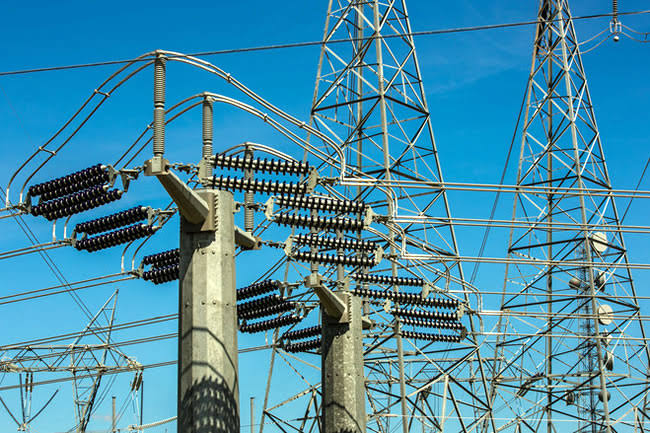
National Grid Warns: Northern Electricity Shortage Likely To PersistEfforts to resolve the ongoing power crisis in Northern Nigeria are becoming increasingly difficult, with new revelations pointing to deep-rooted issues of mismanagement and neglect that continue to hinder progress. The region, which has long faced chronic power outages, is now confronting an acute shortage of transmission infrastructure essential for delivering adequate electricity to the North West and North East.
Sources close to the matter have disclosed that the Transmission Rehabilitation and Expansion Programme (TREP), designed to improve the power supply system, has been severely undermined by the misappropriation of $1.661 billion. Additionally, over $500 million allocated for the Eastern Backbone project—which includes vital transmission lines to cities such as Sokoto, Kaura Namoda, Katsina, Damaturu, Yola, Jalingo, and Calabar—remains unaccounted for.
The destruction of two key 330kV circuits linking Shiroro to Kaduna has left the North West reliant on the single Jos-Kaduna circuit, while the North East depends on the Jos-Gombe 330kV line. These fragile connections leave both regions exposed to severe power shortages.
Although the Jos-Kaduna 330kV direct current line was completed, the essential connection bays at both Jos and Kaduna have not been finalized. Initial contracts for these components were canceled and reassigned to TCN engineers, who transported necessary parts from Anambra. However, sources claim that if the TCN engineers had been allowed to proceed, the bays would have been completed within five months. Unfortunately, the contracts were handed back to the same contractors who had previously failed to meet project deadlines, leading to further delays.
“If the Jos-Kaduna line were to be vandalized, the entire North West would experience a blackout, similar to the recent power failure in the North East,” a concerned source warned.
In contrast to the achievements of figures like Engr. Shomolu, who successfully built 330kV and 132kV lines in the South during his tenure as NEPA’s general manager, the North continues to struggle with inadequate infrastructure. Instead of prioritizing the construction of high-capacity lines, resources have been diverted to building lower-capacity 33/11kV lines across the region.
“TREP was meant to bridge the infrastructure gap in the North, but it has been sabotaged at every turn,” one source stated, pointing to systemic challenges hindering progress. “The South benefits from the legacy of leaders like Shomolu, while the North continues to face neglect. Unless there is a fundamental shift, the power crisis will persist.”
In response to the ongoing issues, the Economic and Financial Crimes Commission (EFCC) has launched an investigation into electricity companies to uncover the reasons behind the frequent collapses of the national grid. EFCC Chairman Ola Olukayode announced the investigation during a recent visit by the House Committee on Financial Crimes to the commission’s headquarters in Abuja.
Olukayode highlighted that the poor performance of budget allocations over the last 15 to 20 years, often below 20 percent, has contributed significantly to the energy crisis. He also noted that some electricity companies have been procuring substandard equipment, exacerbating the national grid’s frequent failures.
Addressing criticisms of the EFCC’s focus on cybercrime, Olukayode emphasized that economic sabotage, including from cybercrime, has harmed the country’s economy and reputation. He added: “No financial crime is too small to investigate or prosecute, and no one is too big to face the consequences. If we ignore the small issues today, they will grow into much bigger problems tomorrow.
For more information on this article and other related posts from Bushradiogist, please join our WhatsApp channel by clicking this link https://whatsapp.com/channel/0029VaUumOODTkK7AZL1Fw3o. For advertisement inquiries only, kindly send a message to 090 1907 0863 on WhatsApp.






Comments
0 comments