
Relief In Sight! Cement Prices May Crash As BUA Moves To Power Its Own Plants
 Follow us on Google News
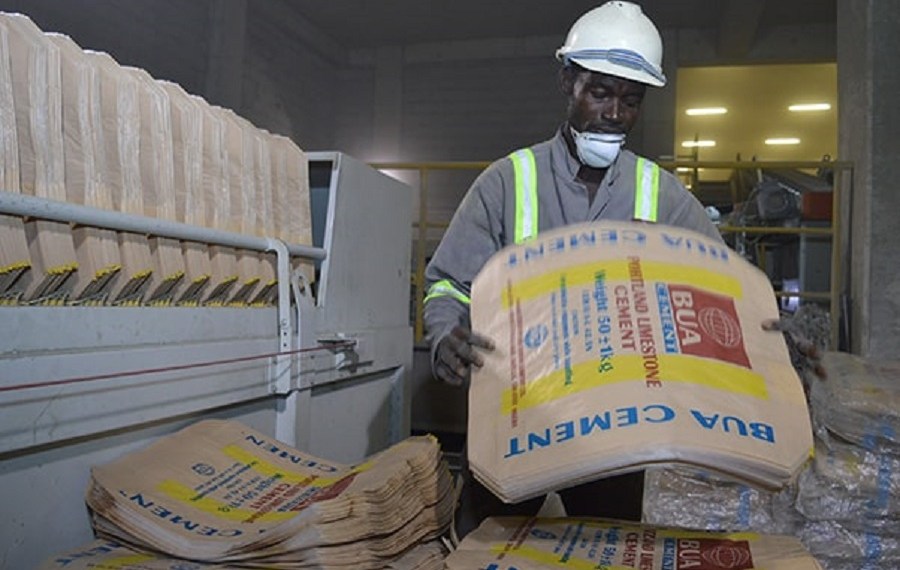
BUA Group Plc has announced plans to begin generating its own electricity to power its production facilities, with a focus on its cement manufacturing plants. The company says the initiative aims to cut operating expenses and ultimately bring down cement prices in the market.
The Chairman of BUA Group, Abdul Samad Rabiu, made the disclosure during the company’s Annual General Meeting (AGM) held Tuesday at the Transcorp Hilton Hotel in Abuja.
“We are spending a significant portion of our earnings on electricity in a country still facing unreliable power supply,” Rabiu noted.
According to him, the decision aligns with BUA’s broader strategy to address the escalating cost of production—primarily driven by energy costs—and deliver better value to shareholders and consumers alike.
To actualize this, BUA Cement has entered into a 70MW power supply deal with Wartsila OY of Finland for its Sokoto Line 4 and an additional 20MW gas-powered project in partnership with Green Power International. These ventures are expected to boost the company’s energy independence and operational efficiency.
“This is why we’re establishing our own energy generation system using our own gas. Gas is profitable, and we aim to optimize it,” Rabiu added.
BUA also commenced construction of a new greenfield cement plant in Ososo, Edo State, with a planned annual capacity of 3 million metric tonnes. Once completed in Q1 2027, the company’s total installed cement capacity will rise to 20 million metric tonnes per annum.
“This expansion has taken us from 11 million to 17 million metric tonnes per annum, further reinforcing our standing in Nigeria’s cement market,” said Rabiu.
At the AGM, shareholders approved a dividend payout of ₦2.05 per ordinary share. BUA Cement’s 2024 Annual Report, titled Beyond Limits, showed strong performance, with revenue surging 90.54% to ₦876.47 billion—fueled by increased capacity and high demand.
Pre-tax profit rose by 48.2% to ₦99.63 billion, while profit after tax grew 6.41%, reflecting increased tax expenses. However, the company’s cash reserves declined by 62.35% due to heightened capital investments and debt repayments. Shareholder equity saw a modest 0.86% rise.
Naira Devaluation Drives Cement Price Hike
Rabiu defended the current cement price, attributing it to the weakening of the Naira, which has inflated operating costs.
“We have to stay profitable. We have employees and investors to take care of, and we’ve invested billions. A ₦10,000 price tag on cement is justifiable under these circumstances,” he explained.
He expressed optimism that a stronger Naira in the future would help reduce costs and ease pressure on consumers.
Speaking on the company’s performance, BUA Cement’s Managing Director/CEO, Yusuf Binji, emphasized that the results reflect resilience and strategic planning.
“Our 2024 results show strong operational performance and the effectiveness of our proactive strategies amidst tough market dynamics,” Binji stated.
He also reaffirmed BUA’s commitment to corporate governance, transparency, and fairness across all business activities.






Comments
0 comments