
Presidency Rejects World Bank’s 139 Million Poverty Claim, Says It Distorts Reality
 Follow us on Google News
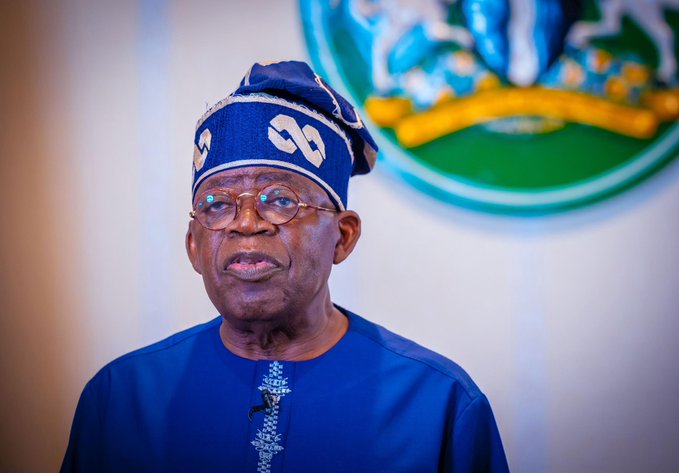
The Presidency has rejected the World Bank’s recent claim that about 139 million Nigerians are living in poverty, describing the figure as “unrealistic, exaggerated, and detached from Nigeria’s current economic reality.
President Bola Tinubu’s Special Adviser on Media and Public Communication, Sunday Dare, stated this on Thursday via his official handle, insisting that the data must be properly contextualised before being taken as fact.
“While Nigeria values its partnership with the World Bank and appreciates its contributions to policy analysis, the figure quoted must be properly contextualised. It is unrealistic,” Dare wrote.
He explained that the World Bank’s estimate was based on the 2017 global poverty line of $2.15 per person per day (Purchasing Power Parity, PPP), which, when converted at current exchange rates, equals about ₦100,000 per month — far above Nigeria’s new ₦70,000 minimum wage.
“The $2.15 benchmark is an analytical construct, not a real-time reflection of local living conditions,” he added.
According to the Presidency, such PPP-based poverty models rely on outdated household consumption data—with Nigeria’s last major survey conducted in 2018/2019—and fail to capture the nation’s informal and subsistence-based economy that sustains millions.
“These models overlook rural livelihoods and informal activities that form the backbone of Nigeria’s real economy,” the statement read. “The government, therefore, regards the World Bank figure as a modelled estimate, not an empirical representation of 2025 conditions.”
FG: Focus Should Be on Progress, Not Projections
Dare noted that the Tinubu administration does not see the World Bank report as an indictment but rather as a call to showcase progress, stressing that Nigeria’s economy is stabilising under ongoing reforms.
“What truly matters is not a static figure but the direction of change,” he said. “Nigeria’s economy is on a path of recovery and inclusive reform.”
FG Lists Anti-Poverty and Economic Reform Initiatives
The Presidency outlined several programmes under the Renewed Hope Agenda aimed at reducing poverty and cushioning the effects of economic reforms:
-
Conditional Cash Transfer Programme: Expanded to reach 15 million households, disbursing over ₦297 billion since 2023.
-
Renewed Hope Ward Development Programme: Targeting all 8,809 wards with micro-infrastructure and livelihood projects.
-
National Social Investment Programmes (NSIP): Revitalised N-Power, GEEP micro-loans (TraderMoni, MarketMoni, FarmerMoni), and the Home-Grown School Feeding initiative.
-
Food Security Measures: Subsidised grains, fertiliser distribution, and mechanisation drives to ease food inflation.
-
Renewed Hope Infrastructure Fund: Financing energy, road, and housing projects to lower living costs and create jobs.
-
National Credit Guarantee Company: Expanding access to affordable credit for women, youth, and small businesses.
Dare said these initiatives, coupled with exchange rate reforms and fiscal discipline, are “already producing measurable results.”
‘Reforms Tough But Necessary’ — Presidency
The Presidency maintained that while reforms such as fuel subsidy removal and exchange rate unification are tough, they are “necessary to correct deep-rooted inefficiencies” and restore productivity.
“The World Bank’s assessment must understand the long-standing structural distortions this administration is correcting,” Dare stated.
“These reforms are restoring macroeconomic stability and renewed growth momentum — even the World Bank itself has acknowledged that they are working.”
He reaffirmed that President Tinubu’s next goal is to ensure that macroeconomic stability translates into real welfare gains for citizens through affordable food, quality jobs, and reliable infrastructure.
“Nigeria rejects exaggerated statistical interpretations detached from local realities,” Dare concluded.
“The foundation for a fairer, more prosperous Nigeria is being firmly laid.”
At the launch of the October 2025 Nigeria Development Update (NDU) in Abuja, World Bank Country Director Mathew Verghis said that despite recent reforms, poverty levels remain high, with 139 million Nigerians living below the global poverty line.
While commending Tinubu’s bold reforms, Verghis warned that Nigeria must “translate macroeconomic stability into improved living standards” or risk losing the momentum of its progress.






Comments
0 comments