
Boko Haram Scared Jonathan Into Backing Down On Subsidy Removal” — Emir Sanusi Reveals Sh*cking Details
 Follow us on Google News
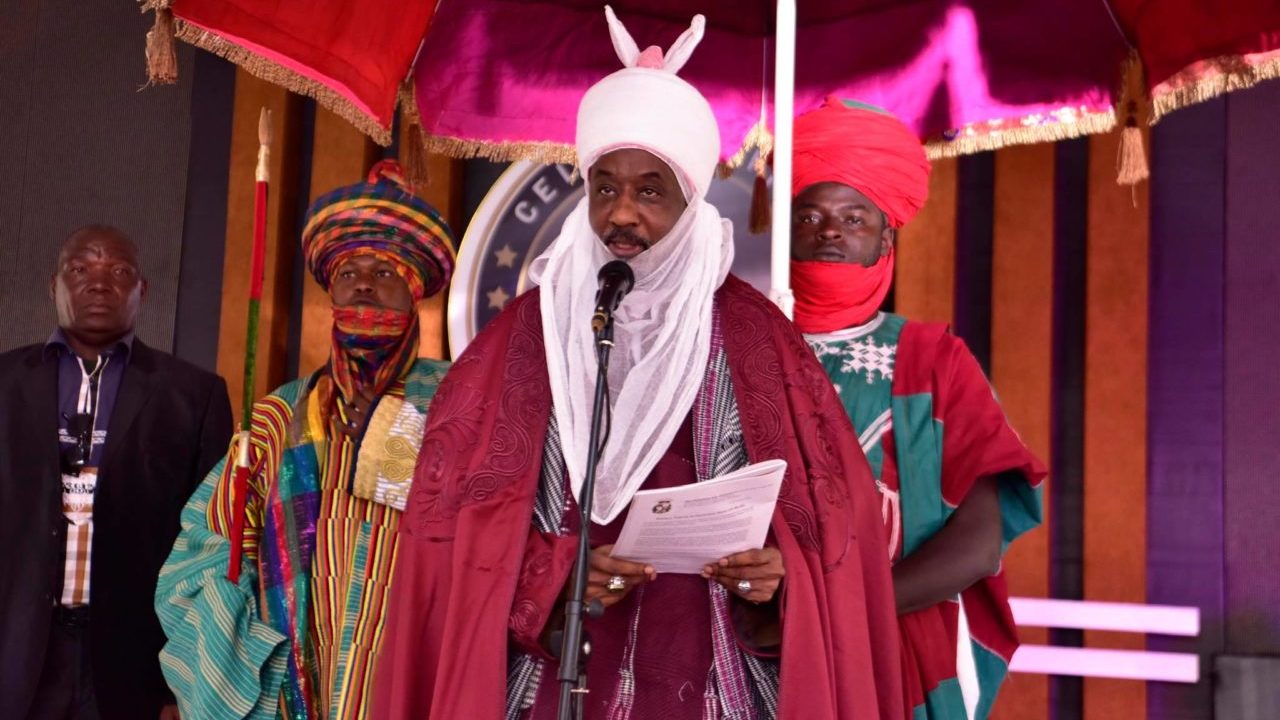
The Emir of Kano, Muhammadu Sanusi II, has disclosed that former President Goodluck Jonathan’s decision to halt the removal of fuel subsidy in 2012 was not a result of public protests but rather fear of Boko Haram’s suicide bomb attacks on demonstrators.
Speaking at the Oxford Global Think Tank Leadership Conference, themed “Better Leader for a Better Nigeria,” Sanusi revealed that as then-Governor of the Central Bank of Nigeria (CBN), he had strongly advocated for the removal of fuel subsidy. However, the Jonathan administration chose to compromise due to growing security concerns at the time.
According to Sanusi, the policy known as “fuel subsidy” was in reality a “naked hedge”—an unsustainable financial arrangement in which the government bore all risks related to price fluctuations in crude oil, exchange rates, and interest rates.
“What we had was not a subsidy but a hedge. The government told Nigerians they would not pay more than a fixed price per litre, regardless of how high global oil prices or exchange rates climbed. Eventually, we moved from using revenue to pay for subsidies to borrowing funds to cover both the subsidy and interest on those loans. That was bankruptcy,” he said.
Sanusi argued that Nigeria’s economic woes today are partly a consequence of not removing the subsidy at the time.
“If Nigerians had allowed Jonathan to remove the subsidy in 2011, the pain would have been far less than what the nation faces today,” he stated.
On why the former president backed down, Sanusi said Jonathan’s government feared that Boko Haram could exploit the protests.
“The only reason the government compromised—doing 50% instead of 100%—was Boko Haram. There were thousands of Nigerians protesting in Lagos, Kano, and Kaduna. The fear was that if a suicide bomber attacked one of those rallies and killed hundreds, it would no longer be about subsidy. To his credit, Jonathan was determined but acted out of caution,” Sanusi revealed.
He also lamented the erosion of values among Nigeria’s political elite, describing the nation as “a classless society” where education and integrity no longer determine leadership quality.
“You can pick 109 Nigerians at random and put them in the Senate chambers; the outcome may not differ much. Many educated leaders behave like illiterates, driven by greed and praise-singing rather than service. When leaders seek only wealth and luxury, they lose their moral authority,” he added.
Sanusi called for the emergence of a principled ruling class guided by values, ethics, and genuine concern for public welfare.
“The ruling class must rediscover values beyond money. True leadership is about serving people, educating children, saving lives, and building the nation—not enriching oneself,” the Emir concluded.




Comments
0 comments