
“Breaking: Sheikh Gumi Reacts To America’s Move To ‘Punish’ Northern Leaders
 Follow us on Google News
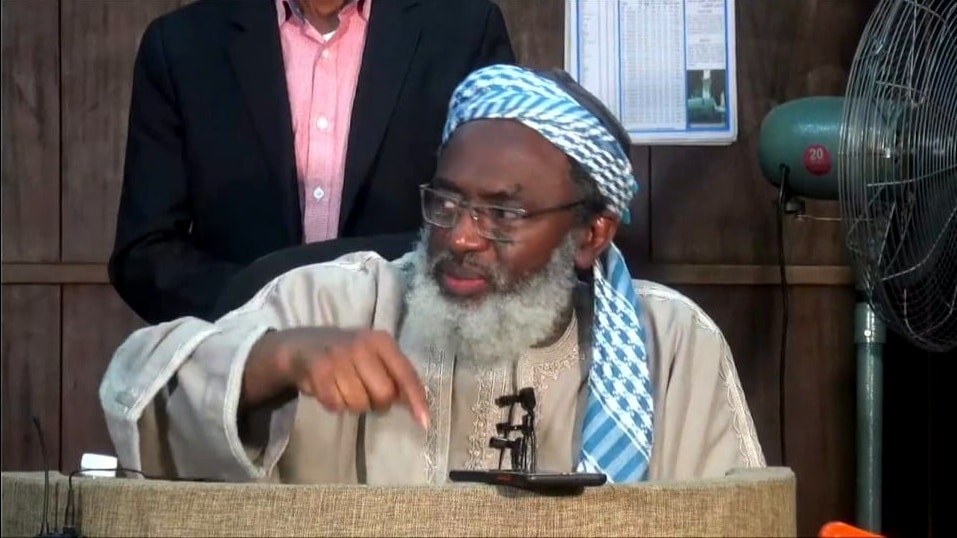
Renowned Nigerian Islamic cleric Sheikh Ahmad Gumi has reacted to reports that he may be among several Nigerian officials and religious leaders targeted by the United States for sanctions over alleged promotion of blasphemy laws and tolerance of religious violence in northern Nigeria.
Speaking from Turkey on Tuesday, Gumi told journalists that he had received no official communication regarding the matter but would not be surprised if his name appeared.
“Well, I didn’t even know they mentioned my name. I haven’t seen it in the papers, and no one communicated it to me. But it’s not surprising; anyone who speaks against cutting ties with America, of course they wouldn’t like him. May God protect us,” he told Daily Post.
Earlier, during a live video on Facebook from the historic Haifa Mosque in Sofia, Turkey, Gumi dismissed the reported sanctions as a distraction and urged Nigerians to promote religious harmony.
“Let us live in peace. If we live peacefully, the evil plans of the West will not succeed against us,” he said.
“Do not worry about their noise. Allah will not grant them victory. We must hold firmly to our religion and fear Allah. It is not by killing Christians or insulting them; they are our partners in nation-building.”
Filming from the mosque, which was converted from a church, Gumi highlighted the importance of tolerance and coexistence:
“This mosque used to be a church, but today it stands as a symbol of peace and coexistence, not war. That is what good relationships bring.”
The U.S. government has proposed legislation to sanction northern governors, judges, traditional rulers, and clerics accused of promoting or enforcing blasphemy laws and enabling religious violence in Nigeria. If passed, the bill would require the Secretary of State to submit, within 90 days, a list of Nigerian officials for potential visa bans, asset freezes, and financial restrictions under Executive Order 13818, part of the Global Magnitsky Human Rights Accountability framework.
The bill specifically targets judges, magistrates, prison officials, and other authorities accused of enforcing blasphemy laws or tolerating mob killings on religious grounds. Twelve northern states are named: Zamfara, Kano, Sokoto, Katsina, Bauchi, Borno, Jigawa, Kebbi, Yobe, Kaduna, Niger, and Gombe, where Sharia law has been expanded since 1999 to include criminal and public morality provisions.
Critics say certain political and religious figures in these states have fostered a culture of impunity and discriminated against religious minorities. The proposed sanctions follow international outrage over high-profile cases, including those of Mubarak Bala, Yahaya Sharif, Sheikh Abduljabbar Kabara, Deborah Samuel, and others who were killed or persecuted over alleged blasphemy.
Human-rights organizations, including Amnesty International and Humanists International, have long called for the abolition of death penalties for blasphemy and stronger protections for freedom of belief and expression.
Sharia, rooted in Islamic jurisprudence, has existed in northern Nigeria for centuries, but its scope expanded between 1999 and 2000, with states like Zamfara under Governor Ahmad Sani Yerima incorporating criminal law into Sharia courts. Eleven other states followed within two years, creating parallel judicial systems alongside secular courts. Critics argue these laws conflict with Nigeria’s constitutional guarantees of religious freedom and equality.
As of Wednesday, November 12, 2025, none of the 12 northern governors named in the U.S. bill had issued a statement. Efforts by Daily Post to reach their media aides were unsuccessful. The proposed bill is still awaiting full Congressional approval and Presidential assent, and if passed, it would be the first time the United States imposes sanctions on Nigerian officials over religious freedom violations.




Comments
0 comments