Buhari Was Aware Of Public Discontent, Daughter Reveals In Candid Disclosure
 Follow us on Google News
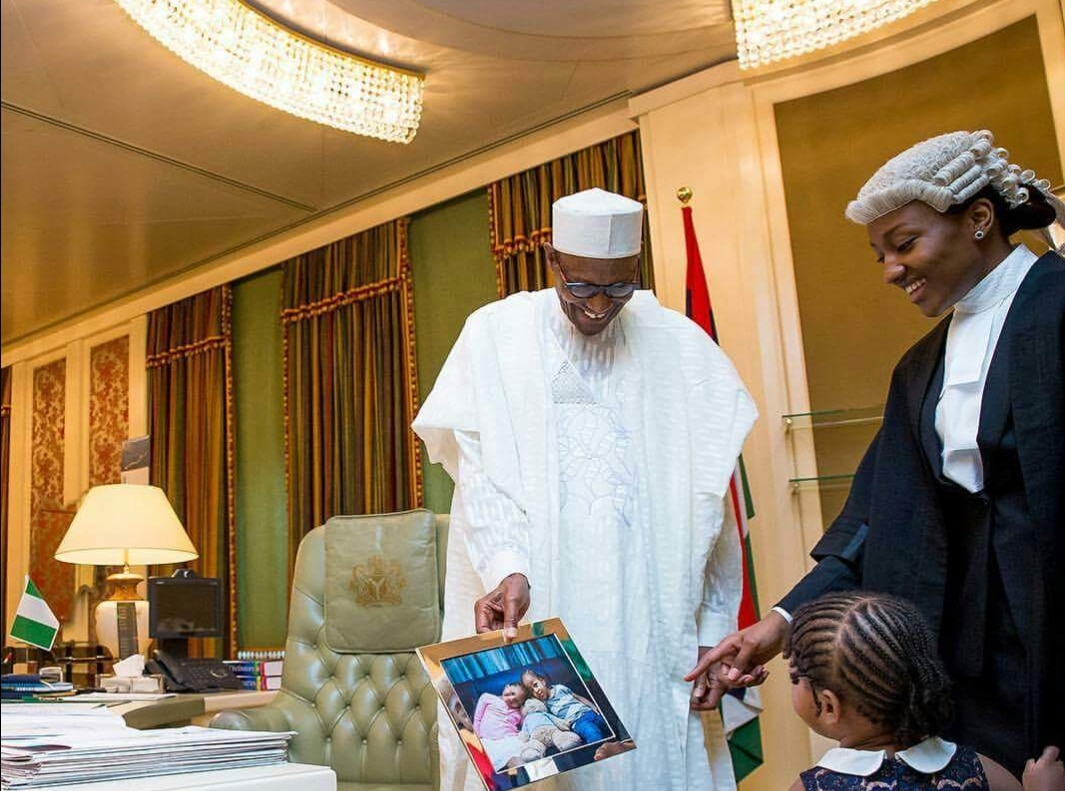
Halima Buhari, daughter of former President Muhammadu Buhari, has disclosed that her father was fully conscious of the widespread dissatisfaction many Nigerians felt toward his administration.
She made the revelation on Wednesday in Abuja at the Yar’Adua Centre during the public unveiling of Headlines and Soundbites: Media Moments That Defined an Administration, a book written by former Minister of Information and Culture, Lai Mohammed.
The event was attended by several prominent figures, including former ministers, past governors, a serving governor, traditional rulers, and political leaders from the All Progressives Congress (APC) and the African Democratic Congress (ADC).
In her remarks, Halima Buhari said her father was keenly aware that the lofty expectations Nigerians had of his leadership were not entirely met, particularly in the areas of security and economic management.
She described governance in Nigeria as far more intricate than it appears to outsiders, shaped by difficult decisions, pressure, and unavoidable limitations.
Drawing from her close proximity to power, she said the former president constantly grappled with the human impact of governance decisions.
“Behind every soundbite was a human being — sometimes weary, sometimes resolute, sometimes frustrated — but always deeply conscious that his choices affected millions,” she said.
“That human being was our father. I witnessed aspects of him that were never seen on television and rarely reflected in print.
“I saw a man who listened more than he spoke, who worried deeply about the safety of ordinary Nigerians, and who struggled with the gap between promises made and realities faced.”
Halima noted that while Nigerians knew him as President Buhari, at home he was simply “Baba,” stressing that leadership often involves unseen compromises.
“To the public, he was President Buhari. To us, he was just ‘Baba.’ Leading a country as complex as Nigeria is never as simple as it seems.
“It requires trade-offs, compromises, and decisions that are often imperfect,” she said.
She further dismissed the notion that her father was shielded from public criticism, stating that he was keenly aware of both praise and disapproval.
“My father was not oblivious to the criticism directed at him. He knew many Nigerians believed more could have been done or done differently.
“He heard the disappointment, just as he heard the gratitude of those who felt their lives had improved.”
According to Halima, the event was not intended to impose a definitive judgment on Buhari’s time in office, noting that his legacy would continue to generate debate.
“Our gathering here is not to rewrite history or force a single narrative about his years in power,” she said.
“In a vibrant democracy, Nigerians will continue to debate his legacy. There will be books that commend, books that criticise, and books that attempt to document.”
She added that Lai Mohammed’s book provides an insider’s perspective on governance and public communication, reflecting the realities of exercising power under intense public scrutiny.
“This book, written by someone deeply involved in shaping public messaging, offers a valuable insight into how an administration is managed, tested, and challenged in the court of public opinion,” she concluded.