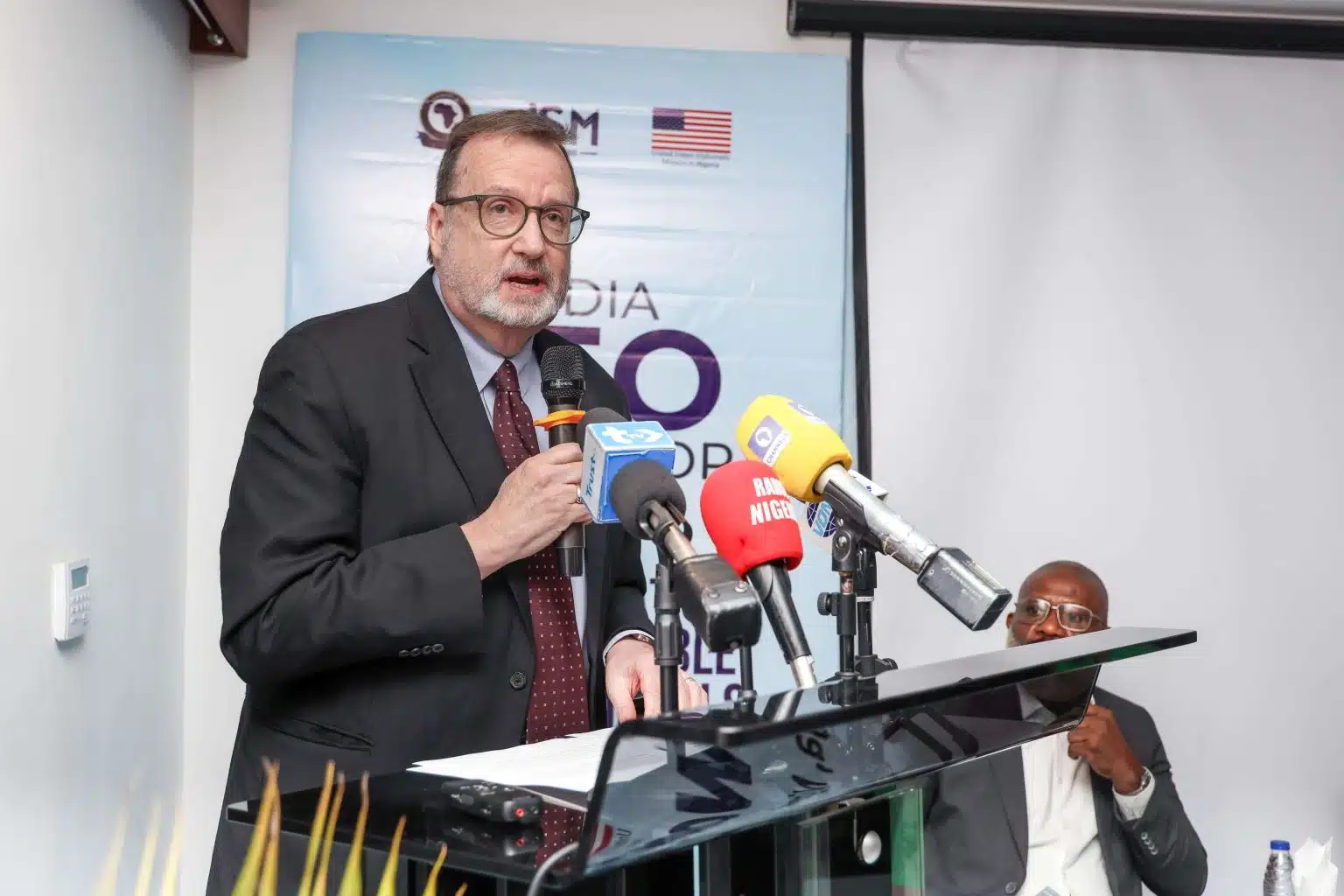
He made the clarification on Sunday in Abuja during a press briefing held alongside the visit of a United States Congressional delegation.
Mills explained that the restrictions form part of wider efforts to tighten security and improve the vetting process for visa applicants.
According to him, the presidential proclamation, which will take effect on January 1, 2026, applies to specific visa categories and is focused on ensuring proper screening and reliable information, rather than penalising Nigerians.
The ambassador added that the proclamation clearly spells out the visa categories that could be affected, while also listing exemptions for certain groups, including holders of diplomatic and official passports and those travelling for religious reasons.
He urged Nigerians planning to apply for U.S. visas to visit the official website of the United States Embassy for accurate details on affected categories and available exemptions. He also encouraged applicants with concerns to reach out through the embassy’s official communication channels for further guidance.
Also speaking at the briefing, U.S. Congressman and head of the delegation, Bill Huizenga, noted that visa reviews and restrictions are common international practices.
Huizenga said such measures are typically aimed at promoting compliance and cooperation and are not meant to single out or punish citizens of any particular country.
He explained that visa restrictions usually focus on government systems and administrative processes and are routinely applied across different countries as part of global security and immigration management procedures.

 Follow us on Google News