Presidency Opens Up: Why Tinubu Raised 2026 Budget To A Massive ₦58.18 Trillion
 Follow us on Google News
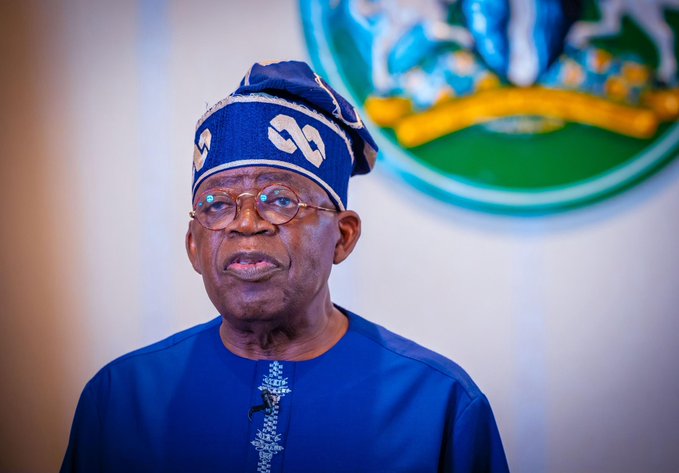
A source within the Presidency has disclosed why the Federal Government raised the proposed 2026 budget from the ₦54.46 trillion outlined in the Medium-Term Expenditure Framework (MTEF) to ₦58.18 trillion.
Speaking to Vanguard, the source explained that the upward review was necessary to accommodate the large-scale recruitment recently approved by President Bola Tinubu for the military, police and other security agencies.
According to the source, budget proposals from Ministries, Departments and Agencies (MDAs) had already been submitted to the Budget Office of the Federation in line with the Budget Call Circulars before the President announced the security sector recruitment drive.
As a result, the overall budget size had to be adjusted upward to reflect the financial implications of the additional personnel.
The source added that President Tinubu proceeded to present the budget to the National Assembly without delay to demonstrate commitment to an early passage, noting that the budget cycle was already behind schedule and could not wait for all the details to be fully harmonised.
“They will work out the details and tidy them up before the bill is returned to the National Assembly for continuation of the process, including budget defence by the MDAs,” the source said.
The proposed total expenditure of ₦58.18 trillion represents a six per cent increase over the 2025 budget estimate of ₦49.7 trillion.
The figure includes projected spending by government-owned enterprises amounting to ₦4.98 trillion, as well as ₦1.37 trillion earmarked for grants and donor-funded projects.
The aggregate expenditure also covers statutory transfers of ₦4.1 trillion and debt servicing costs of ₦15.52 trillion, which include ₦3.388 trillion allocated to the sinking fund for retiring maturing obligations to local contractors and creditors.
Personnel costs, including pensions, are projected at ₦10.75 trillion—seven per cent higher than the 2025 allocation—and include ₦1.02 trillion for government-owned enterprises. Overhead expenses are estimated at ₦2.22 trillion.
Non-oil revenues have continued to grow, now contributing about two-thirds of total government receipts, reflecting a gradual shift away from reliance on oil income.
With projected revenues of ₦34.33 trillion against total spending of ₦58.18 trillion, the budget deficit is estimated at ₦23.85 trillion, equivalent to 4.28 per cent of GDP.
Recurrent (non-debt) expenditure is pegged at ₦15.25 trillion, while capital spending is projected at ₦26.08 trillion.
In terms of sectoral allocations, security receives the largest share at ₦5.41 trillion, followed by infrastructure (₦3.56 trillion), education (₦3.52 trillion) and health (₦2.48 trillion).