Tension Ahead Of 2027: Falana and Gani Adams Cry Out Over Threat Of One-Party Rule
 Follow us on Google News
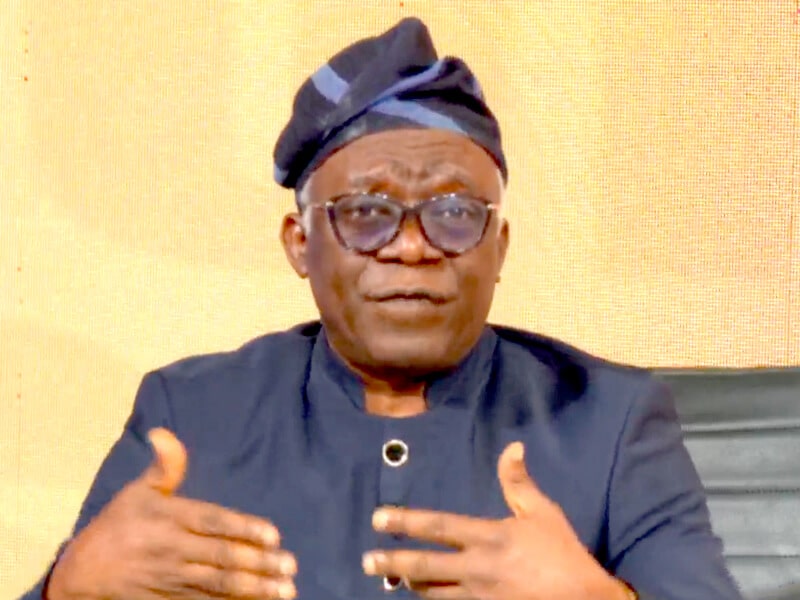
Human rights lawyer, Femi Falana (SAN), and the Aare Ona Kakanfo of Yorubaland, Gani Adams, have warned that Nigeria could end up with only a single presidential candidate in the 2027 general election if the judiciary continues to interfere in the internal affairs of political parties.
They made this known during the fifth Comrade Yinka Odumakin Memorial Lecture held at the Airport Hotel in Ikeja, Lagos, which attracted notable activists, labour leaders, and legal practitioners.
Falana, while delivering the keynote address, expressed concern over what he described as the growing use of conflicting court orders to destabilise political parties. He warned that such developments could weaken Nigeria’s democracy by limiting electoral competition.
According to him, “Through manipulation of the courts and legal processes, Nigeria could end up with just one candidate in a presidential election. If that happens, the country may not even need to spend resources conducting the election.”
He made these remarks against the backdrop of the Independent National Electoral Commission (INEC) stating that it would not recognise rival factions within the African Democratic Congress (ADC) led by David Mark and Rafiu Bala, pending the resolution of a court case.
Falana also criticised judicial interference in party matters, arguing that such actions go against provisions of the Electoral Act and could undermine democratic processes. He warned that denying citizens real electoral choices could lead to public unrest.
He added, “We must move from complaining to taking action in the interest of democracy and the people.”
Speaking in the same vein, Gani Adams warned that Nigeria may be gradually moving toward a one-party system. He accused those in power of using the judiciary to suppress opposition and influence political outcomes.
Adams cautioned that Nigerians must not remain silent simply because their preferred political group is in power, stressing that political power is temporary and silence today could have consequences in the future.
Falana also delivered a lecture titled “Can Nigeria’s Democracy Work without Restructuring?”, where he argued that while restructuring is ongoing, it largely favours the political elite.
He noted that Nigeria has become more centralised compared to the First Republic, when regional governments had more control over key sectors such as policing and governance.
Falana further pointed out that despite calls for restructuring, many state governments have not taken advantage of existing powers in areas like electricity generation and rail development.
Other speakers at the event also raised concerns about governance in the country. Olumide Fusika warned about rising insecurity, while activist Richard Akinola criticised what he described as excessive ties between the executive and the judiciary.
The President of the Nigeria Labour Congress, Joe Ajaero, called for restructuring and decentralisation of power, while activist Omoyele Sowore argued that Nigeria’s current situation could push citizens toward revolutionary change.
The lecture was held in honour of the late activist, Comrade Yinka Odumakin, who was known for his role in Nigeria’s pro-democracy struggle.