ADC Drama: Inside The Rise Of Nafiu Bala And The Party’s Leadership Chaos
 Follow us on Google News
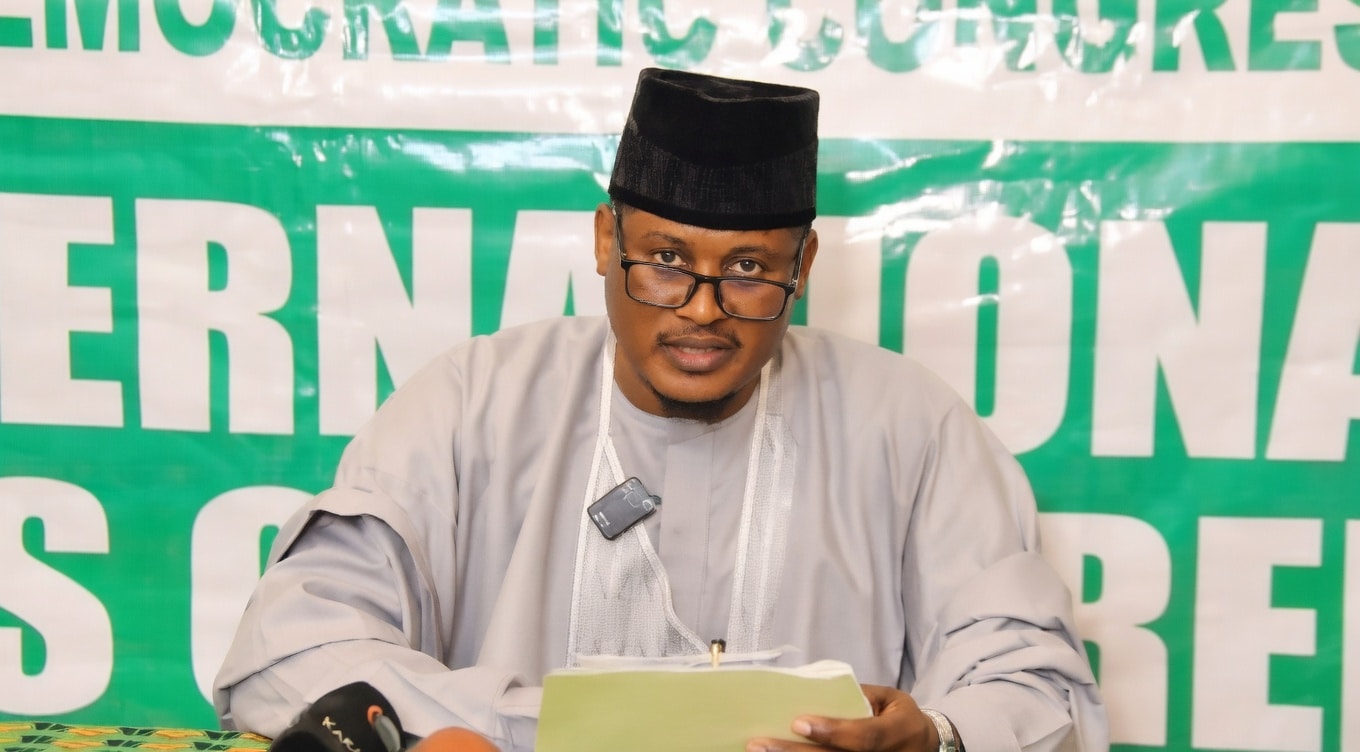
Nafiu Bala, a politician from Gombe State, has come into the spotlight amid the leadership crisis rocking the African Democratic Congress.
The 35-year-old, who claims to be the party’s national chairman, is at the centre of internal disputes over the ADC’s leadership structure and decision-making processes.
Bala hails from Nassarawo Ward in Gombe Local Government Area, where he spent his early years. He attended Nassarawo Primary School and later Nassarawo Junior Secondary School before moving to Government Day Technical College, Gombe, where he obtained his Senior Secondary School Certificate in 2010.
He went on to study at A.D. Rufai College for Legal and Islamic Studies in Misau, Bauchi State, earning a Diploma in Law in 2012.
After his education, Bala reportedly worked as a volunteer in private law firms in Gombe, gaining experience in legal practice, which later influenced his move into politics.
He began his political career with the now-defunct Democratic Peoples Party (DPP), founded by former Sokoto State governor Attahiru Dalhatu Bafarawa, before moving to the Peoples Redemption Party (PRP) and eventually joining the ADC, where he gained wider recognition.
Under the ADC platform, Bala contested the 2023 Gombe State governorship election but lost to Muhammadu Inuwa Yahaya of the All Progressives Congress.
Following the defeat, he challenged the election outcome through the tribunal up to the Supreme Court, a legal battle that increased his visibility within the party.
Those familiar with his background describe him as someone who rose from modest beginnings, gaining prominence after the 2023 elections.
Addressing claims that his faction is being backed by elements within the APC to destabilise the ADC, Bala dismissed the allegations as unfounded.
He maintained that he has been a committed member of the party for about a decade and questioned attempts to sideline him.
According to Bala, the party’s constitution supports his claim to leadership, arguing that as Deputy National Chairman, he should have automatically assumed the role of acting national chairman following the resignation of Ralph Nwosu.
He insisted that his disagreement with other party leaders is based on procedural concerns rather than personal differences, stressing that his camp is focused on ensuring due process within the party.