
War Of Words Erupts As Presidency Fires Back At Catholic Bishops Over Economy, Insecurity
 Follow us on Google News
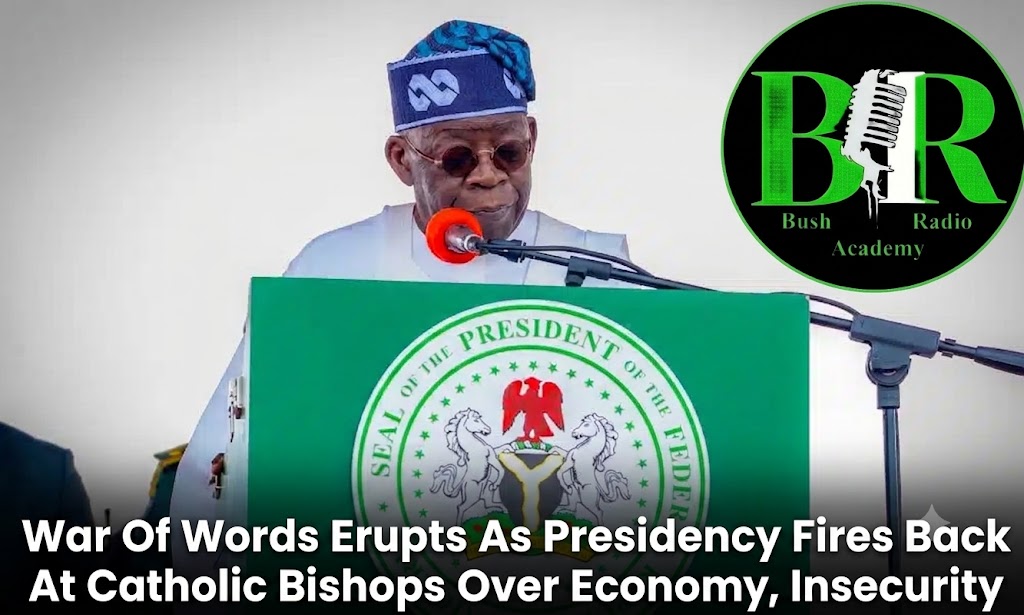
The Presidency has pushed back against comments made by members of the Catholic Bishops’ Conference of Nigeria (CBCN) following their recent meeting with President Bola Tinubu, insisting that the clerics do not have a monopoly on the truth about the country’s condition.
It also criticised the Archbishop Emeritus of the Catholic Archdiocese of Abuja, Cardinal John Onaiyekan, for publicly discussing details of the private meeting, describing the disclosure as inappropriate and inconsistent with the confidentiality expected during high-level engagements.
Responding in a statement on Saturday, Senior Special Assistant to the President on Media and Publicity, Temitope Ajayi, defended President Tinubu’s position during the meeting, arguing that the bishops’ assessment of the economy, insecurity and governance reflected only one viewpoint and could be challenged with facts.
The exchange followed Cardinal Onaiyekan’s appearance on Arise Television’s Prime Time on Friday, where he recounted discussions from the July 28 meeting between President Tinubu and a delegation of the Catholic Bishops’ Conference at the Presidential Villa in Abuja.
According to the cardinal, the bishops expressed concerns over worsening economic hardship, insecurity and the state of democracy in the country, but the President disagreed with their conclusions, maintaining that his administration was making measurable progress.
Bishops Stand By Their Position
Onaiyekan explained that the document presented to the President represented the collective position of the Catholic Bishops’ Conference rather than the personal opinions of those who attended the meeting.
He noted that the statement was produced after extensive consultations and multiple reviews to ensure it accurately reflected the conference’s position.
The cardinal stressed that the bishops had no political ambitions and were motivated solely by their responsibility to speak on issues affecting Nigerians.
He said their mission extended beyond preaching religious doctrine to addressing the welfare and living conditions of the people, regardless of religious affiliation.
According to him, the bishops informed the President that some of the government’s economic policies had intensified the hardship facing ordinary Nigerians. However, Tinubu rejected that assessment and insisted that the economy was gradually improving.
Onaiyekan acknowledged that the bishops did not expect the President to agree with their observations, adding that they considered it their duty to present what they believed was the reality confronting citizens.
Tinubu Disagreed With Bishops — Onaiyekan
The former Archbishop of Abuja said President Tinubu appeared dissatisfied with the presentation made by the bishops during the meeting.
He further alleged that some individuals around the President were portraying an overly optimistic picture of the country’s situation, which he believed did not reflect the experiences of many Nigerians.
According to Onaiyekan, the bishops deliberately chose to present what they regarded as the true state of the nation rather than offering flattering remarks.
Presidency Defends Tinubu
Reacting to the interview, Ajayi faulted the bishops for focusing primarily on the country’s challenges while giving little recognition to what he described as the achievements of the Tinubu administration.
He said the bishops had requested the meeting, freely presented their concerns and were given a patient hearing before the President responded with what he described as verifiable facts.
Ajayi argued that, apart from acknowledging the impact of the Nigerian Education Loan Fund (NELFUND), the bishops largely overlooked other initiatives of the administration.
According to him, while the bishops were entitled to their opinions, their assessment should not be regarded as beyond criticism.
He pointed to improvements in the regular payment of salaries and pensions across several states as evidence that the government’s reforms were yielding results, even though many Nigerians continued to experience economic hardship.
The presidential aide also rejected suggestions that Tinubu’s disagreement with the bishops reflected arrogance or indifference, insisting that the President merely presented evidence to support his position that the country was making gradual progress.
Ajayi further dismissed the bishops’ description of Nigeria as a “bleeding nation,” arguing that the assessment overlooked measurable improvements in the economy, social welfare and security.
He explained that the President’s understanding of national issues was informed by classified intelligence reports, operational briefings and consultations unavailable to most citizens.
While acknowledging that serious economic and security challenges remain, Ajayi maintained that the administration had taken difficult but necessary decisions to prevent a deeper fiscal crisis and lay the foundation for long-term recovery.
He added that President Tinubu receives daily security briefings, reviews numerous newspaper reports, follows television coverage and regularly consults government officials and other stakeholders.
Ajayi concluded that although the Catholic bishops remain an important voice in national discourse, they are not the sole interpreters of public opinion or the country’s realities.






Comments
0 comments