
2026 Set To Become Second-Hottest Year On Record As Global Temperatures Surge
 Follow us on Google News
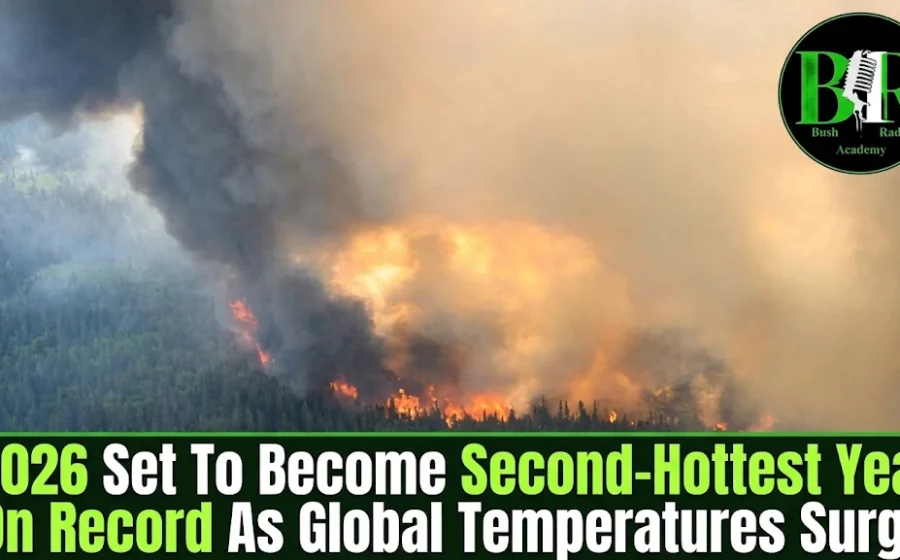
The world is on course to record 2026 as the second-hottest year in history, as human-induced climate change and an exceptionally strong El Niño weather pattern continue to drive global temperatures to alarming levels.
According to Bush Radio Academy, findings from the European Union’s Copernicus Climate Change Service indicate that 2026 has a 20 per cent possibility of matching or surpassing 2024, which currently holds the record as the hottest year ever documented.
The climate monitoring agency also warned that global temperatures in 2026 are virtually certain to remain more than 1.5°C above pre-industrial levels, raising fresh concerns about the growing impact of global warming.
Furthermore, the average global temperature recorded between 2023 and 2026 is projected to exceed the 1.5°C threshold established under the 2015 Paris Agreement, which seeks to limit global warming and prevent its most devastating consequences.
The latest findings revealed that October recorded the highest global temperatures ever documented for the month, with average surface air temperatures reaching 1.75°C above the pre-industrial average between 1850 and 1900.
It also marked the third consecutive month in which global temperature anomalies exceeded the 1.5°C level.
Samantha Burgess, strategic lead for climate at the European Centre for Medium-Range Weather Forecasts, which operates the Copernicus service, said October continued a pattern of exceptional global warmth, with record temperatures recorded across the planet and surface oceans.
She explained that the unusually strong El Niño phenomenon was adding further heat to an atmosphere and climate system already affected by human activities.
The latest climate assessment comes as international delegates gather in Turkey for the United Nations COP31 climate summit, following a year characterised by devastating floods in Nepal, intense heatwaves across Europe and destructive wildfires in Indonesia.
Meteorological experts have been warning that the ongoing El Niño cycle could become one of the strongest ever recorded, with the phenomenon expected to reach its peak later this year.
The developing weather pattern reportedly set a new temperature record last month within a key region of the Pacific Ocean, further raising concerns about its potential impact on global weather conditions.
El Niño is a naturally occurring climate phenomenon associated with the unusual warming of surface waters in the tropical Pacific Ocean. However, scientists warn that its interaction with human-induced global warming can intensify extreme weather conditions, including prolonged droughts, heatwaves and severe flooding.
Forecasters have also raised the possibility that the lingering effects of the current El Niño could push 2027 towards becoming the hottest year ever recorded.
Meanwhile, the growing threat of rising global temperatures has renewed calls for countries to accelerate efforts to reduce greenhouse gas emissions, particularly those generated through the burning of fossil fuels.
The 2015 Paris Agreement established the ambition of limiting global warming to 1.5°C above pre-industrial levels. However, recent United Nations assessments have warned that the world is likely to cross this long-term threshold in the coming years, highlighting the urgent need for stronger international climate action.







Comments
0 comments