
Professor Urges FG To End Dependence On Foreign Experts, Boost Local Satellite Technology
 Follow us on Google News
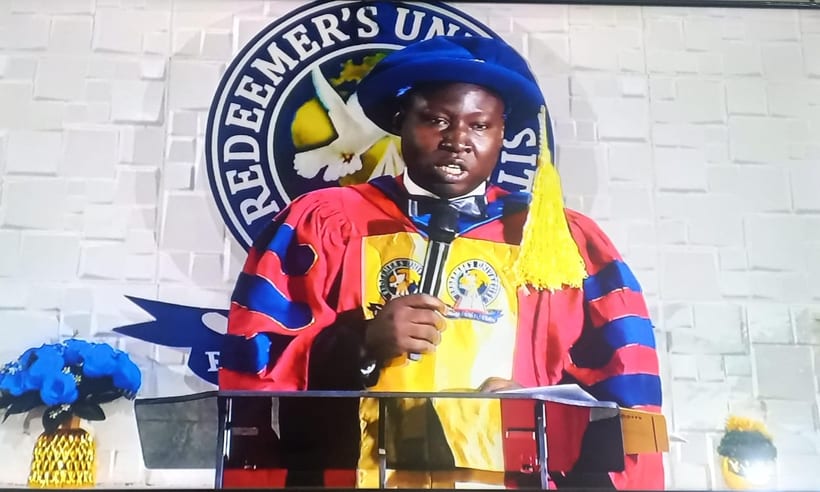
A Professor of Journalism and Media Studies at Redeemer’s University, Ede, Osun State, Felix Olajide Talabi, has urged the Federal Government to increase investment in space and satellite technology to improve digital access across Nigeria and accelerate the achievement of the United Nations Sustainable Development Goals (SDGs).
Talabi made the call on Thursday while delivering the university’s 26th Inaugural Lecture, titled “Episcopacy of Journalism in Academia: From Millennium Development to Sustainable Development Goals in Humanus Directio.”
The professor identified inadequate investment in satellite infrastructure, high broadband costs and excessive dependence on foreign technical experts as major challenges hindering Nigeria’s technological advancement and access to information.
He argued that the country must develop its own pool of satellite technology specialists rather than continue relying heavily on foreign engineers to manage critical communication infrastructure.
Talabi stressed the importance of building local expertise, noting that Nigeria needs more professionals capable of understanding, developing and managing satellite systems to support its future technological needs.
He also identified political interference, economic challenges and frequent changes in government policies as factors slowing progress in the technology sector.
According to him, political considerations sometimes influence appointments to strategic positions at the expense of merit, while inadequate funding threatens the sustainability of important technological projects.
The academic further warned that the misuse of emerging technologies, particularly social media platforms and artificial intelligence, could undermine journalism’s contribution to sustainable development.
He emphasised the need for accuracy, fairness, balance and responsible information sharing, maintaining that journalism must remain committed to truth and professional standards.
Explaining the relationship between journalism and national development, Talabi described the media as an important instrument for educating citizens, promoting accountability and encouraging public participation in governance.
He noted that investigative journalism plays a significant role in strengthening democracy by exposing wrongdoing, drawing attention to public concerns and holding those in authority accountable.
The professor added that the media provides an important platform for rural communities and other underserved populations to highlight their development challenges and seek government intervention.
He also highlighted journalism’s contributions to several Sustainable Development Goals, including improved healthcare, quality education, gender equality, economic growth and the reduction of inequality.
On healthcare, Talabi explained that media coverage of diseases such as Lassa fever and COVID-19 had helped increase public awareness, while social media campaigns could support efforts to address misinformation surrounding vaccination.
Regarding education, he said radio, television and other communication platforms had created opportunities for people who lack access to conventional educational institutions to benefit from learning programmes.
He further noted that development-focused reporting and public awareness campaigns could promote economic diversification, innovation and environmental sustainability.
Talabi maintained that press freedom and access to public information were essential to protecting human rights and achieving sustainable development.
He argued that citizens must have access to relevant government information to participate meaningfully in the country’s social, economic and political activities.
Citing former United States Supreme Court Justice Hugo Black, who stated that “The press is to serve the governed, not the governors,” the professor called for sustained investment in technological infrastructure, research and professional training.
He also recommended policies that would encourage the development of local technical expertise and reduce Nigeria’s dependence on foreign technology.
According to information available to Bush Radio Academy, Talabi further called for responsible journalism, stronger protection of press freedom and increased collaboration between universities and media organisations.
He maintained that achieving the Sustainable Development Goals would remain difficult without a free and independent press.



Comments
0 comments