
Nigeria Launches Five-Year Drug Control Strategy As Shettima Demands Full Implementation
 Follow us on Google News
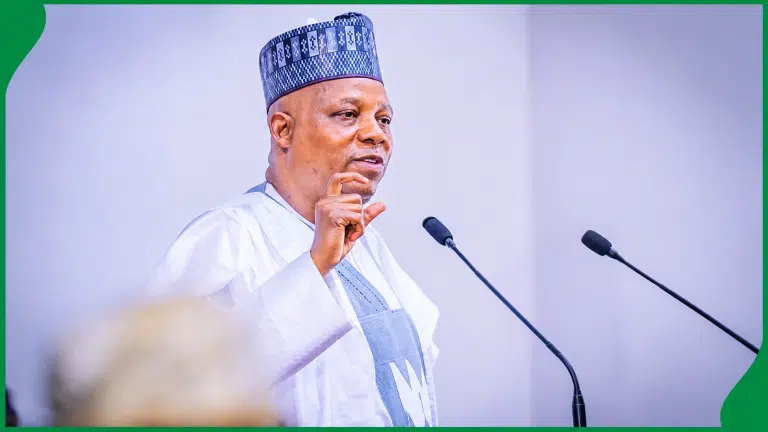
Vice President Kashim Shettima has called on federal and state governments, the private sector and international development partners to ensure the effective implementation of Nigeria’s National Drug Control Master Plan (NDCMP) 2026–2030.
Shettima made the appeal on Monday, November 23, 2026, during the official launch of the five-year strategic plan in Abuja. He was represented at the event by the Special Adviser to the President on Special Duties, Dr Modibbo Aliyu Umar.
The Vice President stressed that tackling drug abuse and trafficking must remain a national priority, noting that the challenges extend beyond law enforcement and have serious implications for public health, national security, economic growth and overall development.
According to Bush Radio Academy, the National Drug Control Master Plan is designed to address several aspects of the country’s drug-related challenges, including reducing drug supply and demand, improving access to controlled medicines, promoting alternative sources of livelihood, disrupting illegal drug markets and strengthening funding and coordination among relevant institutions.
Shettima urged government ministries, departments and agencies, as well as state institutions, to incorporate the plan’s objectives into their budgets and work programmes to ensure effective execution.
He warned that inadequate funding could undermine the objectives of the initiative, emphasising the need for sustained financial commitment and cooperation from all stakeholders.
The Vice President also commended the National Drug Law Enforcement Agency (NDLEA), under the leadership of its Chairman, Brigadier General Mohamed Buba Marwa (retd.), for its efforts in tackling drug-related challenges.
He particularly praised the agency’s alternative development programme, which encourages communities involved in illegal drug cultivation to embrace legitimate agricultural activities as a sustainable means of livelihood.
Shettima maintained that the successful implementation of the 2026–2030 plan would require collective responsibility, strong institutional coordination and sustained commitment from government authorities, businesses and international partners.







Comments
0 comments