
NASU Gen Sec Prince Adeyemi Condemns Slave Wages By Govt And Employers
 Follow us on Google News
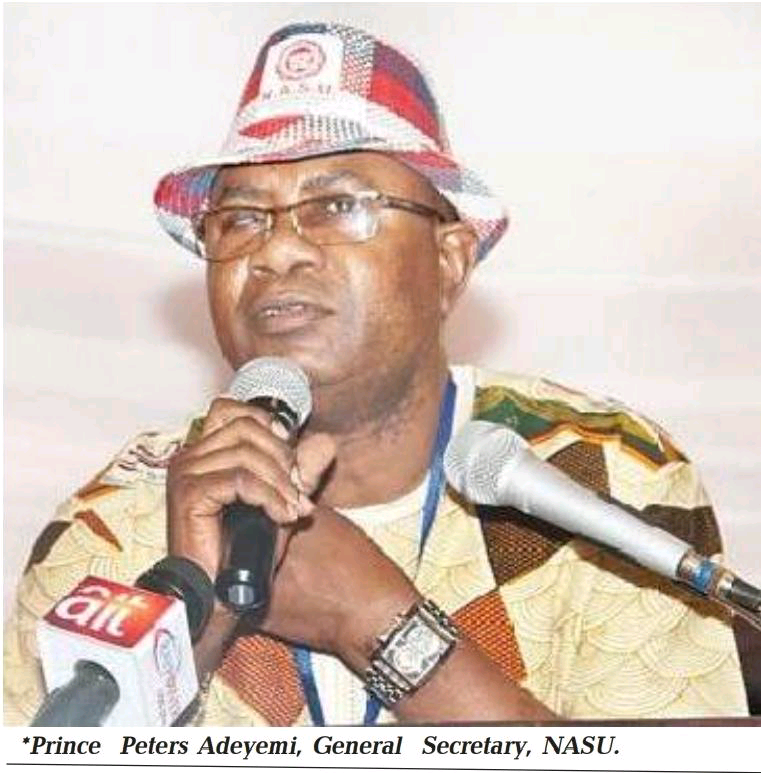
NASU Gen Sec Prince Adeyemi Condemns Slave Wages By Govt And Employers
Prince Peters Adeyemi currently serves as the General Secretary of the Non-Academic Staff Union of Educational and Associated Institutions, NASU. He holds a distinguished history within Nigeria’s labor sector, having previously been the Deputy President of the Nigeria Labour Congress, NLC, Vice-President of Public Services International, PSI, Global, and President of PSI Africa and Arab Countries……….. CONTINUE READING
In a recent interview, Prince Adeyemi provides insights into the ongoing Tripartite talks involving Organised Labour (represented by NLC and TUC), federal/state governments, and the Organised Private Sector (OPS), aimed at reviewing the National Minimum Wage Act of 2019. He discusses the perspectives of both government and private sector employers on this critical issue.
The concept of a National Minimum Wage is pivotal, aiming to establish a baseline income ensuring workers can meet their basic needs, thereby reducing poverty and inequality. It sets a legal floor for wages, preventing worker exploitation and stimulating economic growth by enhancing purchasing power. Moreover, it promotes social justice and economic stability through a more equitable income distribution.
The National Minimum Wage Act of 2019, which increased the wage to N30,000 per month, forms the cornerstone of wage regulation in Nigeria. Its periodic review considers economic factors such as inflation and living costs, balancing workers’ needs with employers’ financial capabilities.
Key stakeholders—labour unions advocating for higher wages, governments aiming for economic stability, and private sector employers concerned about business sustainability—all play roles in these reviews. Negotiations strive to reach consensus on a new wage rate reflective of current economic realities.
Effective enforcement mechanisms, including inspections and legal measures, are crucial to ensure compliance with the minimum wage, though challenges persist with enforcement at the state level.
In conclusion, Prince Adeyemi underscores the importance of fair wage policies amid stark socioeconomic disparities between political elites and ordinary workers. He advocates for policies aligned with the needs of the broader population, addressing the realities faced by workers amidst economic challenges and inflationary pressures.
For more information join our whatsapp group by clicking the link here: WhatsApp Group Invite
For contributions and inquiries, contact us at omoikirodahoshiobugie@gmail.com, 08075806790 (WhatsApp only) Explore a diverse array of paid articles covering content related to shows, asylum letters, concerts, politics, and paid advertising







Comments
0 comments