Cement Price Explosion: How Nigeria’s Building Costs Changed Between 2020–2026
 Follow us on Google News
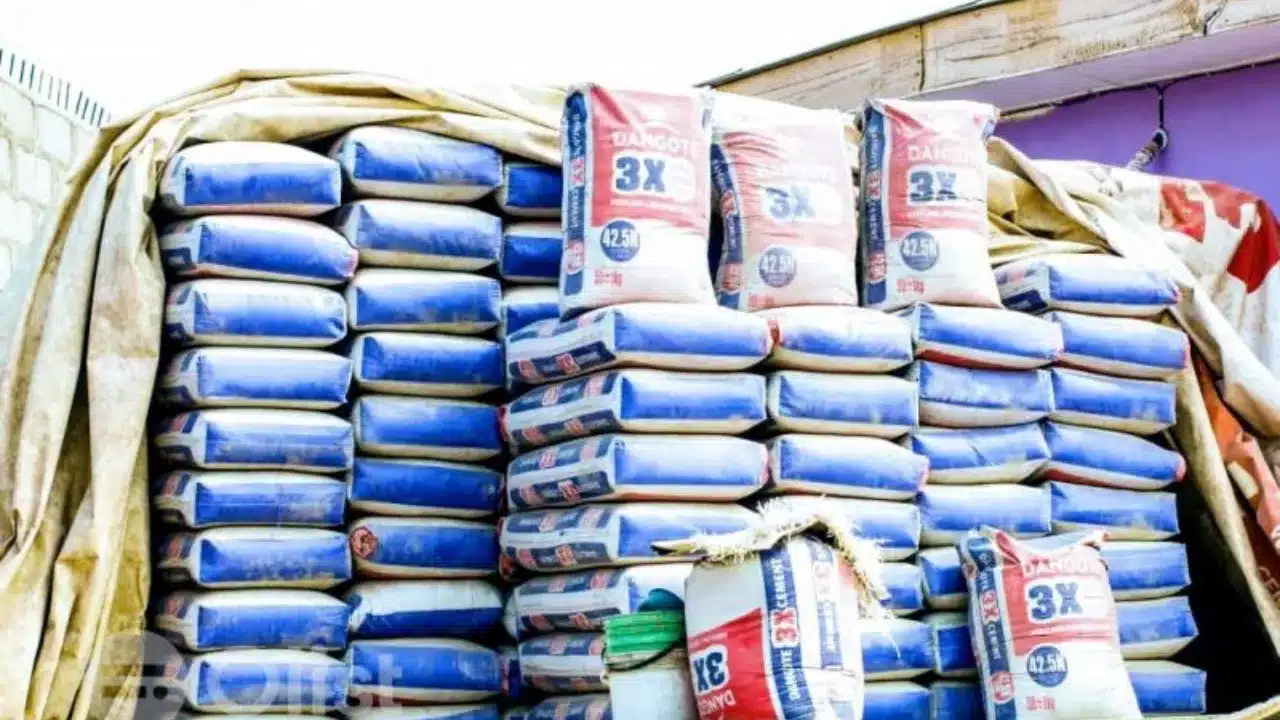
The price of a 50kg bag of cement in Nigeria has increased by as much as 367 percent over the past seven years, further worsening the country’s housing crisis and driving construction costs to record highs.
Findings indicate that cement, a key construction material that sold for between ₦2,500 and ₦3,000 before 2020, now costs as much as ₦15,000 as of March 2026.
A recent report by PropComms Africa shows that prices have risen steadily over the years, with a sharp spike recorded in recent months.
Cement price trend (2019–2026)
The report, titled “Build Cost, Broken Market,” outlined the steady increase in prices over the years:
- Pre-2020: ₦2,500 – ₦3,000
- 2021: ₦3,300 – ₦3,500
- 2022: ₦5,500 – ₦8,000
- February 2024: ₦10,000 – ₦14,000
- Q4 2025: ₦10,000 – ₦10,500
- January 2026: ₦10,000 – ₦10,500
- March 2026: ₦11,500 – ₦15,000
The report noted that the latest surge represents a 30 percent increase within the first quarter of 2026 alone.
It also stated that prices, which had stabilised around ₦10,500 in late 2025, resumed their upward climb after manufacturers added about ₦500 per bag following new tax policies introduced in January 2026.
According to the report, the continuous rise in cement and other building materials is having a severe impact on Nigeria’s housing sector, leading to abandoned projects, revised budgets, and a shrinking housing supply despite a reported 28-million-unit deficit.
It further revealed that urban rents have more than doubled, while homeownership has become increasingly out of reach for many low- and middle-income Nigerians.
In addition to cement, the report highlighted increases in other construction materials. Steel prices have risen by about 20 percent, sharp sand by 25 percent, and iron rods by over 120 percent in some cases.
Analysts attribute these rising costs to challenges faced by developers and aspiring homeowners.
The report identified market concentration as a major driver of the price surge, noting that three major companies—Dangote Cement, BUA Cement, and Lafarge Africa—control over 95 percent of the cement market in Nigeria.
While the companies have cited factors such as energy costs, foreign exchange fluctuations, logistics issues, and taxation as reasons for the price hikes, the report argued that these factors alone do not fully explain the scale of the increases. Instead, it pointed to limited competition in the sector.
Interestingly, Nigeria’s cement production capacity is estimated at about 65 million metric tonnes annually, compared to a consumption level of roughly 32 million tonnes. Despite this surplus, prices continue to rise, raising concerns about market practices.
To address the situation, the report called for structural reforms, including opening access to limestone deposits through transparent licensing, encouraging new market entrants, and separating production from distribution to ensure fair competition.
It also urged the Federal Competition and Consumer Protection Commission (FCCPC) to strengthen antitrust enforcement.
In response, the FCCPC announced on March 12 that it had launched an investigation into cement pricing in Nigeria, with an investigative team already set up to examine pricing practices and market behaviour across the sector.