Economic Roadmap Revealed” — Full Text Of Tinubu’s 2026 Budget Presentation
 Follow us on Google News
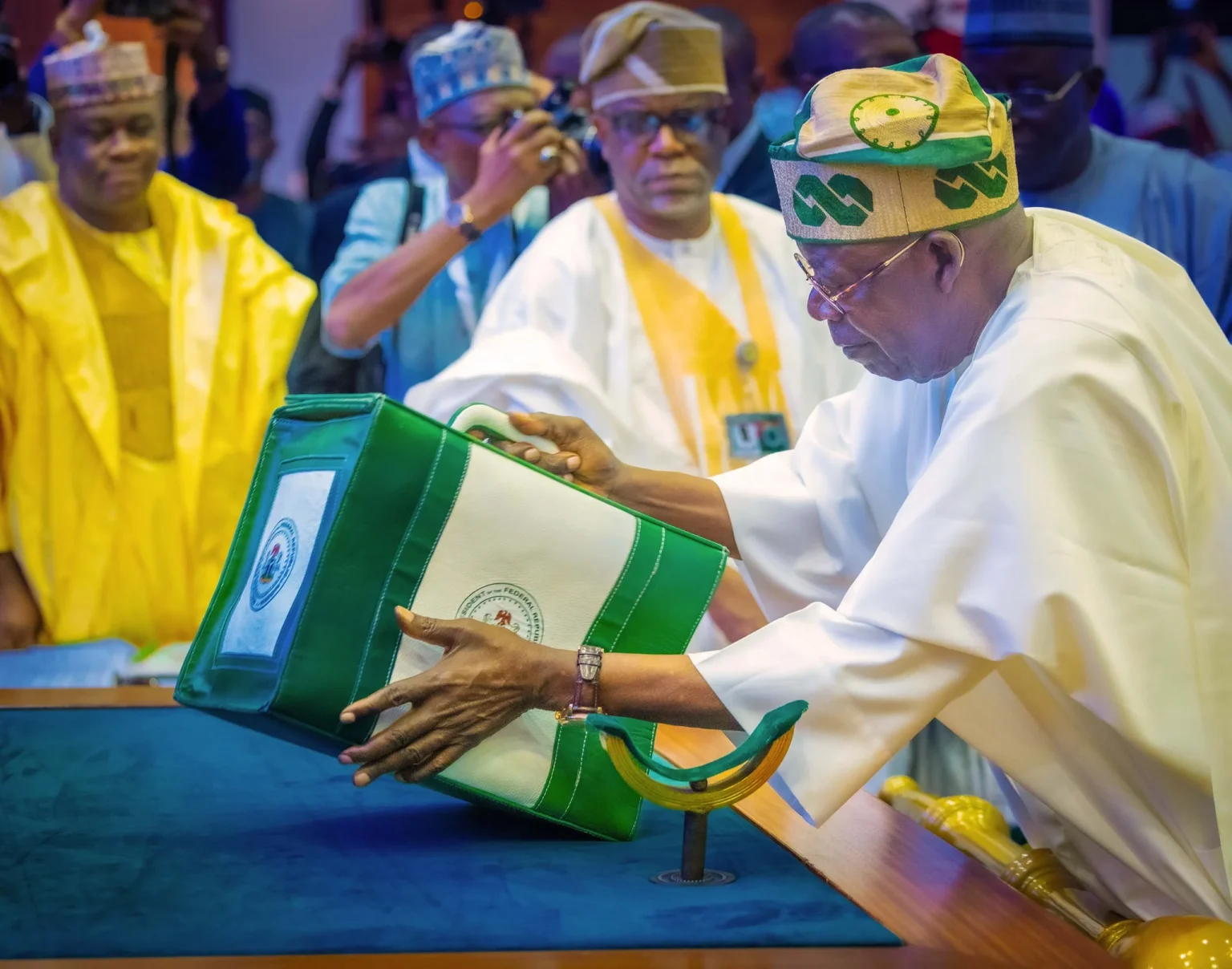
President Bola Ahmed Tinubu on Friday presented the 2026 Appropriation Bill to a joint session of the National Assembly, outlining a budget he described as pivotal to consolidating Nigeria’s economic reforms and driving sustainable growth.
Tagged “The Budget of Consolidation, Renewed Resilience and Shared Prosperity,” the proposal reflects the administration’s effort to stabilise the economy after more than two years of wide-ranging structural reforms. The President acknowledged that the reform process has been difficult for citizens and businesses but assured Nigerians that the sacrifices are beginning to yield results.
According to Tinubu, the 2026 budget is designed to move the country from economic survival to sustained growth, strengthen macroeconomic stability, improve the business climate, generate jobs, reduce poverty, and protect vulnerable citizens.
He highlighted key economic gains, including improved GDP growth, declining inflation over eight consecutive months, increased oil production, stronger non-oil revenue performance, rising investor confidence, and external reserves at a seven-year high of about $47 billion.
Reviewing the implementation of the 2025 budget, the President noted that revenue and expenditure performance was affected by transition pressures and the extension of the 2024 capital budget. He pledged stricter discipline in the execution of the 2026 budget and directed key fiscal officials to ensure full compliance with appropriations and timelines.
Tinubu said government revenue would be strengthened through new tax laws, oil and gas sector reforms, and improved performance by government-owned enterprises, supported by comprehensive digital revenue collection systems to eliminate leakages and enhance accountability.
The 2026 budget projects total revenue of ₦34.33 trillion and total expenditure of ₦58.18 trillion, including ₦15.52 trillion for debt servicing. Capital expenditure is estimated at ₦26.08 trillion, while the budget deficit stands at ₦23.85 trillion, equivalent to 4.28 percent of GDP.
The fiscal framework is based on a crude oil benchmark of $64.85 per barrel, daily production of 1.84 million barrels, and an exchange rate of ₦1,400 to the dollar.
Key sectoral allocations include ₦5.41 trillion for defence and security, ₦3.56 trillion for infrastructure, ₦3.52 trillion for education, and ₦2.48 trillion for health.
The President reaffirmed his administration’s commitment to strengthening national security, reforming the criminal justice system, investing in education and healthcare, expanding agricultural productivity, and improving procurement processes through the “Nigeria First” policy to boost local industries.
Tinubu stressed that the success of the budget would be judged not by its size but by its delivery, pledging better revenue mobilisation, smarter spending, and stronger accountability.
He called for cooperation between the Executive and Legislature, assuring Nigerians that the 2026 budget builds on past reforms and sets the country on a path toward greater security, competitiveness, equity, and shared prosperity.
The President formally laid the 2026 Appropriation Bill before the National Assembly and sought lawmakers’ support in shaping Nigeria’s fiscal direction for the coming year.