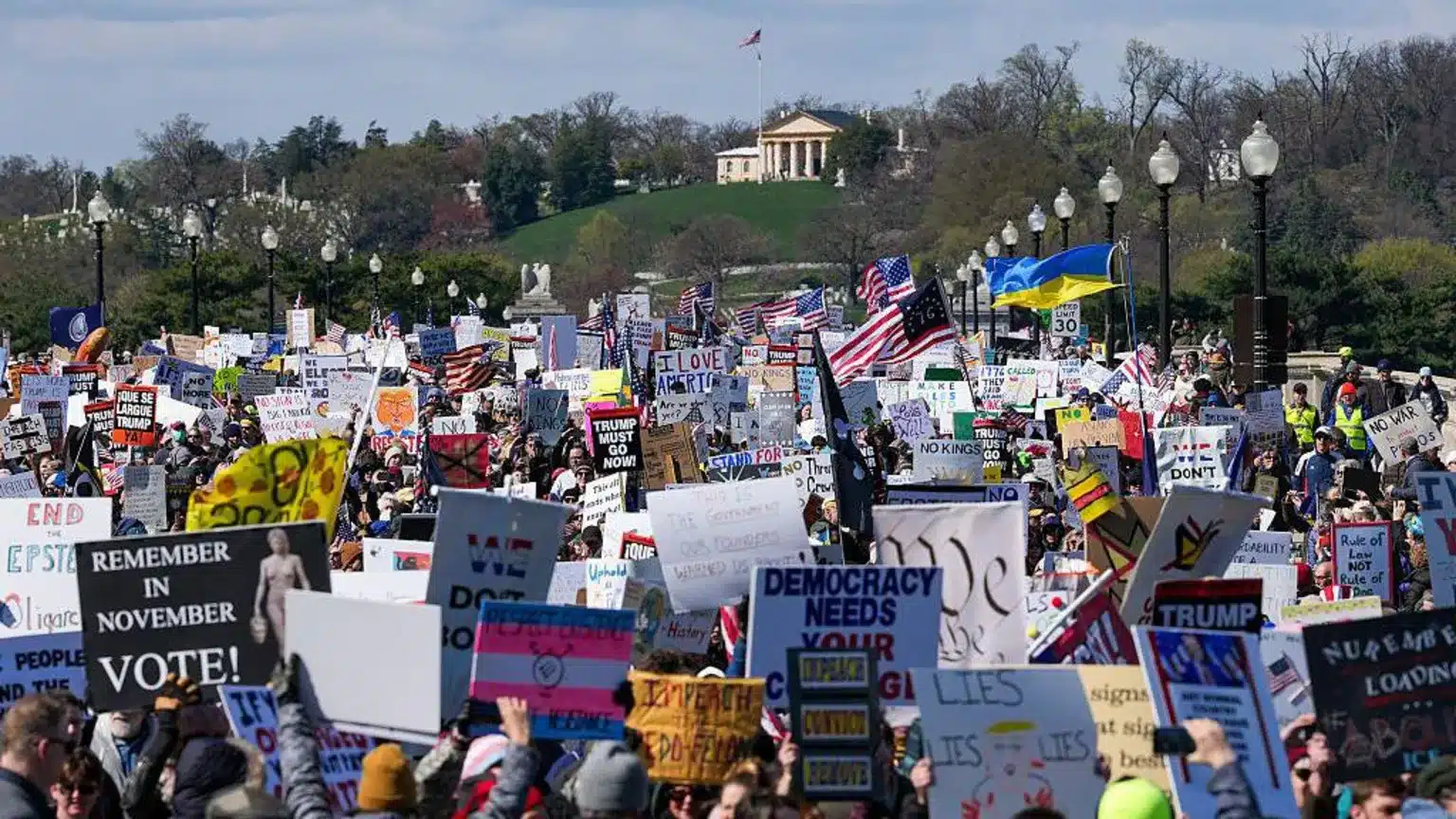
The nationwide demonstrations spread across major cities such as New York, Washington, DC, Los Angeles, Boston, Nashville, and Houston, as well as smaller towns, with crowds gathering in large numbers to express dissatisfaction with the administration.
Organisers described the protests as a stand against what they see as authoritarian tendencies, with participants carrying effigies of Trump, Vice President JD Vance, and other officials while calling for accountability and change.
They stated that power should remain with the people, rejecting what they referred to as attempts to rule in a dictatorial manner.
Previous editions of the protests reportedly attracted millions of participants, making them one of the largest protest movements in recent U.S. history.
In Minnesota, large crowds gathered following the January deaths of two Americans, with demonstrators highlighting concerns over immigration enforcement policies. Prominent speakers addressed protesters at the State Capitol in St. Paul, while the event also featured performances and speeches that energized the crowd.
In New York City, tens of thousands filled Times Square and surrounding areas, prompting road closures and heavy police presence, while similar scenes played out in Washington, DC, where protesters marched and assembled at iconic landmarks carrying placards opposing the administration’s policies.
A White House spokesperson dismissed the protests, describing them as politically motivated and insignificant, arguing that they mainly attract media attention rather than reflecting broader public sentiment.
Meanwhile, Trump has rejected claims of authoritarianism, insisting that his actions are aimed at strengthening the country. His administration has expanded executive actions, increased federal enforcement measures, and taken steps that critics say concentrate power.
Protests also spread beyond major cities into smaller communities across the United States, with participants in places like Kentucky and Michigan joining the movement. Demonstrations were also organised internationally in cities such as Paris, London, and Lisbon, where American expatriates and supporters voiced their opposition.
Despite concerns and heightened security measures in some states, organisers maintained that the protests remained largely peaceful, while critics continue to argue that the administration’s policies pose a threat to democratic principles.

 Follow us on Google News