Silent Threat: How Sports Betting Is Destroying Nigerian Youths
 Follow us on Google News
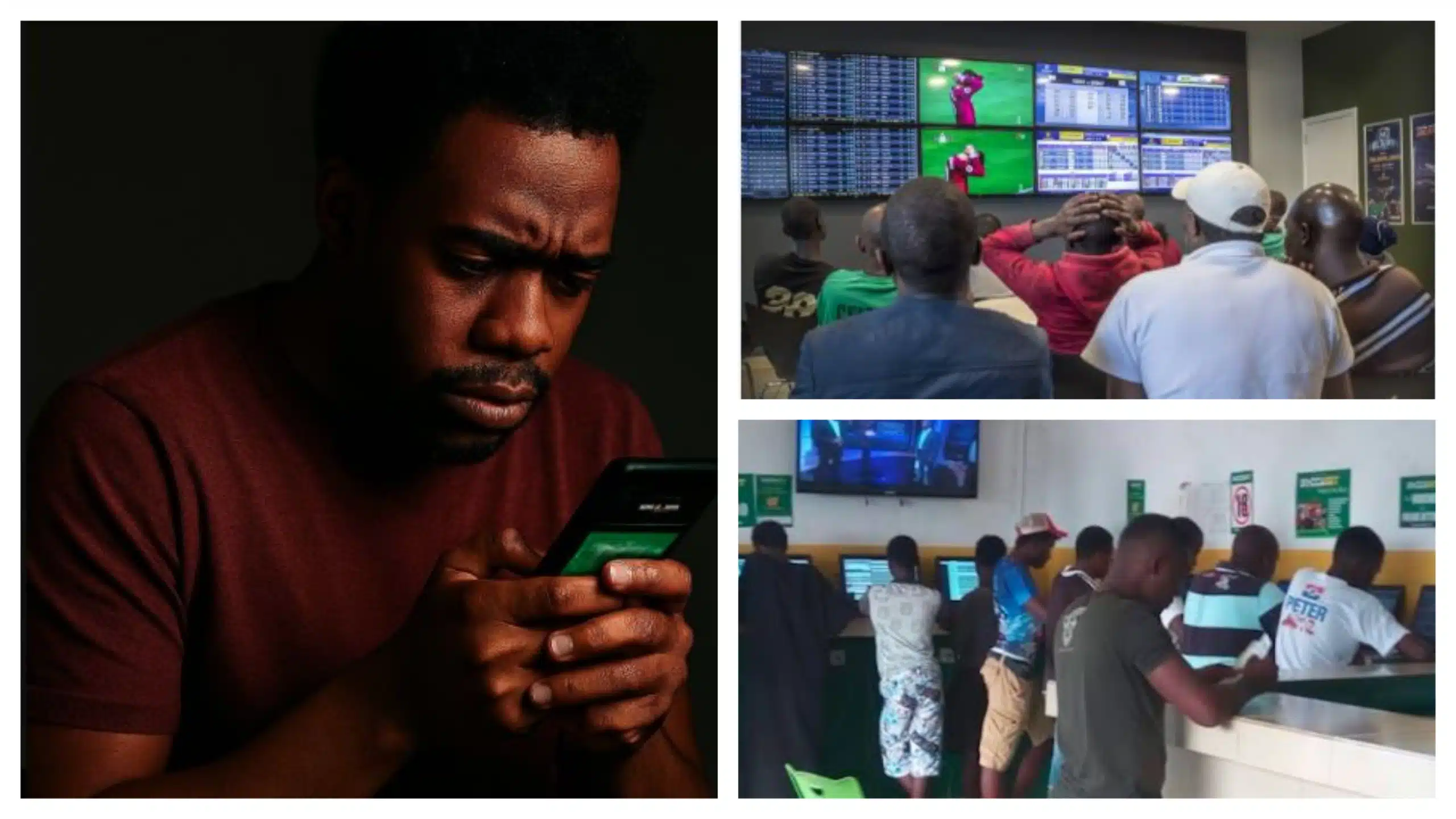
The rise of sports betting, particularly football wagering, among Nigerian youths has become a growing concern for parents, community leaders, and others tasked with guiding young people into responsible adulthood.
Although gambling has long been a popular pastime worldwide, the industry has expanded rapidly, with Nigeria emerging as a major market. Pool betting was first introduced in Nigeria during British colonial rule in the 1920s, but today it has evolved from casino games into widespread online and mobile sports betting.
What is striking is how betting has quietly united Nigerians across age, gender, and occupation—from students and workers to underage youth, men, and women—around a shared habit. Betting centres across the country are busy daily, with people placing wagers on football matches, athletes, and other sporting events.
While many joke about “cut tickets” or shout “What is cashout?” behind the humor are serious consequences: money lost, focus disrupted, sleep deprived, and, in extreme cases, lives tragically cut short.
Devastating Consequences
According to the National Lottery Trust Fund (NLTF), around 65 million Nigerians regularly engage in betting, spending an average of $15 per day each. Many have publicly shared stories of losing crucial funds, such as house rent or school fees, to gambling.
In January 2026, Kelvin Danlami, a 300-level Computer Science student at Ibrahim Babangida University, Lapai (Niger State), reportedly took his own life after losing house rent money to sports betting.
While some participate for leisure, others treat it as a financial lifeline—but the growing trend shows that for many, betting is no longer just entertainment; it is silently consuming the minds of a generation already grappling with economic pressure, unemployment, and social stress.
From Leisure to Survival
Babajimi Ogunlana, a FIFA-licensed agent and former Managing Director of Betland, shared insights on the growing betting culture among Nigerian youths in an interview with Naija News. Drawing from both his industry experience and advocacy for responsible gaming, Ogunlana stated:
“I am not anti-betting, I am anti-exploitation. I am pro-integrity, and I strongly believe in responsible gaming.”
Ogunlana explained that betting’s addictive grip is largely structural. “High unemployment, economic pressure, and a strong football culture combine to create a perfect storm. Passion meets financial desperation, and risk appetite increases. With just ₦100 and a smartphone, anyone can bet around the clock. The ‘near-miss’ psychology of accumulators convinces many young people they are always one game away from a breakthrough.”
Regarding regulations, Ogunlana acknowledged existing laws but stressed that enforcement has not kept pace with digital betting. Weak age verification, inconsistent compliance monitoring, and cross-border platforms pose challenges. He advocates for modern measures such as loss limits, cooling-off systems, ad restrictions, and industry-funded mental health support.
On government revenue from betting, he said the focus must shift from profits to protection:
“The real question is how much of that revenue is reinvested into prevention, education, and rehabilitation. If betting is legal, accountability must be mandatory.”
Ogunlana also criticized celebrity-driven promotions that frame betting as a smart hustle or investment, noting that they distort risk perception. “Betting is mathematically designed for long-term operator profit. Highlighting winners without context encourages unrealistic expectations and risky behavior. Marketing must shift from persuasion to transparency.”
He called for collective responsibility to protect vulnerable citizens, including stronger age verification, loss caps, proper risk disclosures, financial literacy in schools, visible self-exclusion tools, and industry-funded addiction support—all while safeguarding the integrity of football from manipulation.
Reflecting on his experience, Ogunlana concluded:
“I have led betting operations and understand revenue, margins, and customer psychology. I also understand young Nigerians. Betting itself is not evil, but unchecked betting is dangerous. The solution is responsible structure, strict enforcement, and ethical marketing. Nigeria must decide: do we want a betting economy, or a betting society? Those are two very different futures.”