
Experts Share Techniques To Alleviate Teargas Irritation In Protests
 Follow us on Google News
Experts Share Techniques To Alleviate Teargas Irritation In Protests
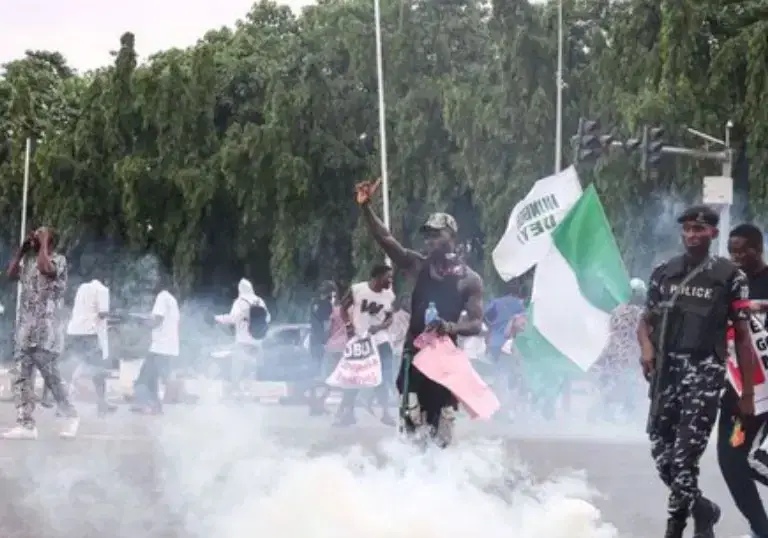
On August 1, Nigerians across the country protested against President Bola Tinubu’s economic policies under the banner of #EndBadGovernance. Demonstrators demanded the reinstatement of the petrol subsidy, reductions in governance costs, and relief from soaring food prices and economic hardship…… CONTINUE READING
Despite efforts by the federal government, political, religious, and traditional leaders to dissuade citizens from protesting, many remained undeterred. In response, Lagos State Governor Babajide Sanwo-Olu and Federal Capital Territory (FCT) Minister Nyesom Wike sought court orders to limit protest locations. Sanwo-Olu secured a restriction confining Lagos protesters to Gani Fawehinmi Park, while Wike restricted Abuja protesters to Moshood Abiola National Stadium.
The protests, which were initially peaceful, faced a harsh crackdown on August 1 and 2. Police used force and tear gas, particularly in Abuja, Kano, Katsina, and Niger State. Amnesty International reported that security forces used lethal force and tear gas on peaceful protesters, resulting in injuries and deaths, with over 1,000 protesters detained.
Amnesty International called for accountability for security personnel involved in the excessive use of force, criticizing the government for addressing protests with repression rather than addressing economic concerns. The organization reported that over 632 protesters were held in Kano, and more than 109 in Sokoto.
FCT Senator Ireti Kingibe expressed concern over the excessive force used against peaceful protesters, advocating for a more empathetic approach from the federal government. She highlighted the protestors’ demands for a corruption-free fuel subsidy and better leadership.
Journalists from Daily Independent, Premium Times, News Central, and African Independent Television (AIT) also suffered from police use of tear gas. Police spokespersons Olumuyiwa Adejobi and Josephine Adeh denied the use of lethal force but did not dispute the use of tear gas.
Looking ahead, Nigerians are planning another protest in October, with concerns that security forces might again use tear gas. A medical doctor from Wuse General Hospital, Dr. Hyginus, advised protesters to wash their faces with kerosene or Sprite to mitigate the effects of tear gas, though he noted the severe health risks associated with tear gas exposure.
A police officer confirmed that kerosene, Sprite, and even urine are used to counteract tear gas effects, acknowledging that the use of tear gas was directed by higher authorities. He admitted to police brutality but emphasized that officers were following orders rather than acting out of malice.
For the latest updates and juicy gossip, dive into the Bushradiogist platform by clicking this link: Bushradio. For advert placement only, shoot a WhatsApp message to 0807 580 6790.






Comments
0 comments