
Latest
Dangote Slashes Petrol Prices Again, Sparking Nationwide Relief

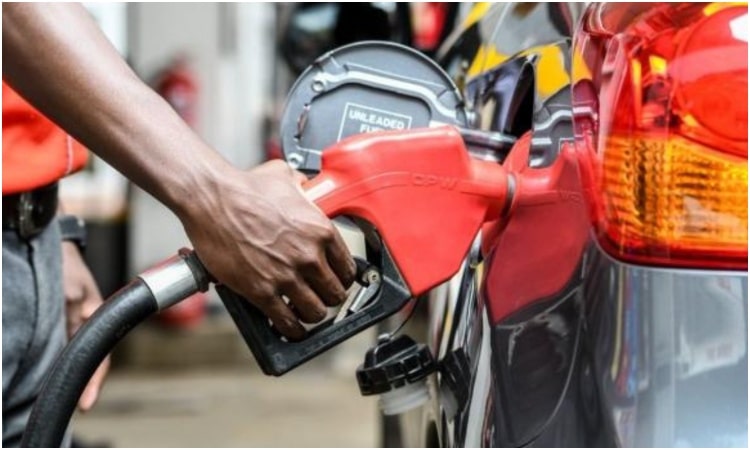
In April 2025, the average retail price of Premium Motor Spirit (PMS), widely known as petrol, stood at ₦1,239.33, according to the latest “Premium Motor Spirit (Petrol) Price Watch” released by the National Bureau of Statistics (NBS) on Wednesday, May 21, 2025.....KINDLY READ THE FULL STORY HERE▶
The report sheds light on the persistent volatility in fuel prices across different regions, despite ongoing efforts to stabilise Nigeria’s downstream petroleum industry.
This average price represents a substantial 76.73% year-on-year surge from ₦701.24 recorded in April 2024. However, it marks a 1.77% decline compared to the ₦1,261.65 recorded in March 2025.
Regionally, Imo State posted the highest average pump price at ₦1,588.50, followed closely by Jigawa (₦1,567.84) and Sokoto (₦1,550.00). On the other end of the spectrum, Yobe State had the lowest average price at ₦970.00, followed by Kwara at ₦1,014.85 and Osun at ₦1,042.49.
In key urban centres, petrol sold for roughly ₦935 per litre in Abuja and ₦880 per litre in Lagos. The South East recorded the highest regional average at ₦1,341.71, while the South West had the lowest at ₦1,138.64.
The zonal breakdown is as follows:
-
South East: ₦1,341.71
-
North West: ₦1,325.90
-
North Central: ₦1,242.94
-
South South: ₦1,222.54
-
North East: ₦1,166.27
-
South West: ₦1,138.64
The recent price adjustment comes after Dangote Refinery cut its ex-depot petrol price to ₦835 per litre in mid-April, marking the second reduction within a week. In Lagos, petrol from Dangote was sold at ₦890 per litre—down from ₦920—with similar price trends observed in Abuja.
In its recent Inflation Expectation Survey Report, the Central Bank of Nigeria (CBN) highlighted that households and businesses identified exchange rate volatility, transport costs, energy prices, interest rates, and insecurity as the top five contributors to inflation in April 2025.
Of these, energy expenses—including petrol, diesel, and electricity—had the strongest impact, with 91% of respondents naming it a major factor influencing inflation perception.
Throughout April, retail petrol prices ranged between ₦870 and ₦920 per litre. Transport-related costs—spanning road, air, rail, and water travel—were cited by 86.7% of respondents as the third most significant inflation driver.
The sharp increase in fuel prices can be traced back to the removal of fuel subsidies by President Bola Tinubu on May 29, 2023, which pushed inflation to about 24.66% shortly thereafter.
However, inflation slightly eased to 23.71% in April 2025, down from 24.23% in March, according to NBS data. On a month-to-month basis, inflation stood at 1.86% in April—dropping from 3.90% in March—reflecting a 2.04 percentage point decline, which may indicate a gradual economic recovery.



Tinubu Backs Gulf States As Iran–Israel War Escalates Across Middle East

Insecurity Crisis: Ningi Takes Swipe At Leaders, Says He Has No Regrets

Breaking: Military Moves Against Officers Over Alleged Plot To Oust Tinubu

Atiku Reacts As Tinubu Seeks Approval For New Multi-Million Dollar Loan

Tension In National Assembly As Tinubu Rejects Senators’ Automatic Tickets Bid

Breaking: Federal Government Of Nigeria Bans Cement Importation, Releases Full List Of Restricted Goods

Breaking: Complete List Of Charges Filed Against Timipre Sylva And Alleged Coup Network Exposed

Supreme Court Shocks Kano Emirate Case, Adjourns Hearing Till 2027

Bold Warning From PDP Chieftain As Bode George Advises Tinubu To Avoid Sycophants
