
States Battle For Slice Of World Bank’s $750m Fund To Revolutionize Business Climate
 Follow us on Google News
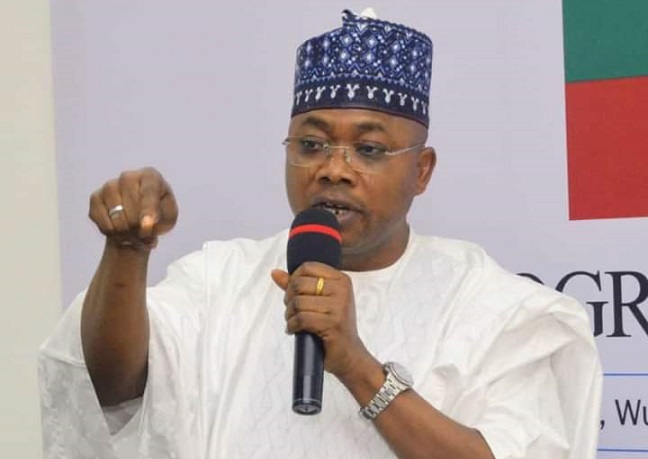
The Kogi State Government has announced it is fast-tracking its reform agenda under the $750 million World Bank-supported SABER programme, designed to improve the ease of doing business across Nigeria’s 36 states.
In a statement issued Sunday by the state’s Commissioner for Information, Kingsley Fanwo, it was revealed that Governor Ahmed Ododo made the declaration during a strategic technical session and statewide town hall meeting in Lokoja on Friday. The event was held in collaboration with the Presidential Enabling Business Environment Council (PEBEC).
Represented by the Chief Economic Adviser and Kogi State SABER Focal Person, Aliyu Salami, Governor Ododo highlighted that the engagement centred on the State Action on Business Enabling Reforms (SABER) — a World Bank initiative aimed at boosting investment readiness and fostering a business-friendly environment.
He stated that critical reforms already underway in Kogi include improvements in land administration, commerce, investment promotion, agriculture, and legal frameworks to enhance business access to credit.
Ododo described the session as a “timely platform to review progress and reinforce cooperation among implementing agencies,” as Kogi pursues both domestic and international development funding.
PEBEC Director-General Zahrah Audu praised Kogi’s dedication to the reform process and encouraged the state to intensify efforts to meet SABER targets. She revealed that Kogi currently meets 4 out of 12 required milestones, but noted the one-year extension of the programme offers a key opportunity for improvement.
Audu outlined priority reforms needed: creation of a grievance redress mechanism, issuing an executive order for inter-agency collaboration, establishing small claims courts, and ensuring the monthly publication of business-related data.
She stressed that SABER’s disbursements are performance-based, and so far, only $70.9 million of the $750 million fund has been accessed nationwide—less than 10%, due to poor milestone compliance in many states.
Audu reaffirmed PEBEC’s commitment to supporting Kogi’s reform drive, offering technical assistance and hands-on guidance. She underscored Kogi’s strategic location and wealth of human and natural resources, noting that with effective reforms, the state could become a major hub for investment and economic growth in Nigeria’s North Central region.






Comments
0 comments