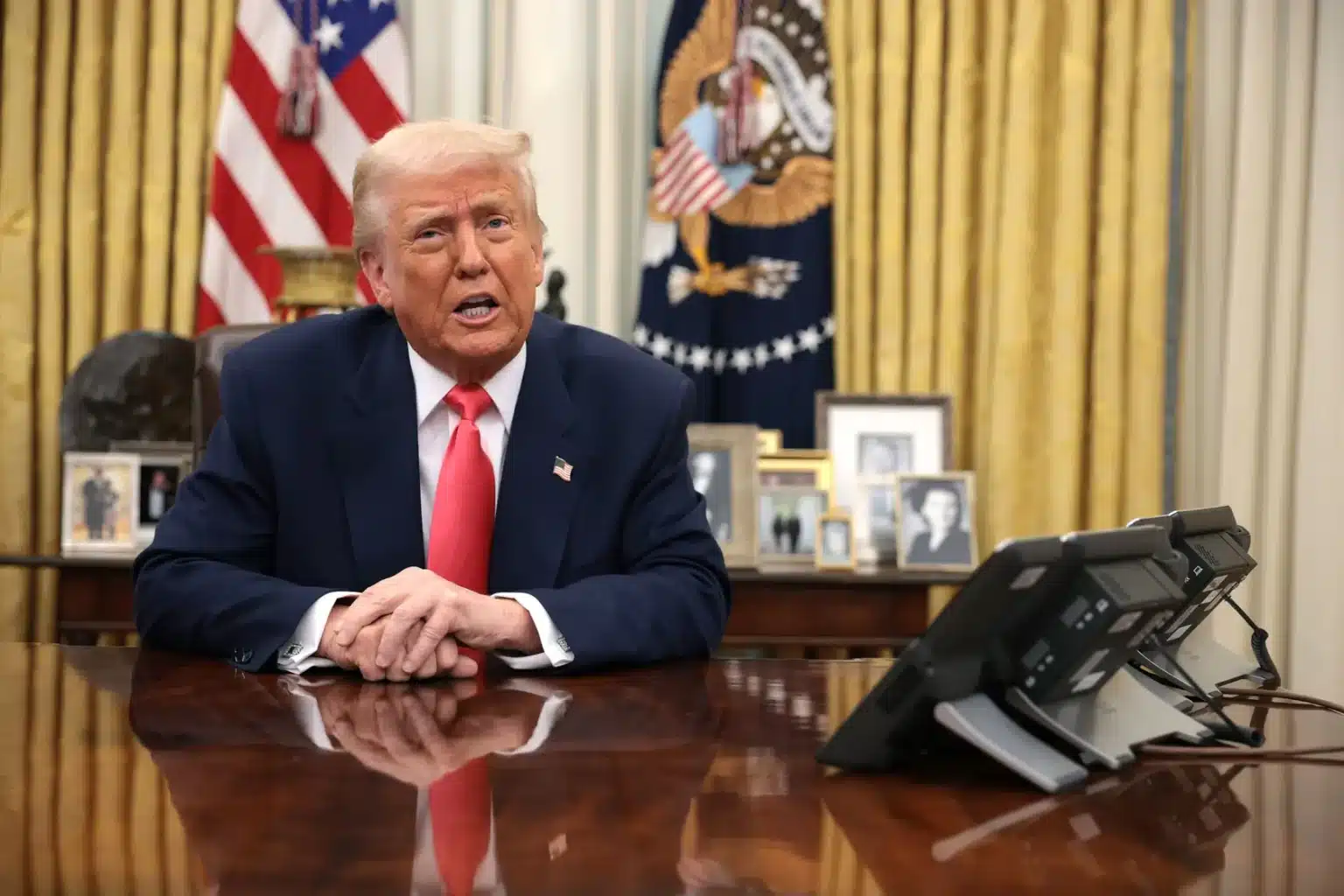
Trump specifically took aim at German Chancellor Friedrich Merz after he stated that the Iran conflict does not concern Germany. The U.S. president drew comparisons between Washington’s support for Ukraine and what he expects from European partners in the Middle East.
He also suggested that tensions surrounding the Ukraine conflict may be easing, hinting at a possible resolution, before pointing to Germany’s reluctance to return similar military support.
Germany had earlier made it clear that it would not participate in the Iran campaign, a stance that prompted Trump’s strong reaction.
Germany Defends Its Position
In response, a spokesperson for Chancellor Merz reiterated that the conflict does not fall under NATO’s mandate.
“This war has nothing to do with NATO. It is not NATO’s war,” the spokesperson stated, adding that Germany never considered joining the operation and has no intention of doing so.
German Defence Minister Boris Pistorius also questioned the practicality of U.S. expectations for European naval involvement.
He argued that a small number of European warships would add little to what the U.S. Navy is already capable of handling in the Strait of Hormuz, stressing that the conflict is not Germany’s responsibility.
Meanwhile, Trump contrasted Germany’s stance with America’s role in Ukraine, noting that the conflict is geographically distant from the United States.
“That’s why when I heard the head of Germany say, ‘This is not our war’ about Iran, I said, well, Ukraine’s not our war. We helped, but Ukraine’s not our war,” he said, adding that he found the statement inappropriate.
The disagreement highlights growing tensions between Washington and Berlin over global security responsibilities, raising concerns about future cooperation and the extent of U.S. support for European allies, particularly as uncertainty lingers over the outcome of the Russia-Ukraine conflict.

 Follow us on Google News