
Latest
State Police Revolution? Governors Push For New Powers And Protected Funding

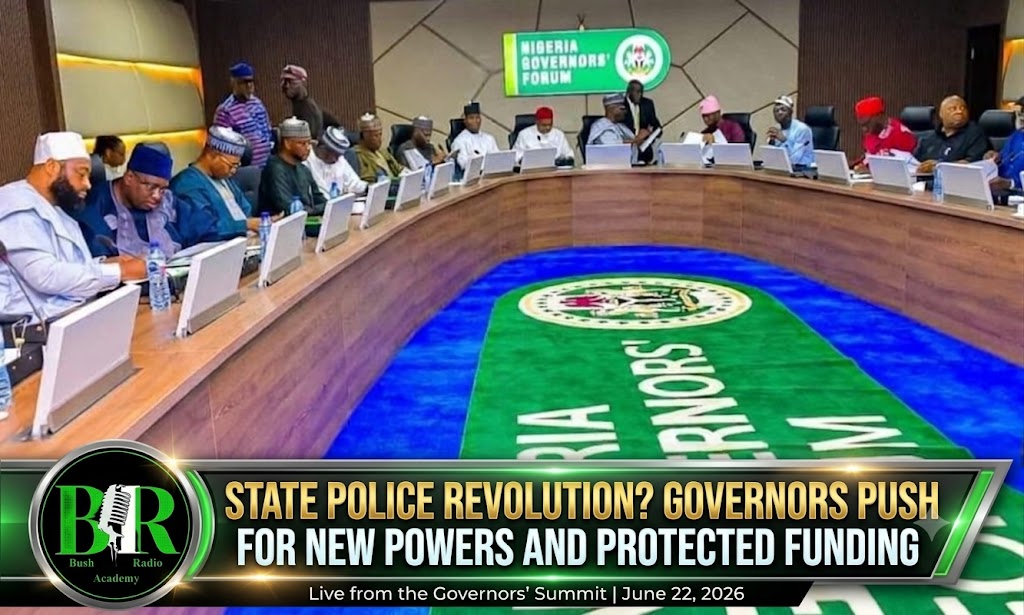
State governors have renewed calls for expanded constitutional powers over security operations in their states, alongside guaranteed funding mechanisms for the proposed State Police Services, as momentum builds for the decentralisation of policing in Nigeria.....KINDLY READ THE FULL STORY HERE▶
The proposal emerged from a high-level strategic meeting organised by the Nigeria Governors’ Forum (NGF) Secretariat in Abuja, bringing together state Attorneys-General, legal experts and senior security officials. The gathering focused on developing a unified constitutional and institutional framework for the establishment of state police nationwide.
According to the report from the meeting, the initiative marks a major step toward strengthening Nigeria’s security architecture through a decentralised policing system designed to address local security challenges while preserving national unity and constitutional safeguards.
The push comes against the backdrop of worsening insecurity across the country, including terrorism, banditry, kidnappings, communal conflicts and other violent crimes.
A major recommendation from the meeting was the need for stronger constitutional recognition of governors’ authority in coordinating security affairs within their states. Participants reviewed provisions currently before the National Assembly, particularly those relating to governors’ powers in directing security operations.
Stakeholders stressed that while governors should play a more prominent role in security coordination, safeguards must be put in place to ensure professionalism, accountability and operational independence within the proposed state police structure.
At present, governors are designated as chief security officers of their states but have limited control over policing because the Nigeria Police Force remains centrally controlled by the federal government.
The proposed model envisions a dual policing system based on cooperative federalism, with clearly defined responsibilities for federal and state police agencies. Under the arrangement, the Federal Police Service would retain exclusive jurisdiction over crimes of national significance, such as terrorism, treason, drug trafficking and interstate criminal activities.
State Police Services would be responsible for preventing, investigating and supporting the prosecution of offences within their constitutional jurisdiction, particularly those arising under state laws.
Funding was identified as a critical component of the reform. Participants called for constitutional provisions that would guarantee sustainable financial support for state policing structures, ensuring consistent funding for personnel training, equipment acquisition and operational effectiveness.
The report also proposed supplementary financing options, including transitional federal assistance and State Security Trust Funds, to encourage private-sector participation in strengthening security infrastructure.
In addition, stakeholders recommended that serving officers of the Nigeria Police Force be allowed to voluntarily transfer to State Police Services without losing their ranks, seniority or pension entitlements. However, they advised that such transfers should occur within a defined timeframe to support effective workforce planning and institutional development.
The recommendations are expected to contribute to ongoing constitutional amendment efforts at the National Assembly. Earlier this month, the House of Representatives passed a bill seeking to establish state police through amendments to the 1999 Constitution, while the Senate has advanced the bill to its Constitution Review Committee for further legislative consideration.
If approved, the reforms would create a dual policing system comprising federal and state police institutions operating side by side under clearly defined constitutional mandates, representing one of Nigeria’s most far-reaching security reforms since the return to democratic governance in 1999.


Breaking Barriers: Lagos Assembly Swears In First Female Clerk

Saraki Opens Up On EFCC Probe, Reveals What Really Happened

Saraki Sparks Debate, Says Some National Assembly Members Win Elections Without Legislative Input

Viral Video: Nigerian Lady Confronts Teni Mid-Dance With Her Husband, Sparks Reactions

Tension Rises As Ibadan Natives Accuse Fayose Of Inciting Unrest In Oyo

Family Speaks: How General Abubakar Died, Reveals Wife Still In Bandits’ Captivity

Dollar To Naira Sh*ck: Fresh Exchange Rate Revealed For June 21, 2026

Etinosa Reacts To Viral Concerns About Her Neck Size, Says She Is Healthy

Fresh Twist In Senate Crisis As Kingibe Speaks On Her Role In Natasha’s Suspension
