
Latest
Fresh Twist: Court Accepts Emefiele’s EFCC Statements As Evidence In $4.5 Billion Case

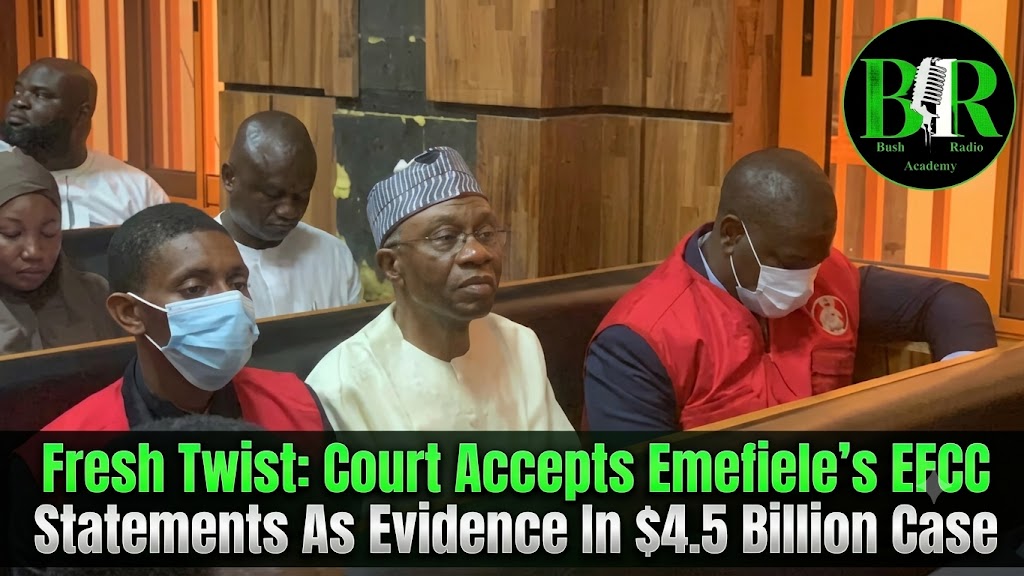
The Lagos State Special Offences Court sitting in Ikeja has admitted into evidence extra-judicial statements allegedly made by former Central Bank of Nigeria (CBN) Governor, Godwin Emefiele, to the Economic and Financial Crimes Commission (EFCC) in his ongoing trial.....KINDLY READ THE FULL STORY HERE▶
Delivering the ruling on Thursday, Justice Rahman Oshodi dismissed objections raised by Emefiele’s legal team, holding that the disputed statements were admissible.
The judge ruled that there was no need to conduct a trial-within-trial because the statements did not amount to confessional evidence.
Justice Oshodi explained that an extra-judicial statement can only be regarded as confessional if it contains a clear and unequivocal admission of the offences alleged against its maker.
According to the court, none of the statements attributed to Emefiele constituted an admission of the allegations before the court.
The judge subsequently admitted into evidence statements allegedly made by the former CBN governor on October 27, October 30, November 11, November 12 and November 13, 2023.
The matter was adjourned until October 6, 7 and 8, as well as November 11, 12 and 13, 2026, for the continuation of trial proceedings.
Emefiele and his co-defendant, Henry Omoile, are facing a 19-count charge involving allegations of abuse of office, receiving gratification, accepting gifts through intermediaries, corruption and fraudulent property transactions said to involve about $4.5 billion and ₦2.8 billion.
Omoile is separately facing a three-count charge over allegations that he received unlawful gifts linked to transactions involving the CBN.
Both defendants have pleaded not guilty to all the charges.
Earlier, Emefiele’s counsel, Olalekan Ojo (SAN), urged the court to reject the statements, arguing that they were obtained through oppression and torture while his client was in the custody of the Department of State Services (DSS).
However, prosecuting counsel, Rotimi Oyedepo (SAN), maintained that the statements were not confessional in nature and, therefore, did not require a trial-within-trial before being admitted into evidence.


US Makes Major Visa Decision, Reveals Nations That Have Lost Waiver Eligibility

Fresh Legal Trouble: Miyetti Allah Leader Appears In Court Over Alleged $2.63 Million Laundering

Civil Servants Don’t Like Me’ — Wike Reveals The Reason Behind The Tension

BREAKING: NELFUND Reveals ₦1.5 Billion Has Already Reached Student Beneficiaries

Fresh Twist: Court Accepts Emefiele’s EFCC Statements As Evidence In $4.5 Billion Case

FG Names Gbajabiamila, 10 Others As Key Witnesses In Controversial Presidential Agency Case

Doctor Who Evaluated Nnamdi Kanu Reportedly Arrested, Raises Fresh Questions

If The Agency Doesn’t Exist, Why Was I Meeting Its Heads?” Adeniyi Adeyemi Challenges Presidency

Fresh Twist: Leaked Documents Reveal SGF Office’s Role In PFIPC Controversy
