
Fresh Twist In NSIPA Probe As Halima Shehu Links Betta Edu To Unauthorized Payments
 Follow us on Google News
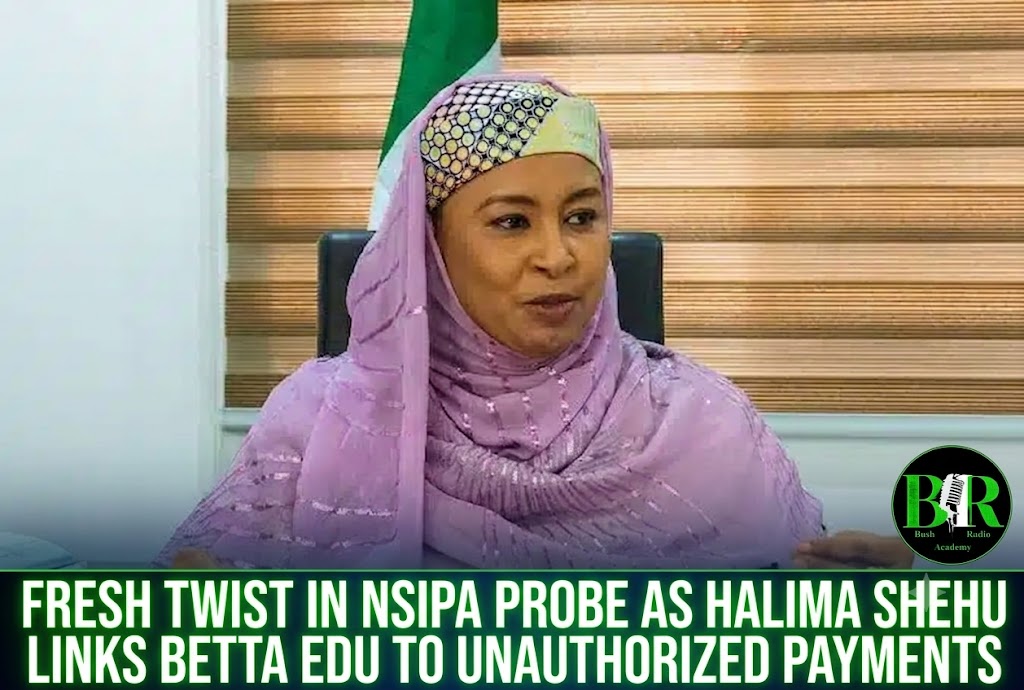
Former National Coordinator and Chief Executive Officer of the National Social Investment Programme Agency (NSIPA), Halima Shehu, has denied allegations that she diverted ₦44 billion, insisting she exposed financial irregularities within the agency before she was suspended.
Speaking during an interview on ARISE News on Monday, Shehu said she had reported the alleged infractions to the Economic and Financial Crimes Commission (EFCC) and other relevant authorities after uncovering questionable financial activities at the agency.
She explained that she assumed office on October 18, 2023, with extensive knowledge of the ministry, having previously worked on the Conditional Cash Transfer Programme and participated in the establishment of the ministry.
“I was appointed by the President on October 18, 2023. Before then, I had worked in the ministry and was part of its formation, so I was familiar with all its programmes and knew the funds inherited from the previous administration for each of them,” she said.
Shehu highlighted her contributions to the Conditional Cash Transfer Programme, noting that she spearheaded its digitisation and introduced financial literacy initiatives aimed at improving transparency and accountability.
According to her, the reforms, carried out in collaboration with the World Bank, led to the opening of more than 1.9 million bank accounts for beneficiaries, bringing many people in the informal sector into the formal financial system.
She also reflected on her involvement in President Bola Tinubu and Vice President Kashim Shettima’s 2023 election campaign, where she served as National Director of the Social and Humanitarian Directorate.
She claimed the mobilisation efforts she coordinated among women, youths and beneficiaries of the social investment programme contributed significantly to the campaign’s electoral success.
After taking over as NSIPA’s chief executive, Shehu said she discovered what she described as weak financial controls within the agency and immediately initiated an internal review.
According to her, she alerted the Minister of Humanitarian Affairs and Poverty Reduction at the time, Betta Edu, as well as the ministry’s Permanent Secretary, over what she considered unauthorized movements of funds.
“I discovered weak financial controls. Money was being moved without proper accountability, so I began conducting my own audit. I informed the minister and the permanent secretary because, under the NSIPA Act, the minister had no authority to handle the agency’s funds in that manner,” she alleged.
Shehu further claimed that Betta Edu appointed more than 10 officials into the agency without following the provisions of the NSIPA Act.
She argued that, as chief executive, she alone had the authority to appoint programme managers responsible for implementing the agency’s mandate.
According to Shehu, several financial transactions were carried out without her approval or knowledge.
“There were movements of funds that I neither approved nor authorised. Those transactions never came through my office. They originated from the minister and were executed through programme managers she appointed, who reported directly to her,” she alleged.
She also claimed that the programme managers were instructed not to report to her, adding that her attempts to engage the former minister through official correspondence were unsuccessful.
“She never invited me to any meeting, and the letters I sent to her office received no response. She directed all the programme managers to report only to her and not to me,” Shehu said.







Comments
0 comments