
Latest
We Clashed With Shekau’ — Ex-Boko Haram Insurgents Reveal What Happened Inside Sambisa

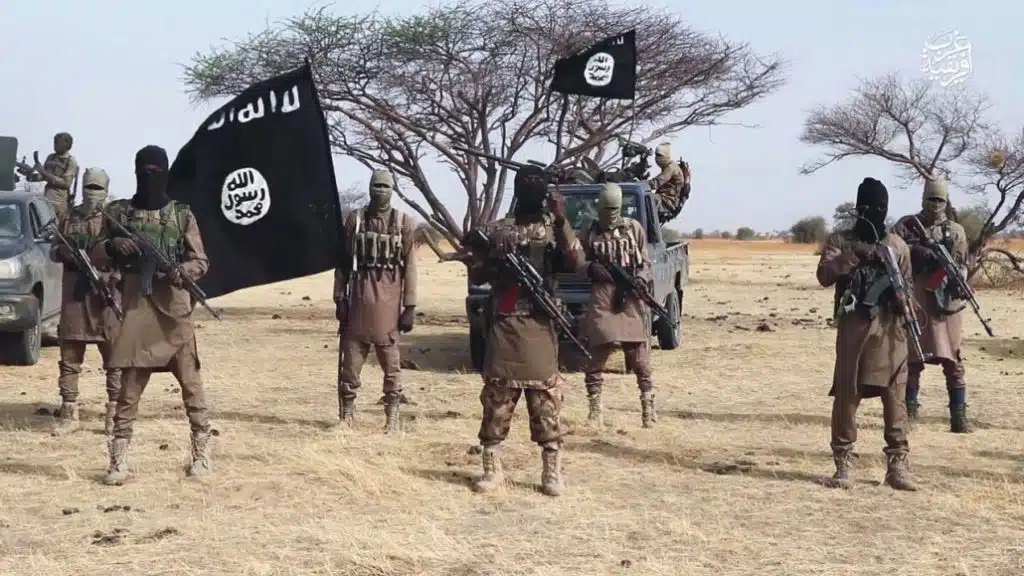
Former Boko Haram fighters undergoing rehabilitation in Maiduguri, Borno State, have recounted how coercion, misinformation, harsh living conditions and growing disillusionment with the insurgency eventually led them to abandon the group and surrender to Nigerian authorities.
The former insurgents, now participating in the Borno State Government’s non-kinetic reintegration programme, said they spent years in terrorist camps before choosing to return to civilian life.
One of them, identified as Liman, said he never willingly chose to join Boko Haram, adding that leaving the group was equally difficult.
“I told myself one day that the life of a terrorist is a terrible one. So I quit, but escaping the camp wasn’t an easy task,” he said.
Liman explained that insurgents intercepted him and several others around Kross Kawa in northern Borno in 2014 as they attempted to escape insecurity in Kukawa.
He said they were taken to an insurgent camp, separated into different groups and subjected to ideological teachings.
“They asked us many questions from the Holy Qur’an and then separated us into different groups,” he recalled.
Liman said he subsequently lost contact with his family and later learnt that his parents and one of his brothers had died.
Another former fighter, Mohammed Ibrahim, said he was influenced by friends to join Boko Haram but eventually regretted spending more than a decade with the group.
“I would have done something meaningful with my life instead of bearing arms and engaging in violence for over a decade,” Mohammed said.
He said his growing dissatisfaction with life inside the insurgents’ camps eventually pushed him to leave.
Former members also described life in the camps as highly restrictive, saying their movements and communication with the outside world were tightly controlled.
They further alleged that insurgent leaders used misinformation to discourage members from surrendering to government forces.
A former Boko Haram cleric, Malam Bashir, said he once occupied a prominent religious position within the group and worked closely with its late leader, Abubakar Shekau.
Bashir said disagreements over religious interpretations eventually caused a rift between him and Shekau. He alleged that he was detained in Sambisa Forest after challenging what he considered to be distorted interpretations of Islamic teachings.
“I was locked up in jail in Sambisa. Later, someone came to tell me I would be executed after Sallah,” he said.
According to Bashir, he regained his freedom during the internal conflict between Boko Haram and the Islamic State West Africa Province.
He also alleged that insurgent leaders repeatedly warned members that Nigerian soldiers would kill them if they surrendered.
“They lied to us that the military would kill us, and that the government would inject us with strange drugs to kill us slowly. They scared us every time with such lies,” he said.
However, some former fighters said communication from relatives, former insurgents and government-backed campaigns gradually changed their views about surrendering and returning to their communities.
Idrissa, another former member, said messages from his mother and friends on social media encouraged him to leave the group.
“I listened to my mother and friends on social media, asking me to return. I’m glad I did,” he said.
Other returnees said community sensitisation campaigns and messages targeted at people living around insurgent enclaves also helped counter the narratives being circulated by terrorist groups.
Military authorities in Borno State said more than 100,000 insurgents and their relatives have voluntarily surrendered over the past five years.
The development followed the introduction of the Borno Model in July 2021, an initiative aimed at encouraging people still in terrorist enclaves to surrender and return to civilian life.
Governor Babagana Zulum has described the initiative as a community-driven, non-kinetic approach centred on dialogue, rehabilitation and voluntary surrender.
The governor’s Special Adviser on Security, retired Brig.-Gen. Abdullahi Ishaq, said the programme is built around three key pillars: disarmament, demobilisation and deradicalisation.
Ishaq said the state’s approach focuses on restorative justice, rehabilitation, reconstruction of communities affected by insurgency and the resettlement of displaced persons and victims of violence.
According to him, surrendered fighters assessed as suitable for rehabilitation are taken to centres in Maiduguri and neighbouring areas, where they receive religious reorientation, civic education and instruction on Nigerian laws and social values.
Islamic clerics, lawyers, police officers and community leaders participate in various aspects of the rehabilitation process.
The returnees are also trained in vocational skills, including carpentry, phone repairs, welding, plumbing, pottery and barbering, to help them become economically independent after reintegration.
Ishaq said many of those who surrendered had initially been forcibly recruited into terrorist groups.
He disclosed that 9,680 low-risk former Boko Haram fighters and their family members had so far been reintegrated into communities.
The security adviser attributed the relative acceptance of the returnees to the involvement of community leaders in the reintegration process.
“We no longer have issue of rejections as experienced during Operation Safe Corridor. This is because community leaders are involved,” he said.
“They ask questions from the repentant fighters and absorb them after these checks.”
Ishaq added that authorities continue to monitor reintegrated individuals through feedback from community leaders.
The programme has also facilitated the return of children from former insurgent families to school.
Idrissa said his 10 children had been enrolled in school following his surrender, adding that the experience had changed his perception of Western education while allowing his children to continue learning Islamic teachings.
Meanwhile, Chairman of the North-East Civil Society Organisations Forum, Ahmed Shehu, said the surrender and deradicalisation initiative had contributed to the peace process despite the challenges that remain.
“Looking at the larger picture of the security situation in the North-East, we have to forgive these people,” he said.
“We either forgive and accept them, as Governor Zulum once said, or they remain in the bush attacking us.”


PFIPC Probe Deepens As Police Reveal Details Of Adeyemi’s Alleged ₦400m Spending

Five Govt Officials Fingered in PFIPC Scandal — Police Reveal

State Police Debate: Senate Reveals Why FCT Was Excluded

Fresh Twist In P-Square Feud As Henry Reveals Alleged Architect Of Family Division

EFCC Has Three Days To Freeze Account’ — Tietie Explains Commission’s Powers

Explosive Details Surface As Full List Of Alleged Sylva Coup Fund Beneficiaries Emerges

This Is Why He Was Arrested’ — Osun Speaker Breaks Silence On SSG Saga

Army Gets New Leadership Boost As COAS Shaibu Appoints Commanders For Tinubu’s New Divisions

She Should Resign!’ — Reuben Abati Fires At Head Of Civil Service Over PFIPC Controversy
