
Rev. Dachomo Challenges Jingir Over Nigeria’s Ownership: “It Belongs To Christians And Muslims
 Follow us on Google News
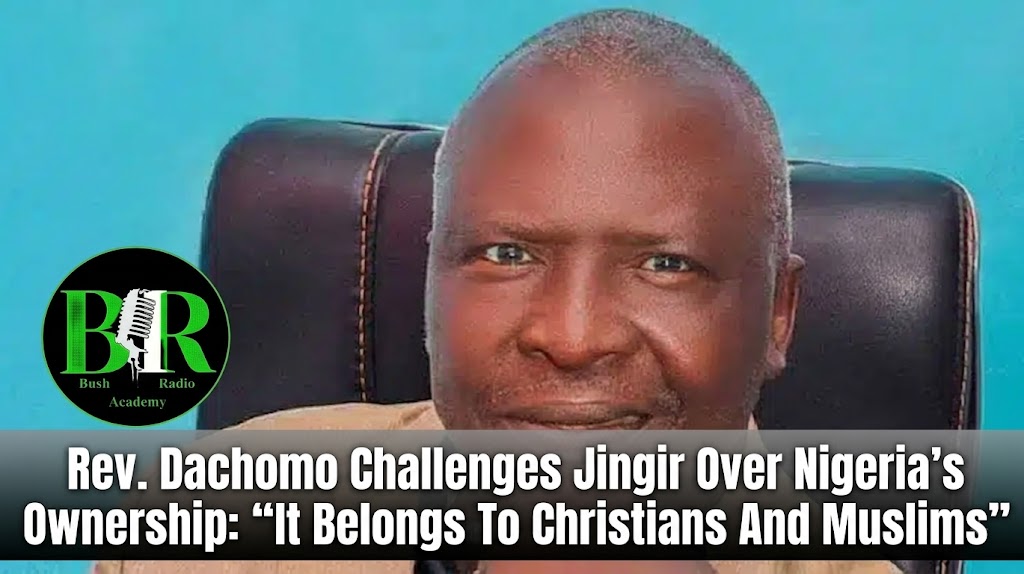
The Regional Chairman of the Church of Christ in Nations (COCIN) in Barkin Ladi Local Government Area of Plateau State, Rev. Ezekiel Dachomo, has rejected the assertion by Islamic cleric Sheikh Sani Yahaya Jingir that Nigeria is a Muslim country.
Reacting to Jingir’s recent comments, Dachomo described Nigeria as a multi-religious nation, stressing that the country cannot be said to belong exclusively to any particular faith.
Jingir, a prominent Islamic scholar based in Jos, Plateau State, reportedly made the controversial remarks during a programme in Kano State over the weekend.
The cleric also backed the continuation of the Muslim-Muslim political arrangement, arguing that Muslims constitute the majority of Nigeria’s population and should therefore have the opportunity to lead the country.
‘Nigeria Does Not Belong to One Religion’
In a statement issued on Tuesday, Dachomo strongly disagreed with Jingir’s position, insisting that Nigeria is neither a Muslim country nor a nation that belongs to any single religious group.
He also urged Jingir and other religious leaders to avoid statements that could further heighten existing tensions between Christians and Muslims.
According to Dachomo, political leadership should not be determined by religious population figures. He said competence, justice, good governance and the protection of citizens should remain the key criteria for selecting the country’s leaders.
“Nigeria is a multi-religious country in which Muslims and Christians have historically participated in the political process and contributed to the development of the nation,” he said.
The COCIN chairman maintained that neither Christians nor Muslims should claim greater ownership of Nigeria based on their numerical strength.
He called on religious leaders to exercise caution and responsibility in their public statements, particularly when addressing political issues or matters capable of affecting relationships between different faith communities.
“I urge religious leaders to be mindful of their public statements, particularly when discussing politics and issues capable of affecting relations between different religious communities,” Dachomo said.
He warned that portraying political leadership as a religious entitlement could deepen divisions and leave members of other faiths feeling excluded.
“Linking political leadership to religious majority could create a perception that one faith has greater ownership of the country than another,” he added.
Jingir Defends Muslim-Muslim Ticket
Jingir had reportedly defended the Muslim-Muslim political arrangement during the Kano programme, arguing that Muslims, as the majority, should be allowed to produce the country’s leaders.
The Islamic scholar was also reported to have described Christians in Nigeria as infidels and suggested that those opposed to the arrangement could leave the country.
His comments have continued to attract reactions, with Dachomo calling for greater responsibility among religious leaders to ensure that discussions around religion and politics do not further strain relations between Nigerians of different faiths.
The COCIN leader reiterated that Nigeria belongs to all its citizens, irrespective of their religious beliefs, and argued that leadership should be determined by a person’s ability to serve the people rather than their religious identity.




Comments
0 comments