
Police Officers: SANs Reject IGP’s Directive, Declare Nigerians Free To Record Them
 Follow us on Google News
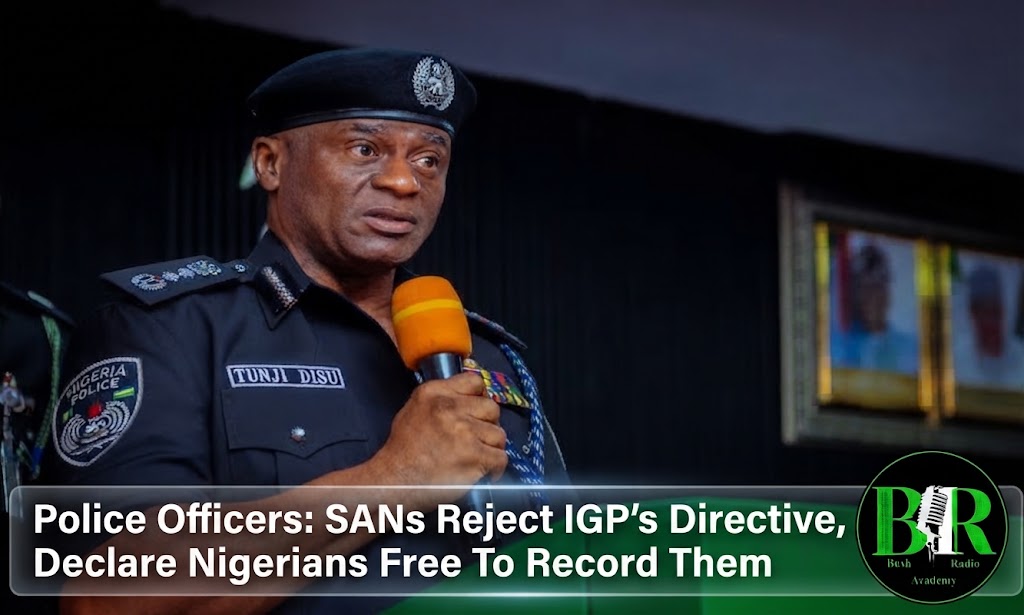
Three Senior Advocates of Nigeria, Olu Daramola, Olalekan Ojo and Isiaka Olagunju, have affirmed that Nigerians have the legal right to record police officers while they are performing their duties in public spaces.
According to Bush Radio Academy, the lawyers were reacting to recent comments by Inspector-General of Police, Olatunji Disu, which generated public debate over whether citizens should be permitted to film police officers during official operations.
The three Senior Advocates offered different perspectives on the issue, with Daramola relying on an existing Federal High Court judgment, while Ojo and Olagunju acknowledged the benefits of recording police activities but stressed the need for citizens to consider their safety.
Disu had criticised a court decision supporting the recording of police officers, describing the development as demoralising to members of the force.
However, Daramola said the legal position on the matter had already been established by the Federal High Court in the case of Maxwell Uwaifor v. Inspector-General of Police.
He explained that Justice Hyeladzira Nganjiwa, who presided over the case, affirmed the right of citizens to record police officers while they are carrying out their duties in public.
Daramola maintained that the judgment, delivered in March last year, remains valid and binding.
He further stated that the court directed police officers to wear visible identification tags and force numbers to enable members of the public to identify them.
The SAN added that the judgment also prevents police officers from taking away citizens’ mobile phones or deleting footage recorded during public encounters with the police.
According to Daramola, the court’s position is supported by Section 39 of the 1999 Constitution, which guarantees freedom of expression and the right to receive and share information.
He stressed that documenting the activities of public officials falls within the constitutional protection, provided that citizens do not obstruct officers from carrying out their lawful responsibilities.
Daramola also pointed out that the use of cameras to monitor police activities is common in several countries, where officers themselves are often equipped with body cameras.
He argued that police officers acting lawfully should have no reason to be concerned about being recorded, insisting that the position of the Nigerian Bar Association reflects the existing law.
Ojo similarly supported the position that citizens can record police officers while they are on duty, arguing that such recordings can strengthen transparency and accountability within the police force.
He explained that video recordings can also serve as valuable evidence when allegations of misconduct arise, noting that some officers who might otherwise deny wrongdoing have been held accountable because members of the public captured incidents on camera.
Ojo said the possibility of being recorded could also encourage police officers to exercise greater caution and professionalism while performing their duties.
He, however, advised citizens to consider their personal safety before attempting to record an encounter with the police.
The lawyer noted that some officers might become aggressive after discovering that they are being filmed, particularly if they believe the footage could expose them to disciplinary action.
According to Ojo, an officer could attempt to seize or destroy a phone or resort to violence to prevent the footage from being preserved.
He therefore urged citizens to exercise sound judgment and assess the circumstances before recording, particularly in situations where doing so could expose them to danger.
Olagunju also acknowledged that the Inspector-General of Police could have concerns relating to the safety and privacy of officers. Nevertheless, he maintained that such concerns should not completely prevent members of the public from documenting the activities of police officers and other public officials.
He argued that recording officials who fail to properly perform their responsibilities can promote accountability and provide evidence that may be useful in addressing alleged misconduct.
Olagunju therefore maintained that while safety and privacy concerns should be considered, citizens should not be denied the opportunity to document official activities in circumstances where such recordings can help promote transparency and accountability.




Comments
0 comments