
Latest
Police Recording Ban IGP Speaks Out on Nigerians Filming Officers On Duty

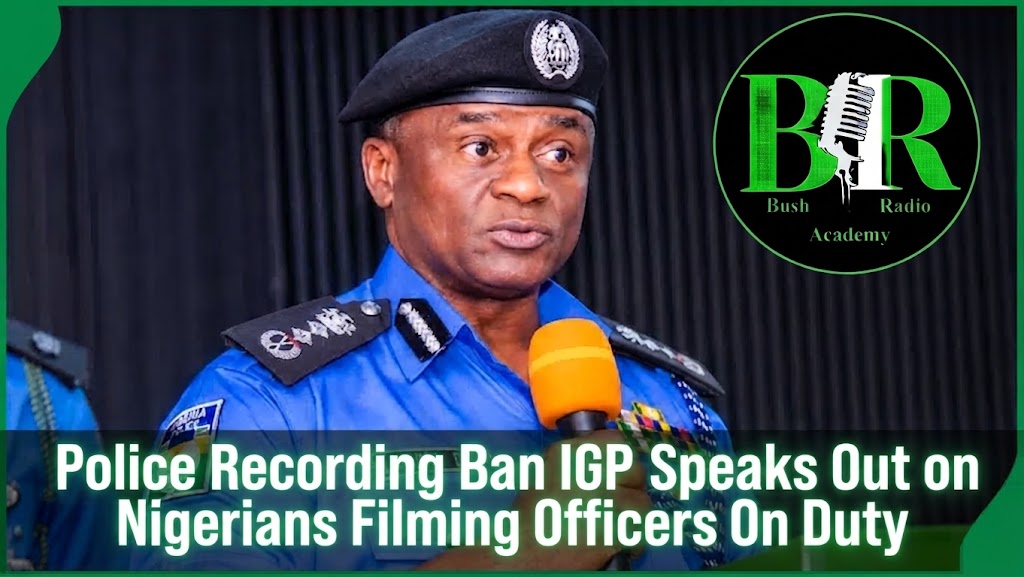
The Nigeria Police Force has clarified that Inspector-General of Police Olatunji Disu does not oppose Nigerians recording police officers while they are performing their duties in public.
The Force New Media Officer, Aliyu Giwa, made the clarification in a series of posts on X on Saturday, explaining that the IGP’s concern was not about legitimate documentation or public accountability but about the misuse of recordings, particularly when police encounters are deliberately turned into entertainment or social media content.
According to Bush Radio Academy, Giwa stressed that the police were not seeking to prevent citizens from scrutinising officers or documenting misconduct. Rather, he said the Force was concerned about situations where officers are deliberately provoked, ridiculed or subjected to unnecessary intrusion for the purpose of creating viral content.
“The IGP’s concern is not to shield Police officers from accountability or deny citizens their rights. Instead, it focuses on the misuse of recordings, especially when officers are provoked, ridiculed, filmed for entertainment, or subjected to unnecessary intrusion while performing their duties,” Giwa said.
He urged Nigerians to distinguish between responsible documentation of police activities and recording encounters primarily for social media entertainment. According to him, legitimate recordings can serve the interests of both citizens and law enforcement by providing evidence when misconduct occurs and protecting officers against false allegations.
Giwa, however, noted that being a public servant does not completely remove a police officer’s right to dignity and privacy.
He also rejected suggestions that the IGP had imposed a blanket ban on Nigerians filming police officers. According to him, Disu’s comments were specifically directed at the misuse of recordings and not at legitimate efforts to promote transparency and accountability.
The police spokesman further disclosed that the use of body cameras is part of ongoing discussions about modern policing. He said such technology could help protect both police officers and members of the public while improving accountability.
Giwa appealed to Nigerians to discuss the issue constructively and avoid portraying the matter as a confrontation between the police and the public or between the IGP and the Nigerian Bar Association.
He said the focus should instead be on finding a balance between accountability and responsibility, transparency and privacy, as well as citizens’ rights and the professional discharge of police duties.
The clarification followed a recent visit by NBA leaders to the Force Headquarters in Abuja, where the issue of recording police officers was reportedly discussed.
Disu had earlier expressed concern about police officers being filmed, particularly when footage is allegedly used to create social media skits. He described the practice as demoralising but acknowledged that citizens have the right to record officers performing their duties in public.
The IGP said Nigerians could exercise that right but urged them not to turn police officers into entertainment content.
The debate has also been linked to a March 17 judgment of the Federal High Court in Warri, Delta State, which affirmed the right of Nigerians to record police officers while they are carrying out their duties in public.
Giwa said the engagement between the police leadership and the NBA demonstrated that disagreements could be resolved through constructive dialogue. He maintained that technology should not be viewed as a threat to law enforcement but should instead be used responsibly to promote professionalism and transparency.
He further argued that legitimate scrutiny should strengthen institutions rather than weaken them, stressing that both the police and members of the public should ultimately work toward promoting truth, justice and a safer Nigeria.


Shock As Church Faces Shrine With Mosque Just Nearby On Same Street

Bovi Announces Final 2026 Shows In Benin, Lagos After Successful International Tour

You Cannot Use EFCC To Torment Its Creator — Dino Melaye Fires Back In Defence Of Atiku

Bus Fare Drama Turns Ugly As Lady Confronts Passenger Who Refused To Pay

Small Arsene Wenger — Xhaka Makes Huge Claim About Sunderland Boss Le Bris

THE 18,439-VOTE MISSION WHY WADADA COULD BE TINUBU’S NASARAWA GAME CHANGER

Fake Miracle Exposed! Nollywood Actor Reveals How He Was Paid To Stage One

KWARA IS NOT RIVERS—BUT INJUSTICE HAS NO STATE OF ORIGIN

Marriage Advice Sparks Debate As Lady Reveals Lie Women Should Tell Men
