
Latest
184.5kg Cocaine Saga: Court Rejects KC Luxury’s Bid To End 30-Day Detention

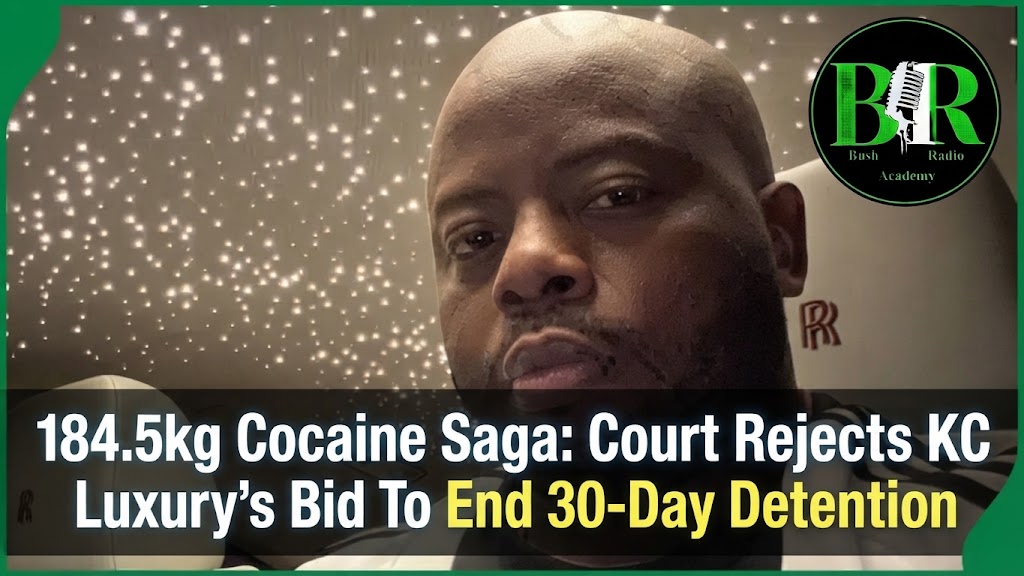
A Federal High Court sitting in Lagos has dismissed an application filed by social media influencer Afolabi Michael Kazeem, popularly known as KC Luxury, challenging a 30-day extension of his detention over an alleged connection to the trafficking of 184.5 kilogrammes of cocaine.
According to Bush Radio Academy, Justice Aluko ruled that the detention extension order granted on August 20, 2026, was valid and properly issued under the Constitution and relevant drug-control legislation.
Kazeem, through his counsel, Abdulakeem Labi-Lawal, SAN, had asked the court to set aside or strike out the order, arguing that the court lacked jurisdiction to extend his detention. His lawyer contended that detention or remand orders could only be issued by a Magistrate Court under Sections 293 to 299 of the Administration of Criminal Justice Act, 2015.
The defence further argued that the detention extension amounted to an unlawful infringement on Kazeem’s constitutional right to personal liberty.
However, the National Drug Law Enforcement Agency (NDLEA), represented by its counsel, Abu Ibrahim, opposed the application and described the argument as a misunderstanding of the nature of the order issued by the court.
The NDLEA maintained that the August 20 order was not a remand order under the ACJA but an extension of detention granted to allow investigators to conduct further inquiries into the alleged drug trafficking offence.
According to the case presented before the court, Kazeem was arrested by NDLEA operatives on August 13, 2026, at the departure hall of the Murtala Muhammed International Airport in Lagos while he was allegedly preparing to travel to Paris, France.
The agency had informed the court that the arrest followed the seizure of 184.5 kilogrammes of cocaine at a DHL facility in Ikeja, Lagos. The NDLEA alleged that Kazeem was connected to the shipment.
Delivering his ruling on Thursday, Justice Aluko held that Sections 293 to 299 of the Administration of Criminal Justice Act, which deal with remand proceedings, did not apply to the circumstances of the case.
The judge further held that the Federal High Court has exclusive jurisdiction over drug-related matters pursuant to Section 251(1)(m) of the Constitution and Section 26(1) of the NDLEA Act.
Justice Aluko also found that the material placed before the court by the NDLEA established reasonable suspicion of a drug-related offence, which he said could justify temporary deprivation of liberty under Section 35 of the Constitution.
The court consequently dismissed Kazeem’s application, describing it as lacking merit and constituting an abuse of the court process.


Falconets Thrash England 3-0 To Storm U-20 Women’s World Cup Quarter-Finals

Heroin Trafficking: South African Woman Sentenced To 40 Years After Airport Arrest

184.5kg Cocaine Saga: Court Rejects KC Luxury’s Bid To End 30-Day Detention

NELFUND Support Changing Lives As Pro-Chancellors Praise EFCC Chairman

Oyo School Kidnap: DSS Witness Reveals How 49 Students, Teachers Survived 56 Days In Bush

Wedding Cancelled Man Walks Away After Fiancée’s Mother Says He Is Marrying Down

Fake Miracle Exposed! Nollywood Actor Reveals How He Was Paid To Stage One

I’ll Pay All The Wedding Bills — 41-Year-Old Woman Makes Bold Marriage Offer Online

Drama As Parents Defend Son Accused Of Stealing, Only To Be Shown Shocking Video Evidence
