
Nigerian Woman Sparks Debate As She Accuses Feminism Of Undermining Traditional Family Values
 Follow us on Google News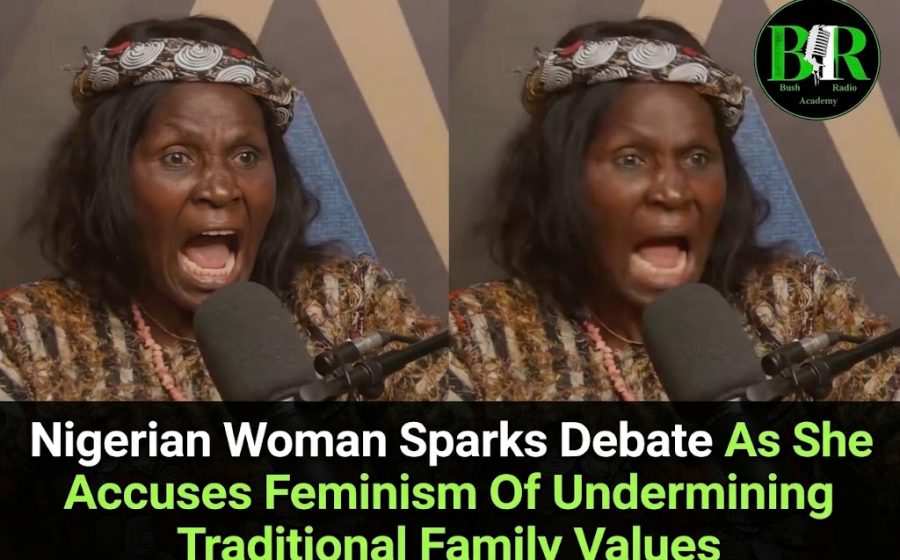
A traditionalist woman has sparked debate on social media after criticising feminism, accusing the movement of encouraging women to reject childbirth, household responsibilities and long-established expectations in relationships.
In a statement circulating online, the woman expressed concern over what she described as changing attitudes among women, arguing that feminism had influenced younger generations to challenge conventional cultural and marital roles.
She also questioned the concept of equal rights as promoted by some feminists, suggesting that the movement conflicts with values she considers important to Nigerian culture and traditional family life.
The woman argued that feminism had negatively influenced how some women relate to men and approach responsibilities within the home. She claimed that an increasing number of women were unwilling to cook, wash clothes or have children, which she viewed as a departure from traditional expectations.
She further expressed displeasure with women becoming more assertive when addressing men, particularly in situations where they believe they have been disrespected.
“Women are now standing up to men and telling them, ‘How dare you talk to me like that?’” she said.
The woman also described feminism as an imported ideology that conflicts with traditional cultural values, urging women who identify with the movement to reconsider their views.
Her comments have brought renewed attention to the ongoing debate over feminism, gender equality and the place of cultural traditions in modern Nigerian society.
While some people believe traditional family roles help preserve cultural values and promote stability in relationships, others argue that women should have the freedom to make personal decisions about marriage, childbirth, careers and domestic responsibilities.
Advocates of gender equality also maintain that household duties should be negotiated between partners rather than assigned solely on the basis of gender. Similarly, decisions about having children are personal and may differ from one individual or couple to another.
According to Bush Radio Academy, the woman’s remarks highlight the continuing differences between supporters of traditional gender roles and those who advocate greater equality and individual choice in relationships. However, the available account does not establish the extent of the public reaction to her statement.







Comments
0 comments