
Abdul El-Sayed Defeats Republican Mike Rogers In Landmark Michigan Senate Victory
 Follow us on Google News
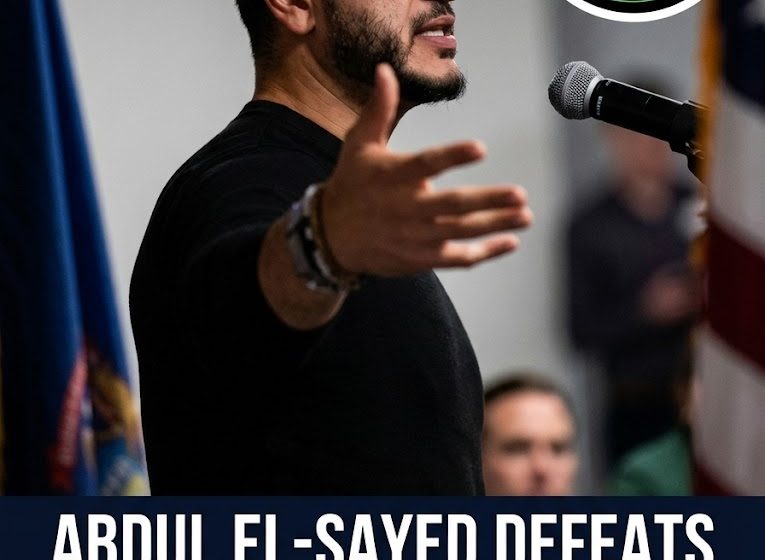
Democratic candidate Abdul El-Sayed has made history after defeating Republican Mike Rogers in Michigan to become the first Muslim elected to the United States Senate.
The 42-year-old’s victory marks a significant milestone for Muslim representation in American politics, as no Muslim American had previously secured an elected seat in the country’s upper legislative chamber.
According to Bush Radio Academy, El-Sayed will occupy the Senate seat currently held by retiring Democratic Senator Gary Peters when the new Congress begins in January.
His victory followed a competitive Democratic primary in August, where he defeated Representative Haley Stevens to secure the party’s ticket for the general election.
During his campaign, El-Sayed received endorsements from prominent progressive figures, including Senator Bernie Sanders, Representative Alexandria Ocasio-Cortez and Michigan Representative Rashida Tlaib.
He focused his campaign on issues affecting ordinary Americans, promising to expand healthcare access through Medicare for All, reduce housing costs and create better economic opportunities for working families.
The Democrat also pledged to address the influence of wealthy individuals and major donors in American politics.
However, his position on Israel and the ongoing war in Gaza became a major issue during the campaign. El-Sayed criticised American military support for Israel, described its military operations in Gaza as genocide and called for an end to unconditional United States military assistance to the country.
His position reportedly generated divisions within the Democratic Party, particularly after Stevens, whom he defeated in the primary, announced her support for Republican candidate Mike Rogers two days before the general election.
Stevens explained that her decision was influenced by concerns about El-Sayed’s campaign statements and political associations.
Her endorsement of Rogers, however, attracted criticism from some Democrats who believed she should have supported the candidate representing her party in the general election.
El-Sayed rejected allegations linking him to extremism, arguing that such attacks were intended to distract voters from pressing concerns, including economic challenges and the rising cost of living.
Born in Rochester Hills, Michigan, to Egyptian immigrant parents, El-Sayed pursued medicine and public health at the University of Michigan, graduating in 2007.
He later earned a doctorate in public health from the University of Oxford in 2011 as a Rhodes Scholar before obtaining his medical degree from Columbia University in 2014.
In 2015, he was appointed Director of the Detroit Health Department, where he supervised efforts to rebuild the city’s public health services following its financial crisis. He served in the position until 2017 before focusing on electoral politics.
El-Sayed contested the Michigan governorship in 2018 but lost the Democratic primary to Gretchen Whitmer, who subsequently won the election.
Between 2023 and 2025, he served as Director of the Wayne County Department of Health, Human and Veterans Services.
His election represents a major development in the political representation of Muslim Americans, who have previously secured positions in the United States House of Representatives but had not elected a member to the Senate.
Keith Ellison made history in 2006 as the first Muslim elected to the US Congress, while Rashida Tlaib and Ilhan Omar became the first Muslim women elected to the House of Representatives in 2018.
El-Sayed’s victory is therefore being viewed as another landmark moment in the growing representation of Muslim Americans in the country’s political leadership.







Comments
0 comments