
Afghan Women’s Identity Under Threat As Taliban Reportedly Orders Removal Of Their Names
 Follow us on Google News
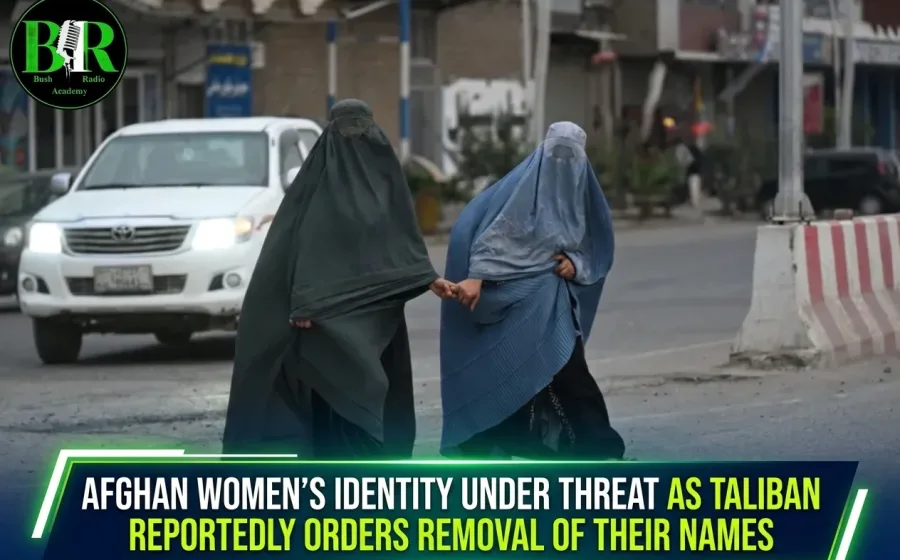
Authorities under Taliban rule in northern Afghanistan have reportedly directed officials to replace women’s names with generic terms in official documents, sparking concerns over women’s dignity, identity and access to essential services.
The reported directive in Balkh province requires women to be identified using the term “bibi”, a Dari expression commonly associated with older women and loosely translated as “grandmother”, instead of their personal names.
Afghan women’s rights activist Lalah Osmany, who currently resides in Germany, disclosed that some women were allegedly being referred to with derogatory terms such as “goat” and “cow”, describing the practice as dehumanising and an attempt to strip women of their individuality.
Osmany, who campaigned in 2017 for women’s names to be included on official documents, warned that replacing personal identities with generic labels could create serious administrative complications, particularly in healthcare facilities where numerous patients could end up having identical names on their records.
She expressed concern that such a practice could lead to identification errors and potentially affect the delivery of medical services.
The activist also noted that women’s names are often excluded from wedding invitations and, in some cases, omitted from inscriptions on their tombstones, further reflecting the marginalisation of women under the Taliban administration.
The reported directive comes amid growing restrictions on the rights and freedoms of women and girls in Afghanistan since the Taliban returned to power in 2021.
During the group’s previous administration between 1996 and 2001, women faced severe restrictions on education, employment and public participation, alongside strict dress requirements.
Following their return to power in 2021, the authorities initially allowed women to attend universities under gender-segregated arrangements and conditions based on their interpretation of Islamic principles. However, those opportunities were subsequently restricted, while girls have been barred from pursuing education beyond the primary-school level.
Women have also faced restrictions on travelling beyond certain distances without a close male relative, as well as limitations on their participation in public life.
The report further highlighted disparities in the country’s penal provisions, alleging that harming a camel could attract a five-month prison sentence, while breaking a woman’s arm could reportedly result in just 15 days in prison.
According to Bush Radio Academy, rights campaigners have condemned the reported removal of women’s names from official records as another troubling development in the erosion of women’s dignity, identity and fundamental rights under Taliban rule.






Comments
0 comments