
Blasphemy Case: US Mounts Pressure On Nigerian Government Over Detained Kano Singer
 Follow us on Google News
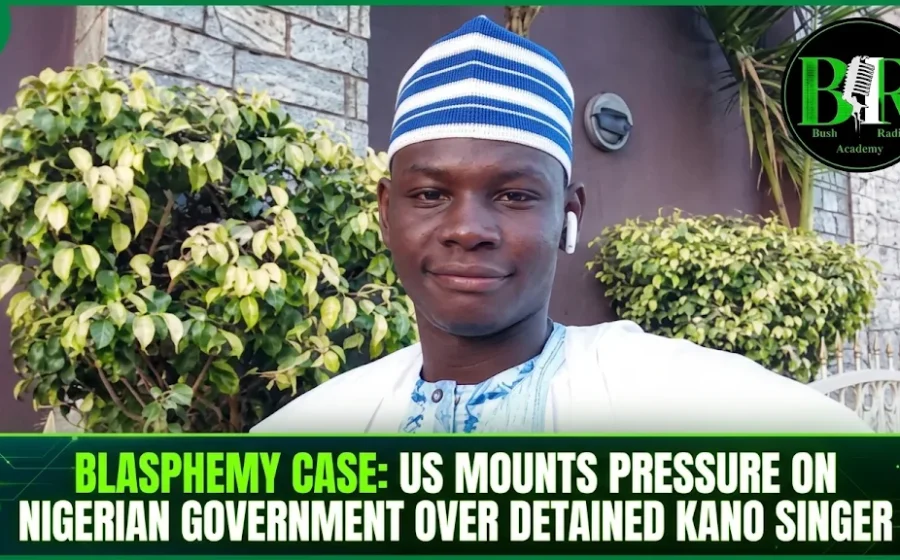
The United States government has called on Nigerian authorities to release Sufi Muslim singer Yahaya Sharif-Aminu, who has remained in detention in Kano State since 2020 over blasphemy charges.
The US Assistant Secretary of State for Democracy, Human Rights and Labour, Riley M. Barnes, made the demand in written testimony submitted to the Africa Subcommittee of the US House Foreign Affairs Committee on Thursday.
According to information made available to Bush Radio Academy, Barnes raised the case in his testimony titled “One Year Later: Assessing Nigeria’s Efforts to Protect Christians and Secure the Middle Belt,” urging the Nigerian government to release the singer and stop enforcing blasphemy laws.
He described the prosecution of individuals over alleged blasphemy as a concerning development, particularly when cases involve expressions considered offensive to religious beliefs, including peaceful speech.
Barnes noted that Sharia penal codes operate in 12 Nigerian states and urged the Federal Government to repeal blasphemy laws or, at the very least, discontinue their enforcement.
He also stated that Washington would continue engaging Nigerian authorities over attacks and violence across the country, adding that the United States would assess progress based on reductions in violence and efforts to ensure that those responsible are held accountable.
Sharif-Aminu was sentenced to death in August 2020 by a Sharia Court in Kano after being convicted over a song he shared on a WhatsApp group, whose lyrics were considered insulting to the Prophet Muhammad.
The singer was arrested in March 2020 following complaints from members of the Muslim community over the song. His arrest came after some youths reportedly stormed the Kano Hisbah office demanding action against him. His family home was also reportedly set ablaze by a mob following the controversy.
However, in January 2021, the Kano State High Court overturned the death sentence and ordered a retrial, citing procedural irregularities, including the absence of legal representation for the defendant during the original proceedings.
The Court of Appeal upheld the retrial order in August 2022, prompting Sharif-Aminu to approach the Supreme Court.
In September 2025, the Supreme Court allowed his appeal against the retrial order to proceed, but the case remains unresolved.
The continued detention of the singer has attracted international attention, with the latest intervention from Washington adding to calls for Nigerian authorities to review the case and address concerns surrounding the enforcement of blasphemy laws.




Comments
0 comments