
Breaking: House Of Reps Endorses Tinubu’s Massive Loan Request To Bridge 2025 Budget Gap
 Follow us on Google News
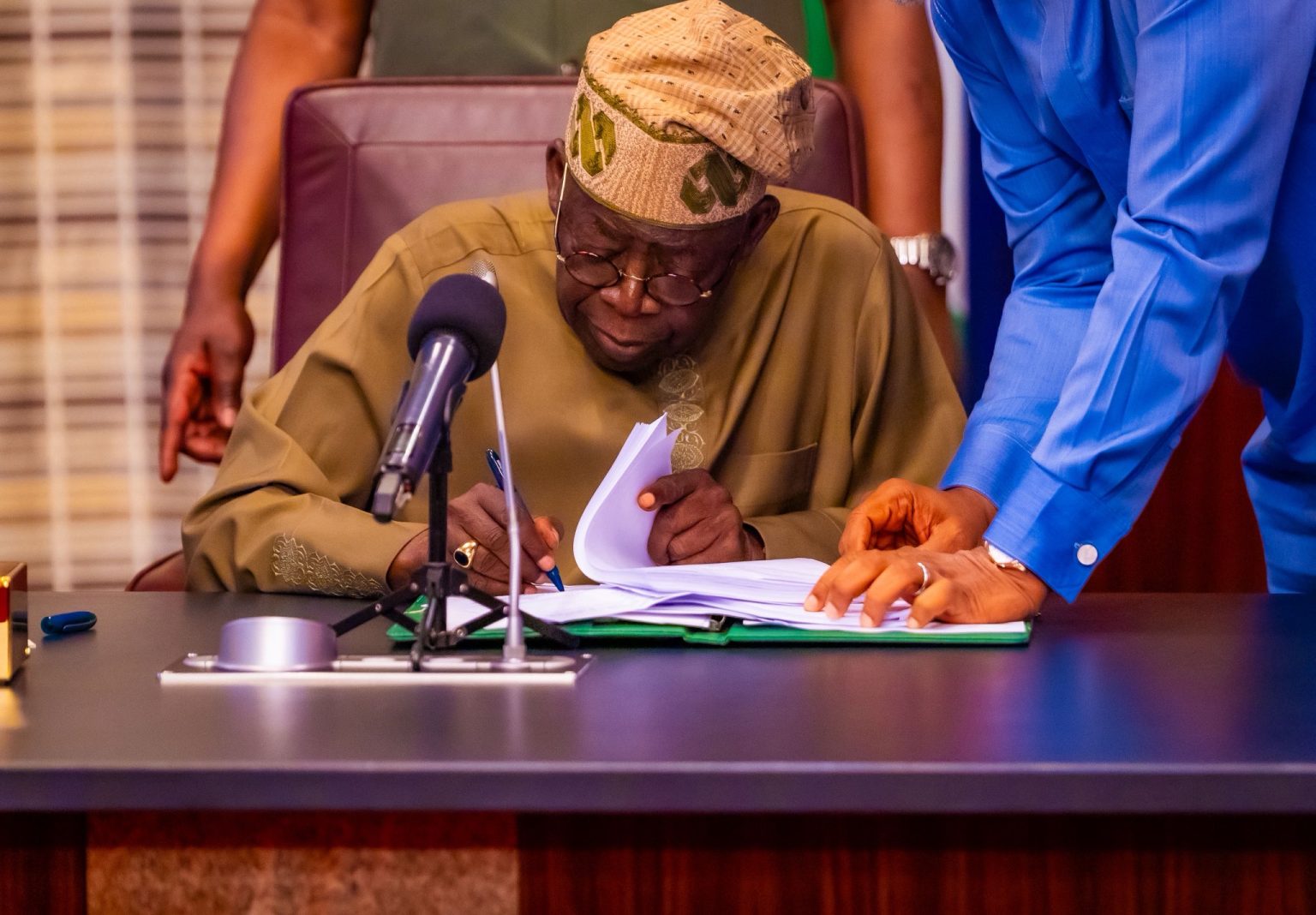
The House of Representatives has approved President Bola Ahmed Tinubu’s request to implement a new external borrowing plan valued at ₦1.84 trillion (approximately $1.23 billion) as outlined in the 2025 Appropriation Act, aimed at bridging Nigeria’s expanding budget deficit.
The approval came after the consideration and adoption of a report by the House Committee on Aids, Loans, and Debt Management, chaired by Abubakar Hassan Nalaraba, during Wednesday’s plenary session.
According to the committee, the borrowing is intended to help address the ₦9.27 trillion deficit projected in the 2025 fiscal framework.
To mitigate repayment pressures and ensure fiscal stability, the House also endorsed the refinancing of a $1.12 billion Eurobond (7.625% USD1.118bn due November 2025). Lawmakers explained that this move would prevent a debt-servicing crunch and minimise exposure to external financial volatility.
In addition, the House granted approval for the federal government to access $2.35 billion through various international financing mechanisms, including Eurobond issuances, loan syndications, bridge financing facilities, and other external borrowings from global financial institutions.
This diversified financing framework, the lawmakers noted, would provide greater flexibility for government funding needs while spreading borrowing risks.
In a bid to expand Nigeria’s debt instruments and attract Islamic-compliant investors, the House further approved the issuance of a $500 million debut stand-alone Sovereign Sukuk in the international capital market. The Sukuk may be issued with or without credit enhancement to boost competitiveness and investor confidence.
This marks Nigeria’s first independent sovereign Sukuk offering abroad, complementing its domestic Sukuk programme, which has funded major infrastructure and road projects.
According to the resolution, the new borrowing plan aligns with President Tinubu’s fiscal strategy focused on:
-
Strengthening Nigeria’s foreign reserves;
-
Stabilising the naira;
-
Financing critical infrastructure projects; and
-
Managing the country’s rising debt obligations.
Lawmakers emphasised that the plan is structured to ease pressure on public finances, attract diverse investment sources, and strike a sustainable balance between debt servicing and economic growth.
While Nigeria’s public debt continues to rise—drawing concern from economic analysts about the nation’s growing reliance on external borrowing—supporters argue that strategic borrowing remains vital to fund capital projects, drive growth, and reinforce investor confidence.
The House resolution concluded by underscoring the importance of responsible debt management, transparency, and accountability in the utilisation of borrowed funds.







Comments
0 comments