
Court Hears Final Evidence From EFCC’s Key Witness In Fayose Case
 Follow on Google News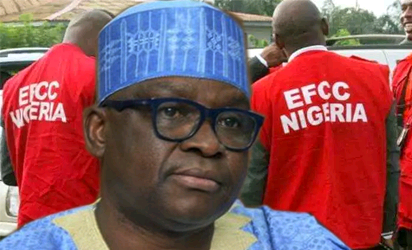
Court Hears Final Evidence From EFCC’s Key Witness In Fayose Case
On Monday, a prosecution witness, Mr. Abubakar Madaki, informed a Federal High Court in Lagos that former Governor Ayodele Fayose did not personally conduct any of the financial transactions pertinent to the charges he faces.
Madaki provided this testimony during cross-examination in Fayose’s ongoing trial for N6.9 billion fraud and money laundering. The Economic and Financial Crimes Commission (EFCC) is prosecuting Fayose.
Initially arraigned on October 22, 2018, before Justice Mojisola Olatoregun alongside his company, Spotless Investment Ltd., Fayose faced 11 counts of fraud. He pleaded not guilty and was granted bail on October 24, 2018, in the sum of N50 million with sureties in like amount. The case was reassigned to Justice Chukwujekwu Aneke on July 2, 2019, after a petition by the EFCC, where Fayose pleaded not guilty again and continued on his previous bail.
The EFCC has been presenting its case before Justice Aneke, with Madaki, an EFCC Investigating Officer, being the 13th witness. During cross-examination by the second defense counsel, Mr. Olalekan Ojo (SAN), Madaki confirmed that Fayose did not personally conduct any transactions relevant to the charges. He stated his conclusions were based on facts gathered from others during the investigation.
Further questioning revealed no direct evidence linking Fayose to the transactions. The witness affirmed that the funds in question were transferred to disguise their origin and were not proceeds of drugs.
The trial has been adjourned until July 19.
The charges against Fayose include allegations of taking possession of N1.2 billion to fund his gubernatorial campaign, receiving $5 million from then-Minister of State for Defence, Sen. Musiliu Obanikoro, and retaining large sums in his account. He is also accused of using these funds to acquire properties in Lagos and Abuja, and transferring N200 million to his sister, Moji Oladeji, to acquire a property. These actions allegedly contravene the Money Laundering Prohibition







Comments
0 comments