
Customs Maintains Restrictions On Rice Despite Forex Ban Lift
 Follow us on Google News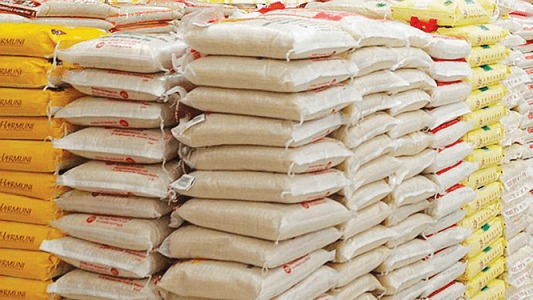
Customs Maintains Restrictions On Rice Despite Forex Ban Lift
Despite the surging costs of rice and the recent lifting of the ban on foreign exchange for its imports, the Nigeria Customs Service has maintained that rice remains a restricted commodity……CONTINUE READING
Rice, a fundamental food item in Nigeria, has experienced a significant price increase, ranging from N55,000 to N60,000 for a 50kg bag, depending on the location of purchase. This is a notable surge from approximately N30,000 per 50kg bag a year ago, despite increased local rice production and the recent allowance of forex for rice imports into Nigeria.
The Central Bank of Nigeria (CBN) had lifted the ban on 43 items, including rice, from accessing foreign exchange on its official platform on October 12. However, contrary to expectations, the cost of rice, especially imported varieties, continues to rise.
Local rice producers attribute the high production costs as a major factor influencing the commodity’s price surge. However, limited rice imports due to restrictions imposed by the Nigeria Customs Service also play a role in the sustained high prices.
The Nigeria Customs Service insists that rice remains a restricted item, and any attempt to import it through the country’s land borders will lead to confiscation. The spokesperson for the NCS, Abdullahi Maiwada, clarified that the removal of the forex ban by the CBN on certain items does not alter the restricted status of rice.
Maiwada explained, “Rice is a restricted item. So, if it is a restricted item, it remains restricted. There is a difference between restriction and prohibition.” He emphasized that the customs service is responsible for implementing fiscal policies, not determining market prices.
Despite the CBN’s announcement, the source within the apex bank revealed challenges in securing dollars to import rice due to a scarcity of forex. The source stated that while securing forex for rice imports through seaports might be possible, the reality is that obtaining approval for Form-A for rice imports is difficult.
In summary, despite the lifting of the forex ban by the CBN, the Nigeria Customs Service continues to enforce restrictions on rice imports, contributing to the ongoing high prices of the staple commodity in Nigeria.
For more information join our whatsapp group by clicking the link here: WhatsApp Group Invite







Comments
0 comments