
Latest
Defence Headquarters Breaks Silence, Reveals Why US Troops Left Nigeria

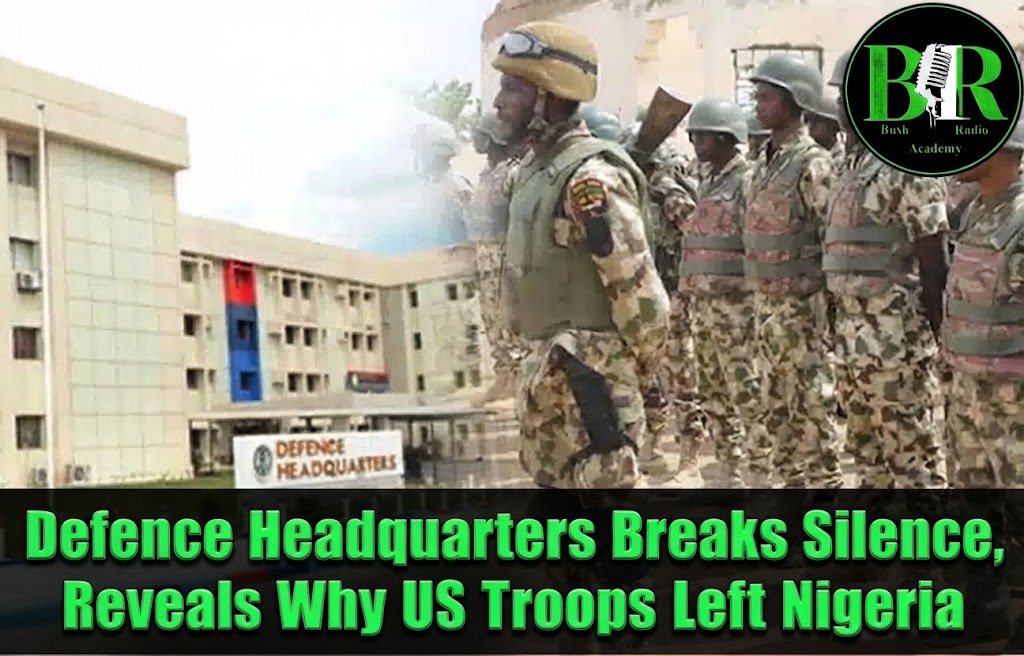
The Defence Headquarters has clarified that the reported withdrawal of about 200 United States military personnel from Nigeria does not signal the end of the security partnership between both countries.
According to Bush Radio Academy, the clarification was made on Tuesday by the Director of Defence Information, Major General Samaila Uba, during a briefing organised by the National Counter Terrorism Centre.
Uba said the Armed Forces of Nigeria had received several enquiries from journalists seeking clarification over reports that the United States was planning to withdraw troops from the country.
He explained that the deployment of US military personnel in Nigeria was primarily based on specific missions and operational requirements. As a result, changes in troop numbers should not automatically be interpreted as a breakdown in bilateral security relations.
The clarification followed a report by The New York Times that the United States was preparing to withdraw troops from Nigeria. The report came after the Commander of the United States Africa Command, General Dagvin Anderson, disclosed in July that a significant portion of American forces had already been withdrawn.
Anderson, however, maintained that the adjustment in troop deployment would not bring an end to Washington’s security cooperation with Abuja.
Reacting to the development, Uba stressed that the reported reduction in the number of US personnel should be viewed as a mission-specific adjustment rather than evidence of deteriorating relations between Nigeria and the United States.
He said the security partnership remained strong, enduring and mutually beneficial, adding that both countries continued to cooperate in several areas aimed at strengthening Nigeria’s capacity to confront security threats.
According to the Defence Headquarters spokesman, intelligence sharing, military training, technical assistance and other forms of professional cooperation would remain important components of the relationship.
Uba further noted that the responsibility for safeguarding Nigeria ultimately rests with the country’s security agencies, while international partnerships are intended to provide additional support, expertise and capacity.
He said the cooperation between Nigeria and the United States had continued to produce valuable results in efforts to combat terrorism and other forms of transnational crime.
The Defence Headquarters consequently urged Nigerians and the media not to interpret the reported troop drawdown as an indication of weakness in Nigeria’s defence capabilities or the collapse of its security partnership with Washington.
Uba maintained that adjustments in foreign military deployments were normal when missions and operational priorities changed, insisting that such changes did not necessarily affect the broader strategic relationship between the two countries.


Police Launch Probe Into Borno Commissioner, Kuje Chairman, Senator Over Inciting Comments

Enzo Fernandez Set For Shock Chelsea Exit As Man City Seal £125m Mega Deal

Wike Endorses Chinda, Declares Him His Choice For Next Rivers Governor

2027 AFCON: Super Eagles Discover Qualifier Schedule, Nigeria Set For Battle

Bank of America VP Erin Piacenti Dies After Random Times Square Stabbing

WHY OKPEBHOLO KNOWS WHAT HE IS SAYING ABOUT TINUBU’S 2.5 MILLION VOTES

Fake Agency Scandal: ICPC Recommends Punishment for 13 Officials — See Full List

Cement Hits ₦15,000: FCCPC Demands Answers From Dangote, BUA, Other Producers

APC Crisis? Ojudu Blasts Tinubu Campaign Council List, Raises Fresh Concerns
