
Demolishing Dissent: How Governments Weaponize Property To Control Opponents
 Follow us on Google News
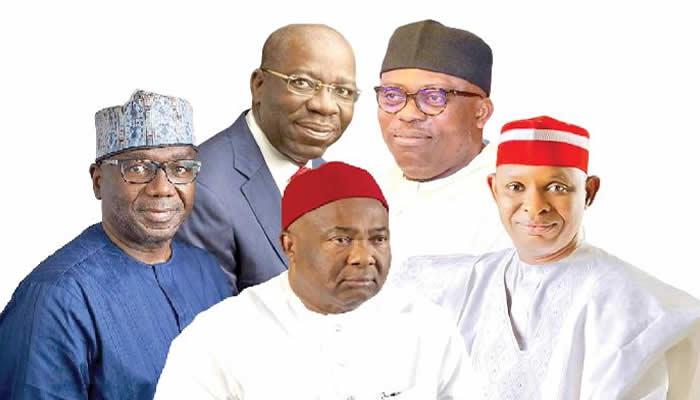
Demolishing Dissent: How Governments Weaponize Property To Control OpponentsIn this analysis, DIRISU YAKUBU explores the trend of sitting governors in Nigeria demolishing properties owned by political opponents to gain leverage in the political arena.
The Chinese military strategist Mao Zedong famously stated that “politics is war without bloodshed,” a sentiment that has become increasingly relevant in Nigeria’s political landscape in recent years. Politics, often viewed as the authoritative allocation of societal values, sometimes devolves into a vengeful pursuit of power by those in authority.
Over the past few years, Nigerians have witnessed unsettling instances of sitting governors targeting their opponents immediately following elections. In a context where politics is perceived as a zero-sum game, personal attacks often overshadow traditional electioneering, particularly at the sub-national level.
A notable example occurred in 2020 when Edo State Governor Godwin Obaseki, shortly after beginning his second term, intensified his campaign against his predecessor’s allies, including former Deputy Governor Pius Odubu and other All Progressives Congress (APC) leaders who opposed his re-election. Obaseki revoked the Certificates of Occupancy for several government properties, claiming they were improperly allocated as parting gifts by former Governor Adams Oshiomhole. “On December 21, 2020, Governor Godwin Obaseki revoked the Certificates of Occupancy for 11 government properties in the Government Reserved Area, which had been allocated to former officials and private entities,” read a government statement.
Following Obaseki’s lead, Imo State Governor Hope Uzodimma quickly moved against the political associates of his predecessor, marking for demolition the Owerri residence of Sam Onwuemeodo, who served as the spokesperson for Rochas Okorocha. Onwuemeodo alleged that the action stemmed solely from his political ties to Okorocha. “They have marked my house for demolition, but no official has explained why,” he stated.
Uzodimma had previously ordered the destruction of seven roundabouts built during Okorocha’s tenure, reflecting ongoing political strife between the two.
In 2023, Kano State Governor Abba Yusuf took similar action, directing the demolition of buildings on government lands sold under the administration of former Governor Abdullahi Ganduje. Yusuf, accompanied by the state Commissioner of Police, oversaw the demolitions, which the government labeled as illegal constructions. Many commentators viewed this as an extension of the longstanding conflict between Ganduje and Yusuf’s political mentor, Rabiu Kwankwaso. In his inaugural address, Yusuf commanded law enforcement agencies to reclaim public properties sold by the previous administration, condemning the “immoral plundering” of public assets.
A recent demolition in Ilorin, Kwara State, saw the Crystal Place shopping mall reduced to rubble on alleged orders from the state government. Former Governor Bukola Saraki claimed the demolition was politically motivated due to the mall’s ownership by Moshood Mustapha, a former commissioner and ally of Saraki.
As these events unfold, prominent figures in Nigeria are sounding alarms about the negative impact of such actions on the nation’s socio-economic fabric. Former Education Minister Prof. Tunde Adeniran expressed concern over the destruction of properties built with substantial investments, describing it as a symptom of Nigeria’s vindictive political culture. “This is a manifestation of our politics of bitterness,” he remarked.
Columnist Jide Ojo echoed Adeniran’s sentiments, attributing the demolitions to envy and the destructive “pull-him-down syndrome.” He cautioned politicians against prioritizing personal vendettas over the public interest, emphasizing the transient nature of political power and the cycle of retaliation among successors.
Ojo cited the rushed inauguration of unfinished projects, exemplified by former Ekiti Governor Kayode Fayemi’s commissioning of an airport that has yet to receive commercial flights, underscoring a culture of sabotaging predecessors’ legacies.
Pro-democracy advocate Joe Okei-Odumakin condemned the trend, labeling it a retrogressive approach to governance driven by personal vendettas. She urged public servants to act with integrity and conscience.
For more information on this article and other related posts from Bushradiogist, please join our WhatsApp channel by clicking this link https://whatsapp.com/channel/0029VaUumOODTkK7AZL1Fw3o. For advertisement inquiries only, kindly send a message to 090 1907 0863 on WhatsApp.




Comments
0 comments