EFCC Breaks Silence On Why High-Profile Corruption Cases Are Dragging
 Follow us on Google News
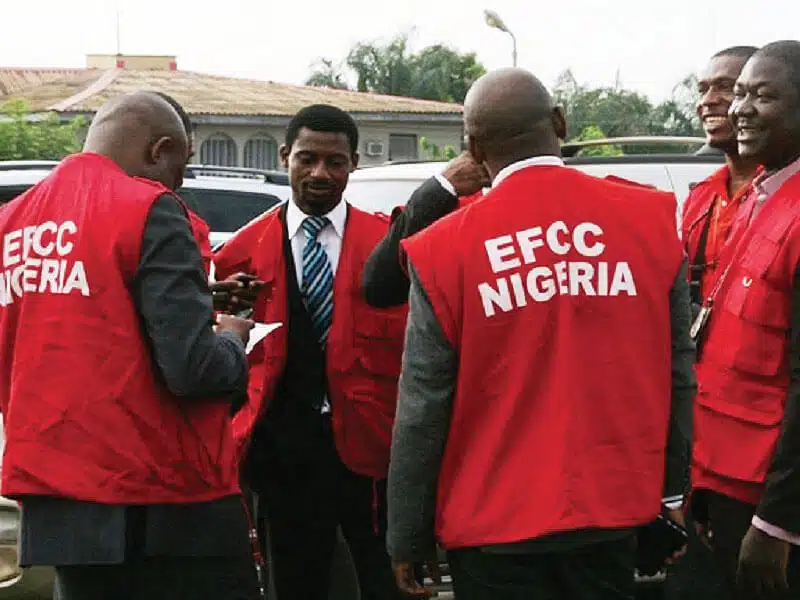
The Economic and Financial Crimes Commission (EFCC) has clarified that the perceived delays in prosecuting certain high-profile corruption cases are primarily due to the time needed to gather credible and admissible evidence.
EFCC Chairman Ola Olukoyede explained that bringing politically exposed persons and suspects in major public corruption cases to court requires thorough investigations, particularly when tracing assets and funds across borders.
He made the remarks during an interview on Sunday Politics aired on Channels Television, noting that the timeline for prosecuting cybercrime cases differs greatly from that of high-profile corruption matters.
“In 48 hours, I can investigate and arraign a cybercriminal—it’s just a matter of accessing devices and documents,” Olukoyede said. “But when it comes to politically exposed persons or cases of major public corruption, it takes time. I cannot take a case to court until I am fully prepared.”
He emphasized that the extended duration before some cases reach court does not indicate inactivity or shielding of suspects.
Addressing accusations that the EFCC selectively targets opposition figures while protecting powerful individuals, Olukoyede dismissed such claims as false and contrary to the commission’s mandate. He referenced the case involving former Minister of Justice and Attorney-General of the Federation, Abubakar Malami, saying, “There is nothing personal in this matter.”
The EFCC chairman stressed that the fight against corruption must remain non-partisan for Nigeria to make genuine progress. “If Nigeria is to move forward, we must agree that this fight is not political. That’s what I want Nigerians to understand and support,” he added.