
Latest
Fresh Twist In PFIPC Scandal: Head Of Civil Service Accepts Responsibility For Due Diligence Lapse

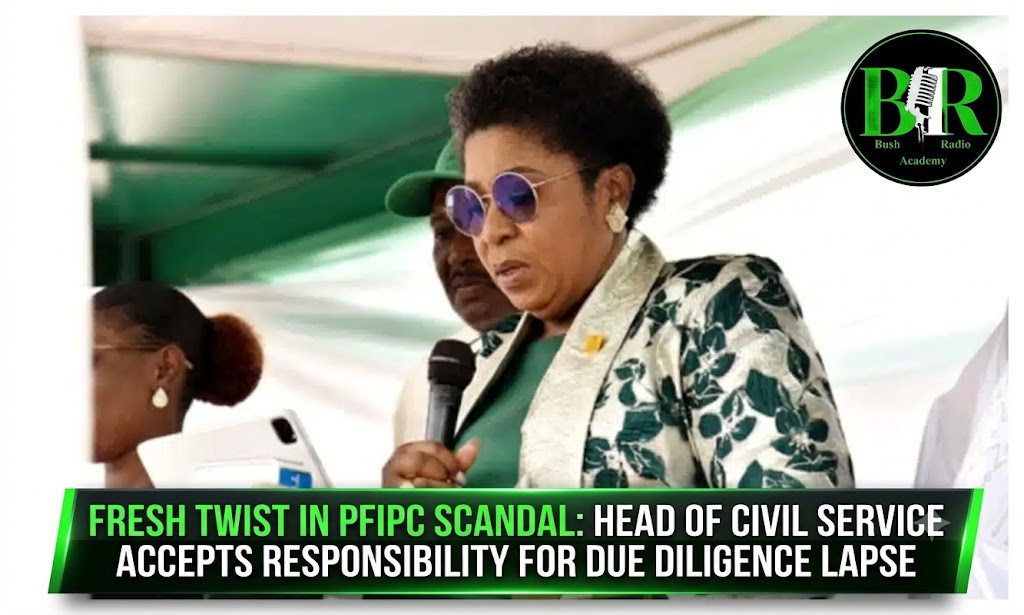
The Head of the Civil Service of the Federation, Didi Walson-Jack, has admitted that her office failed to conduct adequate due diligence before granting an authorised establishment and recruitment waiver to the controversial Presidential Foreign Investment Promotion Council (PFIPC).
Walson-Jack made the admission on Wednesday while appearing before the House of Representatives ad hoc committee investigating the PFIPC controversy, chaired by Yusuf Gagdi.
She acknowledged that the Office of the Head of the Civil Service relied on documents that have since been found to be false before approving key requests submitted by the purported agency.
According to her, officials processed the application after representatives of the organisation presented what appeared to be an Establishment Act and a letter appointing a Director-General during the 2025 Annual Manpower Budget Defence.
She explained that, under existing civil service procedures, newly created agencies seeking approval to recruit staff are required to submit an enabling Act, the appointment letter of their chief executive and other relevant documents before an authorised establishment and recruitment waiver can be granted.
“We now, having seen all the facts and examined all the documents, concede that we ought to have carried out more due diligence in issuing an authorised establishment and recruitment waiver to the PFIPC,” Walson-Jack told the committee.
Describing the incident as unprecedented, she said the Federal Civil Service had never encountered a similar situation, adding that those behind the alleged deception appeared to have exploited established administrative procedures.
However, the Head of Service admitted that after personally reviewing the documents, she immediately suspected that the purported Establishment Act was not authentic.
Drawing on nearly three decades of legal experience, she said the document lacked the characteristics of a genuine Act of the National Assembly.
She also questioned the authenticity of the letter purportedly issued by the Office of the Chief of Staff to the President appointing the agency’s Director-General, noting that the signature on the document differed from genuine signatures attributed to the office.
Although she said she was not a forensic expert, Walson-Jack stated that the signatures were visibly inconsistent.
Responding to her testimony, Committee Chairman Yusuf Gagdi disclosed that forensic analysts from the Nigeria Police Force had examined the disputed documents and concluded that the signatures did not belong to the purported signatory.
According to Gagdi, the forensic findings indicated there was no attempt to imitate the genuine signature, leading investigators to conclude that the appointment letter and other supporting documents were outright fake.
The committee also observed that the document presented as the agency’s Establishment Act lacked essential legislative features, including citation details, Gazette numbers and official publication references typically found in valid Acts of the National Assembly.
Despite acknowledging shortcomings in the approval process, Walson-Jack maintained that officials acted in line with established civil service procedures based on the documents submitted to the office.
She expressed surprise that the fraudulent documents were not detected earlier, noting that the Office of the Head of the Civil Service processes applications from dozens of ministries, departments and agencies each year without similar incidents.


Fresh Twist In PFIPC Scandal: Head Of Civil Service Accepts Responsibility For Due Diligence Lapse

Transfer Bombshell: Tolu Arokodare Reveals Stunning Reaction To Ajax Switch

Transfer Twist: Gift Orban Joins Turkish Side Amedspor As Hoffenheim Agrees Loan Exit

Marriage Crash Drama: Femi Adebayo’s Ex-Wife Finally Speaks On Toyin Abraham Rumours

Fresh Twist In Alleged Coup Trial As Officer Details Personal Feud With Suspected Mastermind

Fear Grips Kidnappers, Bandits as Okpebholo Deploys 497 Forest Guards Across Edo

El-Rufai’s Medical Report Sparks Fresh Crisis As MDCAN Probes Doctor, ICPC Files Charges

Aliko Dangote’s Daughter Reveals Sh*cking Condition In Billionaire’s Will

Aisha Yesufu Unleashes Scathing Reaction To Peter Obi’s Channels TV Interview
