
Governors Of 20 States Borrow N446bn In Response To Revenue Crunch
 Follow us on Google News
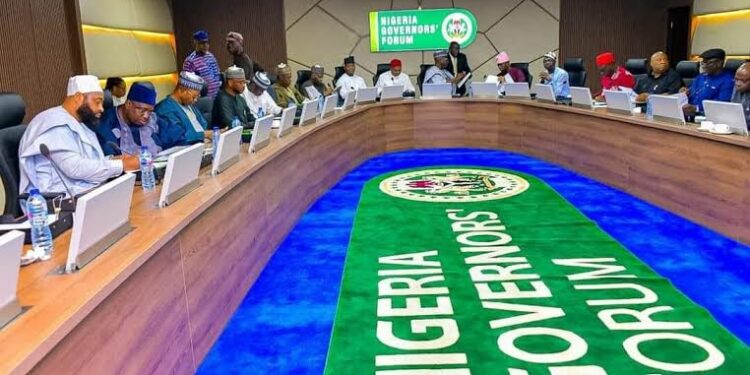
Governors Of 20 States Borrow N446bn In Response To Revenue Crunch
Debt servicing by 29 state governments consumed 80.7% of their Internally Generated Revenue (IGR) in the first half of 2024, underscoring the financial strain these states are under, according to *The PUNCH*. This mounting fiscal pressure has driven governors to borrow a combined total of N446.29 billion during the same period, despite a 40% increase in statutory allocations from the Federation Account……CONTINUE READING
This data, analyzed from budget reports on state websites and the BudgIT-backed *Open Nigerian States* platform, reveals that the surge in debt servicing is severely limiting states’ ability to fund public services and development projects. The situation is aggravated by the inherited debt burdens from previous administrations, making it difficult for states to meet the demands of their residents.
Although the federal government’s reforms, including the removal of petrol subsidies and currency adjustments, led to a 40% boost in income for states, the funds are largely being used to repay loans. This has sparked concerns among experts, who expected that the increased allocations would reduce states’ need to borrow.
Instead, states are accumulating more debt. It was reported that Osun, Ondo, Kaduna, and Cross River states are using much of their Federal Accounts Allocation Committee (FAAC) funds to service existing debt, leaving them with large fiscal deficits. This financial imbalance has also caused states like Ekiti, Cross River, and Ogun to request suspensions on their foreign debt repayments, though FAAC rejected these pleas.
A detailed breakdown of debt servicing across states shows Akwa-Ibom, Borno, Cross River, Edo, Katsina, and Niger spent between 60% and 80% of their IGR to service debts. In some states, like Adamawa, Bauchi, and Kano, debt repayments even exceeded their total revenue, exacerbating their fiscal challenges.
For instance, Abia spent N4.83bn of its N15.6bn IGR on debt servicing, representing 31% of its revenue. Akwa-Ibom, with an IGR of N31.74bn, spent N20.78bn on servicing debts, a ratio of 65.4%. On the other hand, Lagos State had a more favorable debt-to-revenue ratio, collecting N603.71bn in IGR while spending N201.49bn on debt servicing.
Experts attribute the sharp rise in debt servicing costs to the devaluation of the naira, which has significantly increased the cost of repaying foreign loans. Dr. Muda Yusuf, CEO of the Centre for Promotion of Private Enterprise, explained that the weakened naira has exacerbated the debt burden for many states, forcing them to divert funds from essential services to meet their financial obligations.
Concerns have also been raised about the high cost of governance at the state level, with inadequate oversight from state assemblies, leading to unchecked expenditures. Experts like Professor Segun Ajibola from Babcock University have called for more fiscal accountability to ensure that state spending translates to tangible benefits for citizens.
Despite the revenue challenges, 20 state governments borrowed a combined N446.29bn in the first half of 2024 to cover budget deficits, fund infrastructure projects, and support operational costs. Cross River State topped the list of borrowers, securing N121.22bn in loans, followed by Oyo State with N55.36bn, and Kogi State with N41.22bn. Meanwhile, states like Edo, Osun, and Plateau borrowed significantly lower amounts, with Edo borrowing just N633.73m.
The rising debt burden has raised alarms over the long-term financial sustainability of many states, as debt servicing continues to consume large portions of their revenue, leaving little room for investment in critical sectors such as infrastructure, education, and healthcare.





Comments
0 comments