Hope Or Risk? Tinubu’s Fresh $6.9 Billion Loan Targets Poverty Crisis
 Follow us on Google News
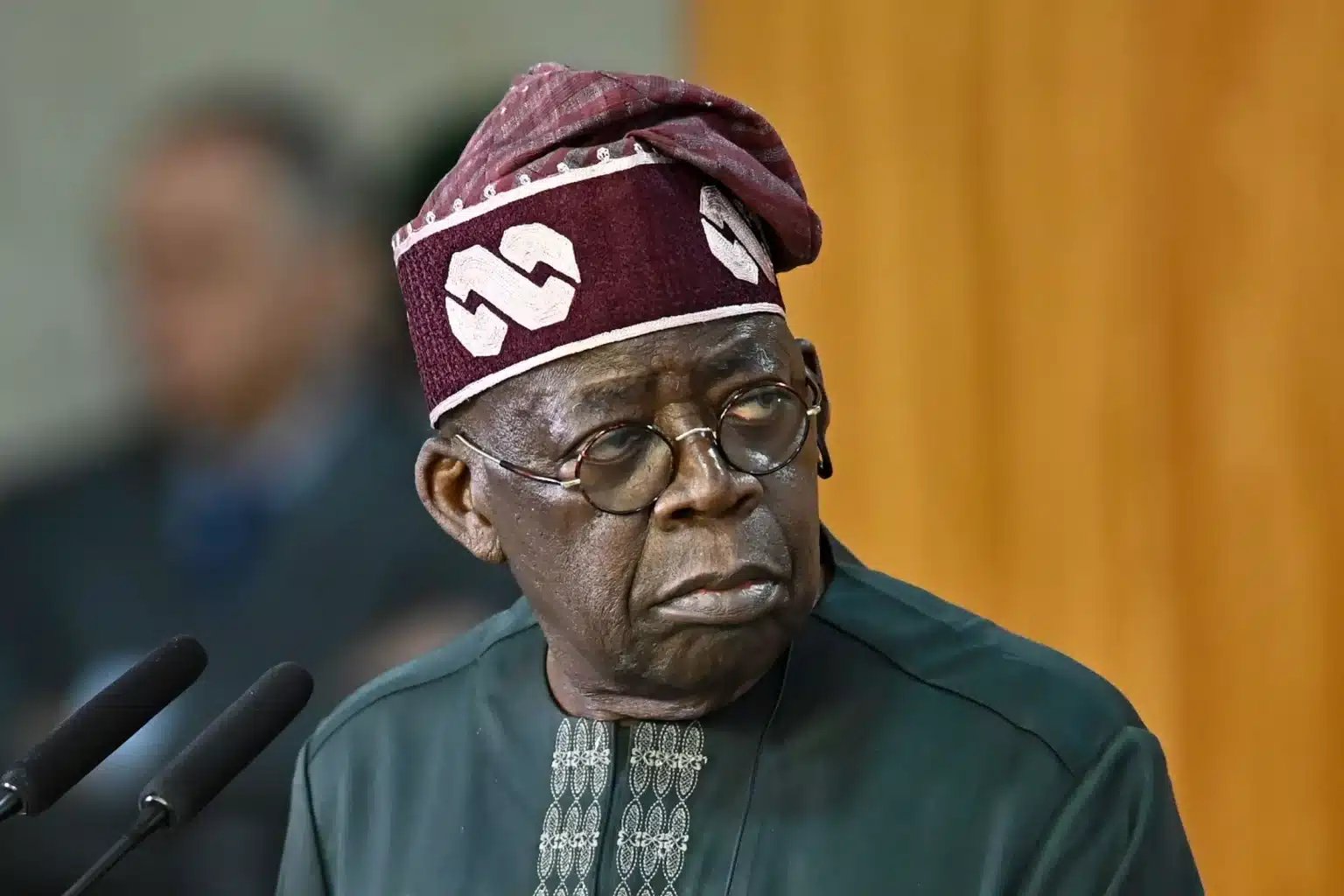
A Professor of Economics at the Lagos Business School, Bongo Adi, has described the $6.9 billion foreign loan secured by President Bola Tinubu as part of efforts to tackle poverty in Nigeria.
Adi made this known on Wednesday, April 1, 2026, during an appearance on The Morning Brief.
The National Assembly had earlier approved the President’s request for a $6.9 billion external borrowing plan. As part of the approval, 40 percent of the funds are to be invested in capital projects outlined in the 2025/2026 budgets, following recommendations from the Senate Committee on Local and Foreign Debt to ensure the funds support infrastructure and development.
Commenting on the development, Adi said the borrowing is aimed at boosting key sectors of the economy and reducing poverty, which he noted has reached unprecedented levels in the country.
He, however, expressed concern over the current economic situation, describing it as one of the most difficult periods in Nigeria’s history in terms of hardship.
According to him, the government’s decision to borrow is based on economic reasoning, as it seeks to maximize benefits while managing limited resources.
Adi explained that Nigeria’s external reserves—estimated at about $50 billion—have strengthened investor and creditor confidence in the country’s ability to meet its debt obligations.
He also pointed out that such loans are typically structured over several years, often between five and ten years, meaning the repayment burden is spread over time.
While acknowledging that ongoing macroeconomic and fiscal reforms may be yielding some positive results, he noted that their impact has yet to be fully felt by ordinary Nigerians.
He added that widespread hardship continues to shape public perception, with many citizens expressing concern over increased borrowing.
The economist further highlighted infrastructure deficits, particularly in the power sector, as a major obstacle to productivity and economic growth.
He noted that although there are improvements at the macroeconomic level—largely driven by developments in the oil sector—these gains have not translated into tangible benefits for the average Nigerian.
Adi also observed that many Nigerians are still adjusting to the effects of key policy decisions, such as the removal of fuel subsidies and the unification of the foreign exchange market.
According to him, while these reforms may be necessary, they have placed additional pressure on households and businesses, contributing to the current economic strain.