
Latest
NBC Fights Back, Seeks Fresh Appeal To Restore Power To Fine Broadcasters

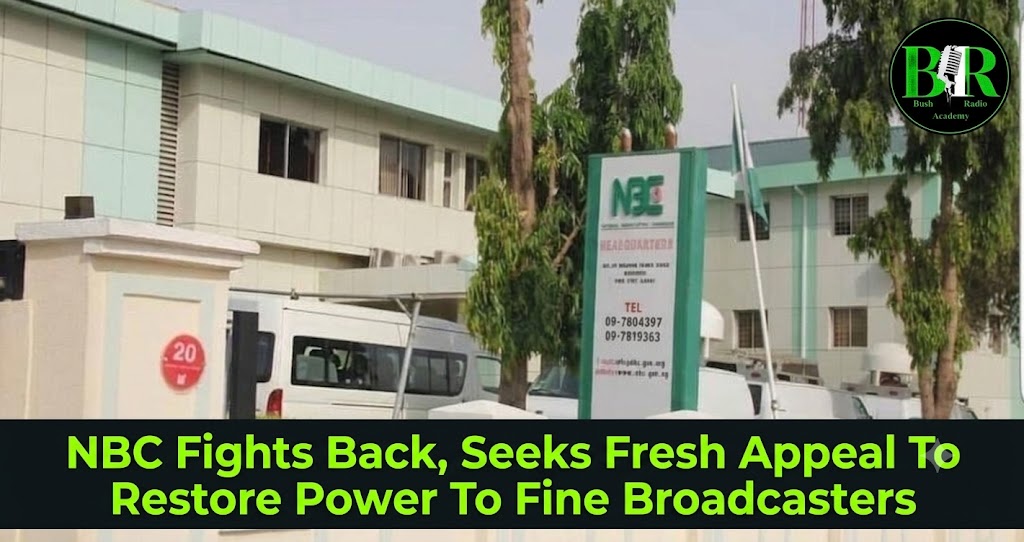
The National Broadcasting Commission (NBC) has applied to the Court of Appeal in Abuja for permission to file a fresh appeal against a Federal High Court judgment that barred it from imposing fines on broadcasting organisations.
The application follows the Court of Appeal’s June 17, 2026 decision striking out the commission’s earlier appeal after declaring it incompetent due to procedural defects.
In a motion filed through its counsel, Dapo Akinosun (SAN), the NBC asked the appellate court to extend the time within which it can challenge the January 10, 2024 judgment delivered by Justice Rita Ofili-Ajumogobia of the Federal High Court.
The legal dispute arose from a suit instituted by Media Rights Agenda (MRA) after the NBC imposed ₦5 million fines on four broadcasting organisations.
The affected broadcasters were Multichoice Nigeria Limited, owners of DStv, TelCom Satellite Limited, Trust TV Network Limited and NTA StarTimes Limited.
According to a statement issued on Monday by MRA’s Communications Officer, Idowu Adewale, the sanctions followed the broadcast of documentaries on banditry and insecurity in Zamfara State.
The NBC had accused the stations of airing content it believed threatened Nigeria’s national security.
However, Justice Ofili-Ajumogobia ruled that the commission acted unlawfully and unconstitutionally by imposing the penalties, holding that the NBC lacked the legal authority to punish broadcasters through fines because it is not a court of law.
Although the commission appealed the judgment, the appeal was later struck out after the court found that the agency’s name had been incorrectly stated in the appeal documents.
The notice of appeal identified the appellant as the “Nigerian Broadcasting Commission” instead of its legally recognised name, the “National Broadcasting Commission.”
In its fresh application, the NBC blamed the error on its former legal team and urged the Court of Appeal to allow the substantive issues in the case to be determined on their merits.
The commission maintained that it had instructed its lawyers to appeal immediately after the Federal High Court delivered its judgment and that the original notice of appeal, filed on March 18, 2024, was submitted within the time allowed by law.
According to the NBC, the appeal failed solely because of an inadvertent mistake in the description of its statutory name.
The commission further argued that the Federal High Court’s decision raises significant constitutional and regulatory questions regarding its authority to oversee broadcasting activities and enforce compliance with industry standards.
It warned that allowing the judgment to stand without appellate review could create uncertainty over the scope of its regulatory powers and weaken its ability to carry out its statutory responsibilities.
“The subsisting judgment is capable of creating significant uncertainty regarding the commission’s regulatory powers and its ability to effectively discharge its statutory mandate,” the commission stated.
The NBC also argued that limiting its enforcement powers could encourage broadcasters to disregard established regulations, potentially leading to the spread of false, misleading and unverified information capable of causing public panic, anxiety and social unrest.
It added that ineffective regulation could promote irresponsible broadcasting practices and the dissemination of sensational or inflammatory content across broadcast and digital media platforms.
According to the commission, the proposed appeal raises issues that extend beyond the parties involved in the suit and could have far-reaching implications for broadcasters, content producers, media audiences and the regulation of Nigeria’s broadcasting industry.
The NBC is also seeking leave to introduce a fresh legal argument questioning whether Media Rights Agenda had the legal standing to institute and maintain the original action before the Federal High Court.
The Court of Appeal has yet to fix a date for the hearing of the application.


Forget The Presidency’ — Wike Says PDP Cannot Defeat Tinubu In 2027

Wike Reveals Why Fubara Will Allegedly Sit Out The 2027 Governorship Race

“PFIPC Probe: Dauda Makes Dramatic Appeal To Lawmakers

NBC Fights Back, Seeks Fresh Appeal To Restore Power To Fine Broadcasters

I’m Going Nowhere’ — Mateo Kovacic Shuts Down Manchester City Exit Rumours

Fear Grips Kidnappers, Bandits as Okpebholo Deploys 497 Forest Guards Across Edo

Aliko Dangote’s Daughter Reveals Sh*cking Condition In Billionaire’s Will

Aisha Yesufu Unleashes Scathing Reaction To Peter Obi’s Channels TV Interview

This Is Why He Was Arrested’ — Osun Speaker Breaks Silence On SSG Saga
