
Nigeria On Alert After Ebola Case From Uganda As Experts Raise Concerns Over Weak Health Facilities
 Follow us on Google News
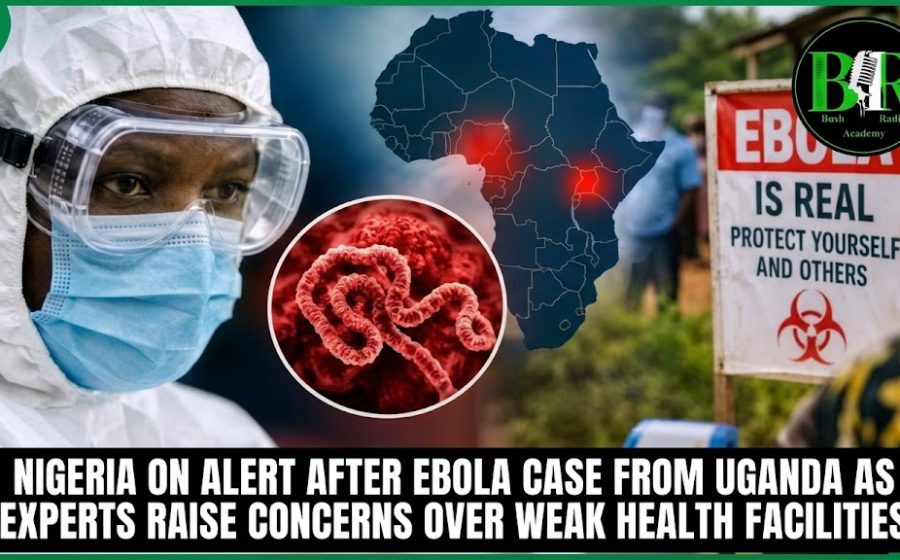
Nigeria’s preparedness to respond to major disease outbreaks has come under renewed scrutiny following the Federal Government’s reported confirmation of an Ebola case in a woman who recently travelled from Uganda.
According to Bush Radio Academy, the Federal Ministry of Health and Social Welfare announced the case on October 20, 2026, after laboratory tests reportedly detected the Ebola virus in the patient, who had received treatment at a private hospital in the Federal Capital Territory, Abuja.
The government said the woman had been placed in isolation and was receiving medical care. Health authorities also reportedly identified 44 close contacts and intensified disease surveillance and infection prevention measures to reduce the risk of further transmission.
Public and private health facilities were urged to remain vigilant and promptly report suspected cases. The World Health Organization (WHO), meanwhile, cautioned that a single imported case does not automatically constitute an outbreak, urging Nigerians to remain calm, avoid misinformation and follow official public health guidance.
The development has revived concerns about whether Nigeria and other African countries have adequately addressed weaknesses exposed by previous Ebola outbreaks and the COVID-19 pandemic, particularly in early detection, emergency funding, laboratory capacity and community awareness.
A Senior Registered Community Health Practitioner in Oyo State, Samson Ojo, said African countries had made some progress in outbreak preparedness since the 2014 Ebola crisis but continued to face significant challenges.
Ojo acknowledged that some countries had established disease control agencies, laboratories and emergency operation centres. However, he argued that inadequate funding, weak community surveillance, shortages of trained healthcare workers and limited resources at primary healthcare facilities remained major obstacles.
He expressed particular concern about conditions in some Nigerian health facilities, where he said shortages of personal protective equipment, isolation facilities and qualified personnel could hinder an effective response to infectious diseases.
Ojo also warned that dependence on international donors to finance emergency responses could leave countries vulnerable when external funding was insufficient or unavailable.
According to him, limited laboratory capacity and difficulties transporting samples could delay the confirmation of suspected infections, while reliance on paper-based records could slow information sharing between healthcare facilities and public health authorities.
He further noted that disease detection was often more difficult in rural and border communities, where access to healthcare could be limited and fear, misinformation or traditional healing practices might discourage people from seeking medical attention.
Ojo cautioned that delays in identifying infected individuals could allow diseases to spread before patients reached facilities equipped to diagnose and manage them.
He also questioned the effectiveness of cross-border cooperation among African countries during public health emergencies, pointing to slow information sharing, porous borders and insufficient joint preparedness exercises.
Although regional frameworks exist through organisations such as the Economic Community of West African States (ECOWAS) and the Africa Centres for Disease Control and Prevention (Africa CDC), he maintained that stronger practical cooperation was needed.
Separately, Africa CDC Director-General Dr Jean Kaseya reportedly criticised the limited international attention given to developing a vaccine against the Bundibugyo strain of Ebola. He argued that greater investment in African vaccine research and production was necessary to reduce the continent’s dependence on external support.
Ojo also said African governments had not fully sustained some of the improvements introduced during the COVID-19 pandemic. He cited inadequate long-term funding for infection prevention, abandoned handwashing facilities, declining infection-control training and persistent shortages of healthcare workers.
Regarding Nigeria, the health practitioner said the country had improved its outbreak response capacity through stronger disease surveillance systems, laboratory development and screening at ports of entry. However, he warned that gaps remained, including a lack of functional isolation facilities in some general hospitals and inconsistent compliance with infection prevention measures.
He urged governments to strengthen primary healthcare centres, improve laboratory networks and sample transportation, and train rapid-response teams that could be deployed immediately when suspected cases emerged.
Ojo also stressed the importance of community-level surveillance and public education, arguing that investments should be made before emergencies occur rather than after an outbreak has begun.
He recommended communicating health information in local languages and involving traditional rulers, religious leaders and community health workers to improve public understanding. He also called for regular updates from health authorities, including transparent explanations of what is known and what remains uncertain.
An African cultural advocate based in Ethiopia, Adekunle Adeleke, popularly known as D Baba Afrika, also expressed concern about the continent’s approach to infectious diseases.
Adeleke argued that the belief that Africans could withstand diseases through resilience or faith alone risked undermining prevention efforts. He said limited infrastructure, inadequate detection technology and weak cooperation between neighbouring countries could make it harder to identify and contain infections.
He further urged African governments to learn more effectively from previous pandemics and strengthen partnerships with international health organisations to improve access to medical technology, healthcare training and public awareness programmes.
Adeleke called for a coordinated response involving relevant government agencies whenever a suspected case is detected, particularly at international borders.
The reported Ebola case has therefore renewed debate about the need for sustained investment in public health infrastructure, early detection, emergency preparedness and international cooperation.
Note: The case confirmation and related developments described above are based on the supplied report and have not been independently verified here. Readers should consult official updates from Nigeria’s health authorities and the WHO for confirmed information.





Comments
0 comments