
PDP Declares Legal War As 82 Lawmakers Defect — Vows To Reclaim ‘Stolen Mandates
 Follow us on Google News
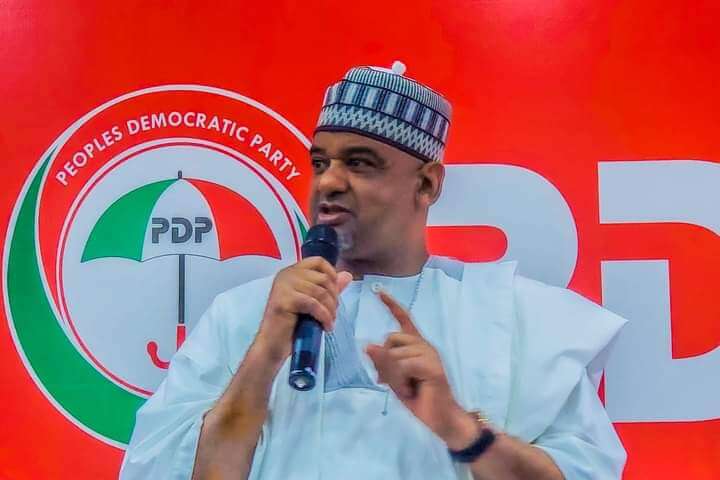
Nigeria’s political landscape is heating up as the Peoples Democratic Party (PDP) launches a fierce legal battle to recover what it describes as “stolen mandates” amid a wave of defections, primarily to the ruling All Progressives Congress (APC).
In a stunning turn, 82 lawmakers at both federal and state levels have dumped the PDP—most for the APC—triggering one of the party’s most serious crises since it lost power in 2015.
Oborevwori’s Defection Sparks Alarm
Perhaps the most jarring defection is that of Delta State Governor, Sheriff Oborevwori, whose switch to the APC sent shockwaves through the PDP. Widely regarded as the last major PDP stronghold in the South-South, Delta’s sudden political shift has left the party scrambling to preserve its influence in the region.
Following a tense six-hour meeting in Abuja, the PDP’s National Working Committee (NWC) resolved to go to court to challenge what it calls a “brazen theft” of electoral victories won under its platform.
A Legal Gamble in Uncharted Waters
The PDP is preparing to argue that political mandates belong to political parties—not individuals—under Section 68(1)(g) of Nigeria’s 1999 Constitution (as amended). This provision states that elected lawmakers who defect without a division in their original party must relinquish their seats.
While this legal principle has been used before against lawmakers, applying it to a sitting governor like Oborevwori breaks new ground. No Nigerian court has yet ruled definitively on whether executive mandates can be reclaimed under this clause.
Leading the legal charge is PDP National Legal Adviser, Kamaldeen Ajibade, who is reportedly assembling a team to begin filing challenges. As of this weekend, no formal court cases have been launched—keeping the public and political class in suspense.
Delta: The Battleground
The situation in Delta is especially volatile. All 22 PDP lawmakers in the State House of Assembly have defected to the APC, threatening the PDP’s base in the region. To address the turmoil, the party has appointed South-South Zonal Chairman, Mr. Emma Ogidi, to coordinate damage control.
“Our destiny cannot be handed over to political mercenaries,” declared PDP National Chairman, Ambassador Umar Iliya Damagum. “We have directed our legal team to recover every mandate stolen from us.”
Defections Become a Political Epidemic
What began as sporadic realignments has turned into a full-blown wave of desertions:
-
4 Senators, including Ned Nwoko (Delta North) and the late Ifeanyi Ubah (Anambra South)
-
19 House of Reps members, like Erhiatake Ibori-Suenu (Delta) and Wole Oke (Osun)
-
22 Delta State House members
-
26 lawmakers from Rivers State, now in legal battles to retain their seats
-
7 Edo lawmakers, including the Speaker, and
-
4 legislators in Abia who defected to the Labour Party
Many cited internal PDP crises and the desire to align with their governors as reasons for the move.
Doubts Within and Outside
Despite the aggressive stance, not everyone in the PDP is confident. Some leaders quietly question whether the courts will support their strategy or if it will further divide the party.
A senior NWC official, speaking anonymously, admitted that legal action is currently focused only on Delta. “There is no roadmap yet to replicate the strategy elsewhere,” they said.
Constitutional lawyer and PDP figure Dr. Tunji Abayomi warned that courts have generally viewed executive mandates as belonging to the electorate, not the party—casting doubt on efforts to unseat a sitting governor like Oborevwori.
Political analyst Dr. Chidi Nwaobia added: “This could be the defining moment for the PDP. A court victory would restore its relevance. A loss could accelerate its political demise.”
A Fight for Survival
For the PDP, this legal battle is about more than seats—it’s a fight for survival. Though court filings are still pending, the party’s leadership is positioning this as a critical stand to uphold democratic integrity and party discipline.
While critics accuse the PDP of distracting from bigger national issues, the APC is taking the matter seriously, watching for signs of either resurgence or collapse within the opposition.
The Verdict Awaits
The courts have yet to weigh in. If the PDP succeeds, it could reshape Nigeria’s understanding of political loyalty and mandate ownership. If it fails, the party risks being further weakened and divided.
In the midst of the storm, one question looms large: Does the electoral mandate belong to the party—or to the people who cast the votes?







Comments
0 comments