
Price Hikes Grip Lagos Markets As Sallah Approaches
 Follow us on Google News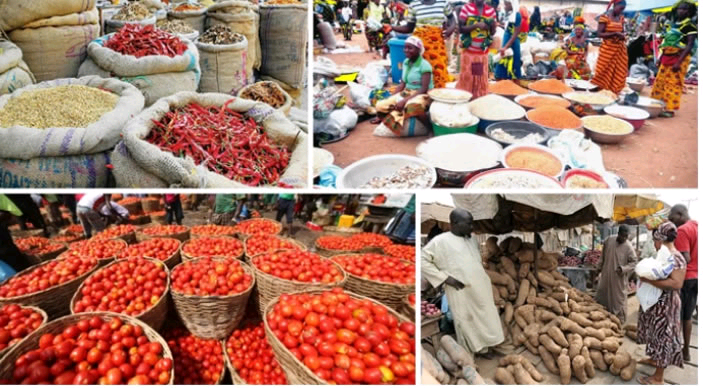
Price Hikes Grip Lagos Markets As Sallah Approaches
With the approaching Eid Kabir celebrations in 2024, prices of both perishable and non-perishable food items in major Lagos markets have skyrocketed by over 300%. A recent survey conducted by the News Agency of Nigeria across Mile 12, Oyingbo, Surulere, and Ajah markets on Tuesday and Wednesday revealed staggering price hikes of nearly 400% in some cases over the past year.
For instance, a 50kg basket of tomatoes that cost N35,000 in 2023 now sells for N100,000 at Mile 12 and up to N120,000 in upscale areas like Lekki and Ajah. Scotch Bonnet peppers, known locally as “rodo” or “atarodo,” have surged over 600%, with prices soaring from N18,000 to N120,000 per 50kg bag. Bell peppers (“tatashe”) and red chili peppers (“bawa” or “shombo”) have similarly seen their prices rise dramatically to N95,000 and N110,000 respectively, from N21,000 and N22,000 last year.
The survey also highlighted that a 100kg bag of onions now commands N70,000, up from N25,000 previously. Local rice prices have climbed from N48,000 to N65,000 per 50kg bag, while imported rice prices range between N80,000 and N90,000, up from N55,000 last year.
The cost of animals traditionally used for festival celebrations has also surged significantly. Medium-sized rams are priced between N350,000 to N700,000, cows range from N800,000 to N1,000,000, and goats are priced from N75,000 to N120,000, depending on negotiations.
Eggs and poultry prices have not been spared either, with egg prices climbing from N1,800 to N4,500 per crate, and chickens now fetching between N12,000 and N15,000, depending on the type.
Femi Odusanya, spokesperson for Mile 12 International Market, attributed these price hikes to heightened insecurity affecting farmers across the country, leading to reduced agricultural activities. He also pointed out that transportation costs have contributed significantly to the inflationary pressures on food items.
Odusanya urged governments at all levels to subsidize the agricultural sector and improve security to incentivize farmers and stabilize prices. He emphasized the need for increased investment in local processing and value addition to make agriculture more attractive and sustainable.
Meanwhile, Nigerians have expressed growing concern over the impact of these inflationary pressures on their daily lives. Nutritionists warn of potential malnutrition outbreaks as essential food items become increasingly unaffordable for many citizens.
Charity Ephraims, a businesswoman, noted a rise in begging across the country, attributing it to the economic strain caused by escalating food prices. She called on the government to take urgent measures to alleviate the burden on ordinary citizens, emphasizing that a well-fed populace is crucial for national productivity.
Pepper trader Alhaji Bala Tanko echoed these concerns, urging the government to bolster security in farming regions and implement measures to reduce transportation costs until food prices stabilize.
The current situation underscores the urgent need for comprehensive interventions to mitigate the impact of inflation on food security and the overall well-being of Nigerians.







Comments
0 comments