
Sanusi Breaks Silence On El-Rufai Case, Questions Motive Behind Corruption Probe
 Follow us on Google News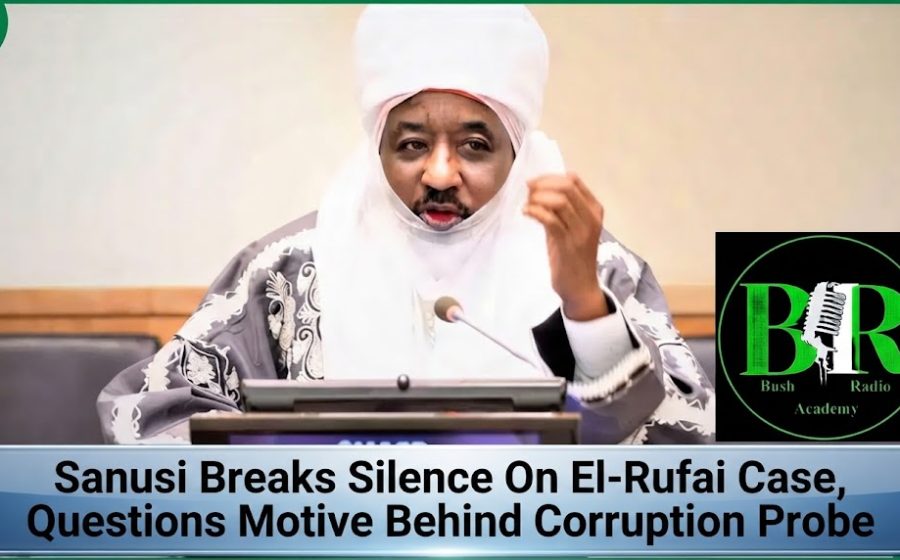
The Emir of Kano, Muhammadu Sanusi II, has raised concerns about the effectiveness of Nigeria’s fight against corruption, arguing that political connections can sometimes influence the way corruption cases are handled.
Sanusi made the remarks in an interview with Channels Television in Lagos during the public presentation of “Unexplained Wealth: A Trilogy of Nigerian Financial Law,” a three-volume book authored by anti-corruption lawyer Dr Wahab Shittu (SAN).
According to Bush Radio Academy, the former Central Bank of Nigeria governor acknowledged that Nigeria has laws, institutions and courts established to identify, investigate and prosecute corruption. However, he argued that the effective implementation of those laws remains a major challenge.
Sanusi alleged that some individuals facing corruption charges could have their cases discontinued because of their political environment or connections. He said such situations could create doubts about whether certain prosecutions were genuinely focused on fighting corruption or were influenced by political considerations.
The Emir cited the case of former Kaduna State Governor Nasir El-Rufai while making his point, referring to what he described as concerns surrounding the use of legal processes in high-profile cases.
Sanusi said the situation could lead members of the public to question whether legal actions were being pursued primarily as part of anti-corruption efforts or whether political considerations were involved.
He stressed that political leaders, public officials and the judiciary have a responsibility to ensure that existing laws are applied for the purposes for which they were established.
The Emir also said that reviewing Nigeria’s financial and anti-corruption laws was important, but argued that legal reforms alone would not be sufficient without strengthening the institutions responsible for enforcing them.
Sanusi maintained that meaningful progress would require stronger institutional commitment and consistent application of the law, regardless of an individual’s political connections or status.
His comments come amid continued public debate over the handling of high-profile corruption cases in Nigeria and the effectiveness of institutions responsible for enforcing the country’s anti-corruption laws.







Comments
0 comments